A car that carries a dog to the trail, a cat to the vet or a muddy companion home from the river has a different cleaning life from a car used only for commuting. Hair finds seams you never knew existed. Paw prints appear on the door before you have found the towel. The cargo blanket can look perfectly respectable until you lift it.
You do not have to choose between enjoying those trips and enjoying your vehicle. The practical goal is a cabin that works for your household, with a cleaning plan that recognises where your pet rides and what usually comes home with them. A few accurate details make a professional appointment more useful, while a modest routine makes the result easier to maintain.
Describe the pet's route through the vehicle
Start by tracing an ordinary journey. Which door does your pet use? Where do they settle? Do they ride in a carrier, on a compatible cover or in the cargo area? Are the rear seats folded down? These details are more helpful than saying there is dog hair everywhere, even when that is exactly how it feels.
A detailer needs to know which surfaces have actually been exposed. The back of a folded seat may collect hair while its seating surface stays clean. A carrier may keep most debris contained but leave the surrounding cargo carpet dusty. A dog that leans against the door may leave marks above the area captured in a floor photograph.
Take photographs with the normal travel arrangement removed, if you can do so safely. Include the seat backs, side trim and cargo edges as well as the obvious centre patch. This gives the provider an honest view of the work and helps prevent surprises after the appointment begins.
Separate loose hair from embedded hair
A quick vacuum and a dedicated pet-hair session are not always equivalent. Some hair sits visibly on a smooth surface; some becomes caught in textile fibres and seams. The amount of effort depends on the combination of hair, material, access and condition, not simply the size of the animal.
When requesting service, describe whether your usual vacuum removes most of it or leaves much behind. That observation tells the detailer something practical without requiring a technical label. Mention high-pile cargo carpet, fabric seat backs or other areas that seem especially persistent. One troublesome surface can shape the visit more than the overall vehicle size.
Ask how pet hair is assessed in the quote. Is there an allowance, a separate item or an inspection before the final scope is agreed? You are not asking for a guarantee that no hair exists anywhere in the vehicle. You are asking for a shared definition of the areas and level of improvement being purchased.
Mud and hair need their own attention
A muddy footprint is different from a field of fine hair. The appointment may need to address both, but the methods and limits can differ. Make a note of where mud is sitting on a surface and where it has left a stain. Include any marks on fabric, door trim or the back of the front seats.
Avoid experimenting with a succession of household products before the visit. Ford's interior-care guidance warns against household cleaners and glass cleaner on its fabric materials. The broader lesson is to consult the instructions for your own vehicle rather than assume a cleaner suited to a kitchen surface belongs on automotive upholstery.
If you have already attempted a cleanup, be straightforward about it. Share the product and the area treated. There is no embarrassment in an unsuccessful attempt; it is simply part of the vehicle's recent history. A detailer can make better decisions when they know what the material has already been exposed to.
Choose an outcome you will notice every day
Perfection can be an unhelpful target for a vehicle that will carry the same enthusiastic passenger tomorrow. Instead, name the improvements that would change your experience. You might want a cargo floor that no longer leaves hair on luggage, rear seats ready for human passengers or door panels free of muddy streaks.
Those priorities support a sensible conversation about time. If the most persistent hair is in an area you rarely use, decide whether extensive work there is important now. If a relative will ride in the back seat next week, that seating position may deserve first attention. Your use of the vehicle should drive the choices.
Our interior detailing guide explains how to think about routine cleaning and more involved textile work. Pet-related mess does not automatically require every possible treatment. It calls for a clear description, suitable methods and a result that matches the way the car is used.
Treat pet accidents as a distinct request
If there has been an accident, tell the provider before booking. Identify the likely location, when it happened, the approximate extent and any cleanup already attempted. A visible spot may not describe the full concern, particularly if liquid travelled into an edge or beneath a removable item.
Ask whether the provider handles that type of work and what assessment is needed. Do not assume a general interior package includes every odour or contamination concern. A professional may need to limit the work, recommend another service or explain that a result cannot be predicted until the area is inspected.
Keep the conversation factual. You do not need to identify a substance more precisely than you know, and the provider should not promise a health outcome simply because an area has been cleaned. A realistic objective is to address the identified source within a defined scope, then reassess after the vehicle has dried and returned to normal use.
Give covers and carriers their own cleaning plan
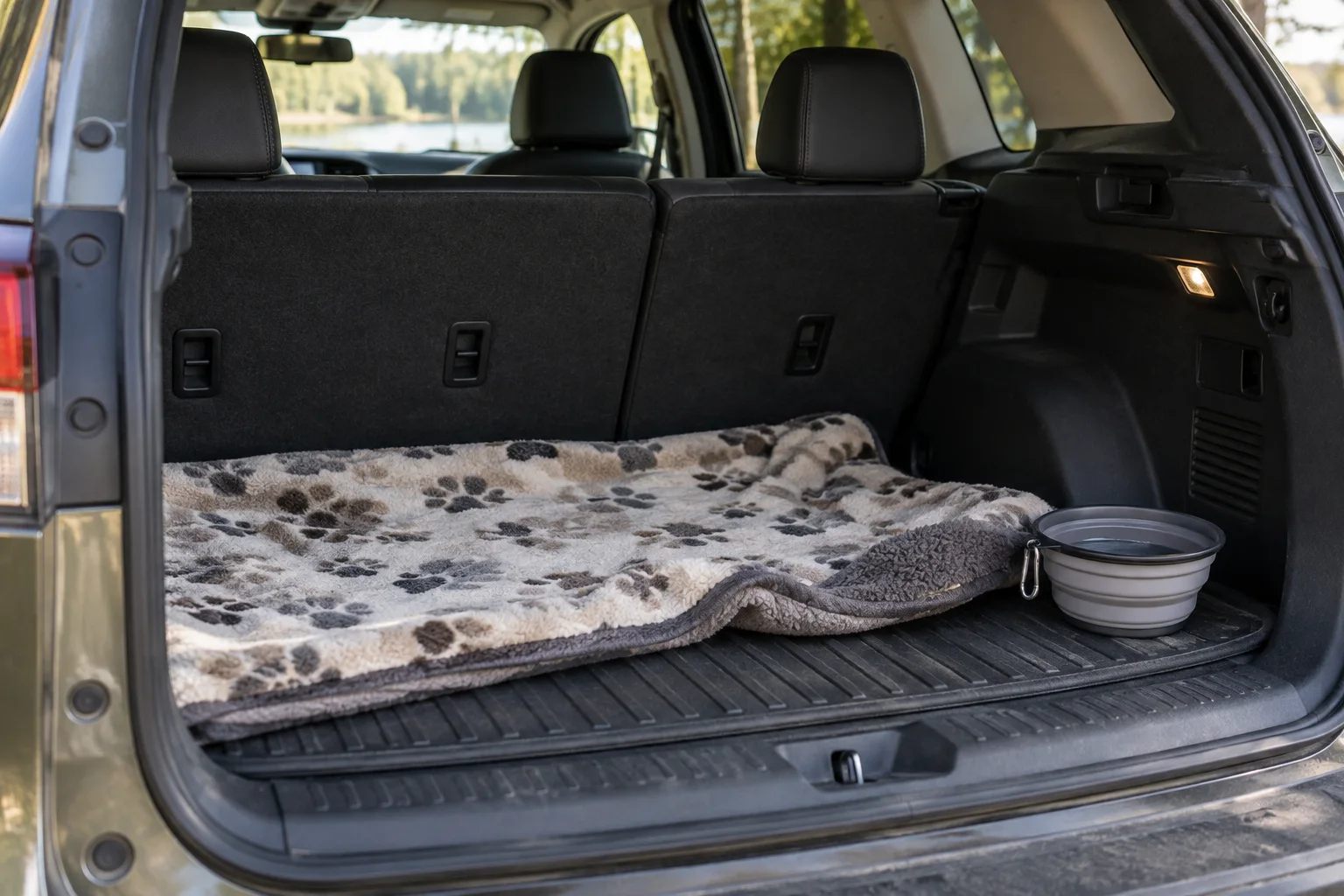
A clean vehicle can be immediately reintroduced to dirt by an unwashed cover, blanket or carrier. Before the appointment, decide what will happen to those items. Read their care labels and manufacturer guidance, and allow enough time for any cleaned items to dry before they return to the car.
Do not assume the detailer will wash every accessory that arrives with the vehicle. A removable cover may be outside the agreed scope or require a different method. Ask directly if you want help with it. The same applies to a crate tray, carrier cushion or fitted cargo accessory.
It can help to make a simple division: vehicle surfaces, washable travel items and equipment that needs its own instructions. That prevents everything being treated as one large cleaning job. It also lets you make progress independently, such as laundering an approved blanket while the car is being detailed, without interfering with the provider's work.
Be careful about what you add to a seat
A protective cover can be useful, but suitability matters more than a product's attractive photographs. Seats may contain airbags, sensors and other components with specific requirements. Consult the vehicle instructions and the accessory maker before adding a cover or changing the travel arrangement.
Tesla's Model S manual, for example, cautions against non-approved seat covers because they can affect seat systems. That is a model-specific instruction rather than a universal accessory recommendation. It illustrates why a cover that works in one car should not automatically be transferred to another without checking.
Also think about ordinary practicality. Can you remove the cover without dropping all its contents into the cabin? Is it easy to maintain as directed? Does it fit the way your household loads the vehicle? The best protective arrangement is one that is compatible, correctly installed and manageable on a rainy evening after a long walk.
Make the appointment comfortable for everyone
Arrange for your pet to be somewhere comfortable and secure while the work takes place. Open doors, unfamiliar equipment and repeated movement around the car can make a detailing area unsuitable as a waiting place. You can plan this in advance without turning the visit into a complicated event.
Remove food bowls, leashes, medication and other personal items from the work area. If a carrier must remain for a later journey, discuss where it can wait while its usual space is cleaned. Keep the access route clear so the provider can move around the vehicle without stepping over travel gear.
Mention sensitivities or a preference for minimal fragrance when booking. Ask what the provider can accommodate rather than relying on a description such as fresh scent. A vehicle can look tidy without needing to smell strongly of a finishing product. Clear preferences are easier to honour when they are part of the initial plan.
Build a useful after-walk station
A little organisation near the point of departure can save a lot of rearranging later. Keep suitable pet-care items where you can reach them before opening every door and moving everything around. What belongs there depends on your animal and routine, but convenience is the main design principle.
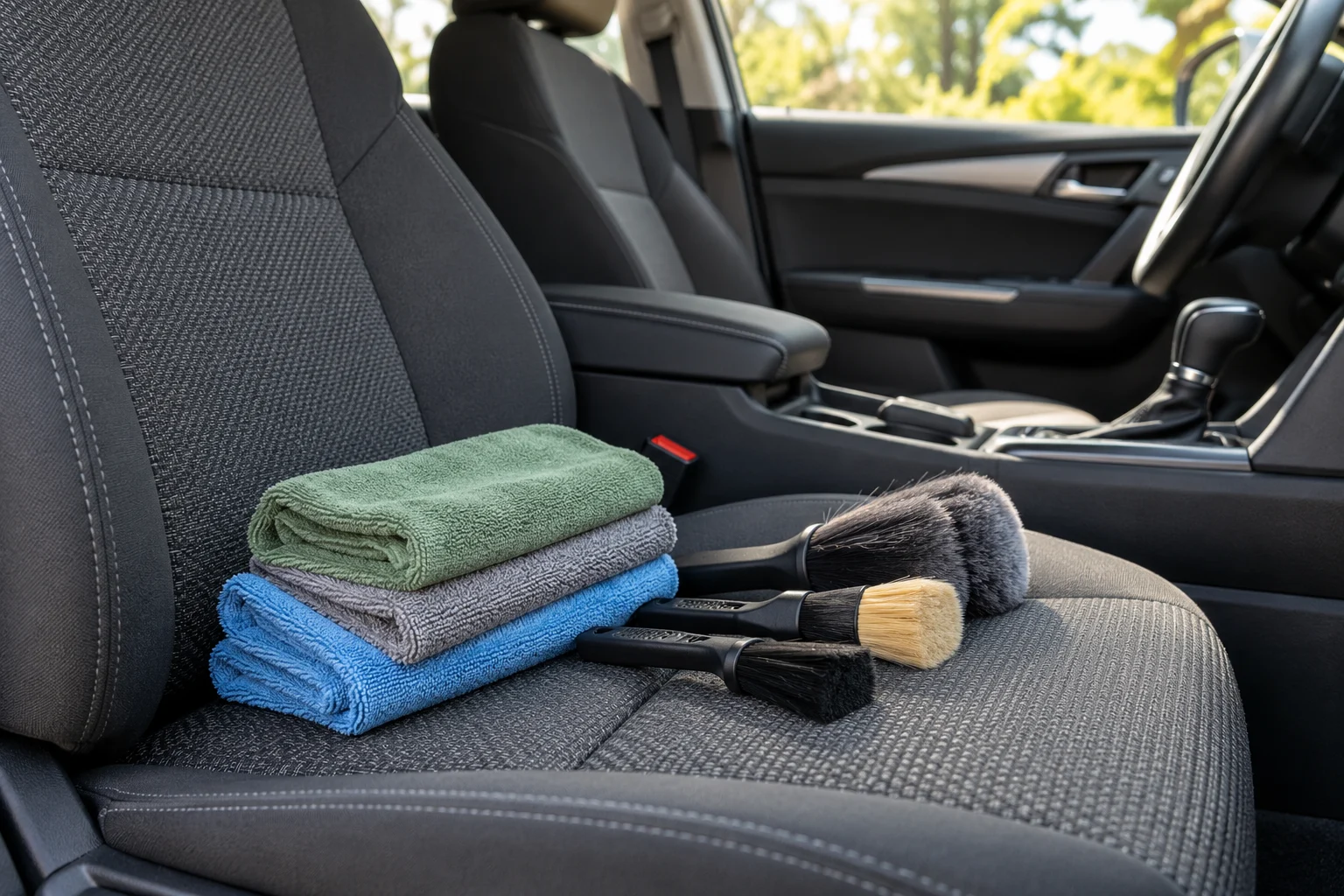
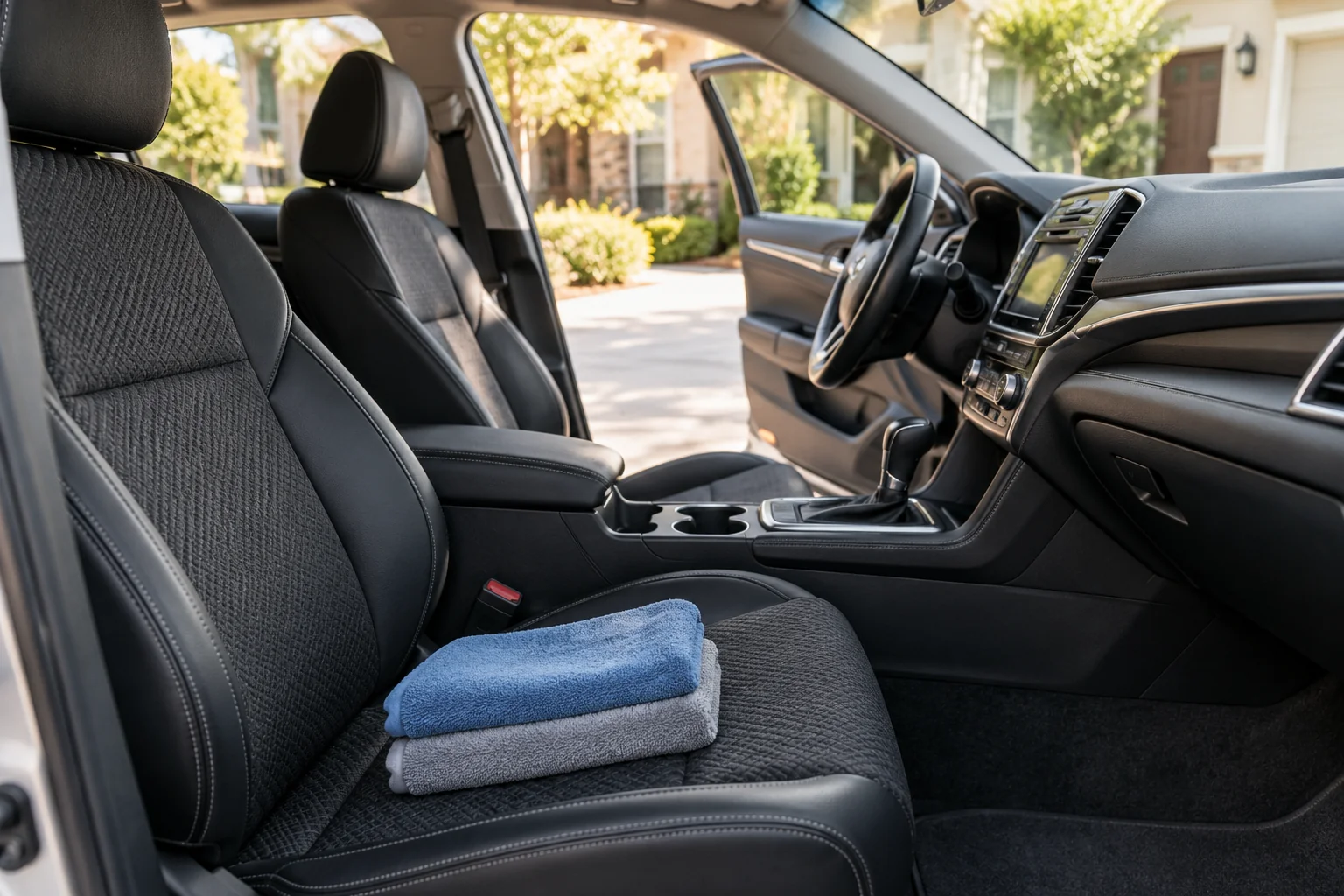
For example, a household that regularly visits muddy paths might keep a clean towel with the walking gear and a separate place for used textiles when arriving home. The important step is bringing the used items indoors for appropriate care. A damp towel forgotten in the cargo area is not a finished cleanup.
Avoid creating a permanent pile of supplies that consumes the whole boot. Keep only what you use, secure it appropriately and review it occasionally. A small, predictable kit is easier to maintain than an overflowing basket of half-used products. It also leaves space to see the carpet and notice when the vehicle itself needs attention.
Make routine hair control realistic
Choose a short maintenance window that fits your life. Perhaps you remove the travel blanket after the weekend walk or check the rear seat before carrying colleagues. The point is to stop the job feeling invisible for months, not to make pet ownership into a daily detailing obligation.
Use tools suited to the surfaces and follow their instructions. Do not attack delicate trim or worn textiles with an aggressive tool simply because it works well on a household rug. If you are unsure, ask the detailer which routine methods make sense for your particular interior and which should be left alone.
Look for patterns. If hair repeatedly collects along one seam, that area may need occasional focused attention. If most mess arrives on one removable item, caring for that item could be the most useful habit. You can improve the overall experience without trying to clean every centimetre equally often.
Understand what a remaining mark means
After cleaning, a surface may still show signs of use. Claw marks, pulled threads, scratches and worn seat edges are different from removable dirt. Ask the provider to distinguish these during the initial assessment if they are visible. That helps avoid disappointment when cleaning improves the surrounding surface but does not repair physical damage.
A photograph taken before the work is useful here. You can compare the same area under similar light and see what changed. Avoid judging solely from a distant overall photograph or a dramatic close-up. Both can distort how noticeable a remaining mark will be during ordinary use.
If repair matters to you, ask what type of specialist would assess it. Do not assume additional scrubbing is the next step. Sometimes a clean, comfortably usable interior is the right outcome; sometimes a damaged section deserves a separate repair conversation. The choice depends on your priorities and the actual condition.
Keep a brief record for the next visit
After the reset, note which areas were hardest to manage and which parts of the service mattered most. A sentence in your phone is enough. You might record that the cargo side panels needed more attention than expected, or that cleaning the removable cover first made the whole process easier.
This is especially helpful when more than one household member uses the vehicle. A shared note prevents one person booking a routine refresh while another is expecting a lengthy hair-removal session. It also makes the next request more accurate without requiring you to remember the details of an appointment months later.
Your needs may change with the season or with the animal's travel habits. Review the plan when those habits change instead of repeating the same scope automatically. The result is a cleaner car and a more predictable appointment, with less time spent explaining a problem that you have already worked through once.
Review the cabin before rebuilding the travel setup
At handover, inspect the areas that were part of the agreement before returning the blanket, cover and carrier. Ask about drying, remaining hair and any marks that could not be safely improved. This is the easiest moment to understand the result because the surfaces are still visible.
Confirm that mats and accessories go back according to their instructions. Keep clean items separate from the pile waiting to be washed at home. It is surprisingly easy to undo a careful reset by reinstalling the same muddy cover simply because it is nearest to hand.
Then enjoy using the vehicle. A useful cleaning plan should support the trips you want to take, not make you reluctant to invite your pet along. For Cody Mobile auto detailing, current booking is available in Ottawa and the surrounding area; other areas are on the waitlist. Share the pet travel arrangement and your priorities so the appointment can be planned around your real car, not an imaginary pet-free one.