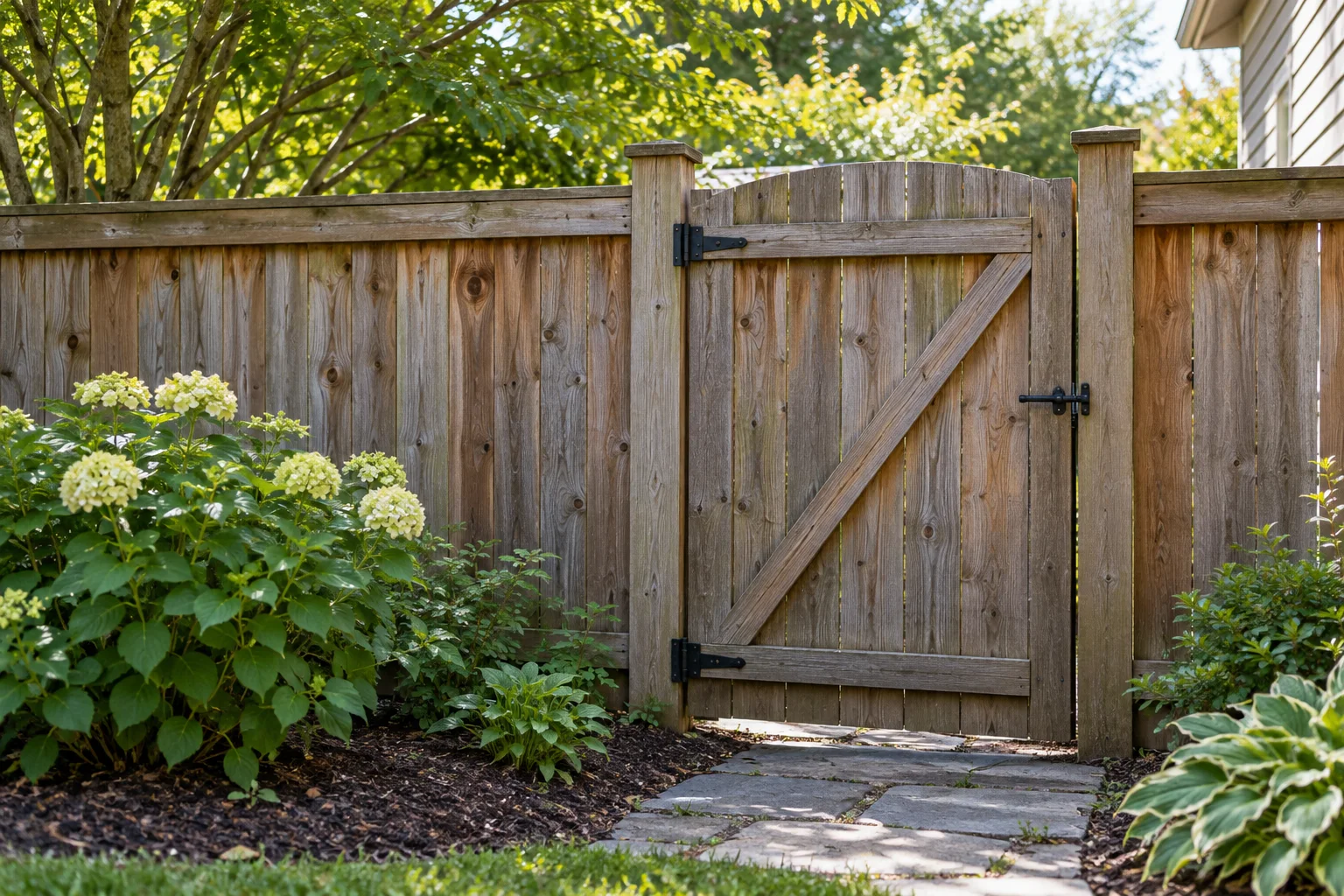
A gate that needs lifting and a fence board that rattles in the wind can seem like two small jobs for the same afternoon. They may be, but the visible symptom does not establish the repair. The condition of posts, rails, hardware and surrounding ground can determine whether a modest repair is appropriate or whether a fence specialist should assess a larger problem.
Good preparation begins from a safe distance and with a clear description. Identify what has changed, which parts appear affected and what the fence or gate is meant to do. A decorative garden boundary, a shared property fence and a pool enclosure carry different responsibilities. The right scope respects those differences before anyone orders boards or replaces a latch.
Describe the fence as an assembly
Give the provider an overview of the fence material, approximate age if known and the length of the affected area. Include photographs showing the whole section as well as close views of visible damage. A single loose board may be the immediate concern, but the wider view helps explain how it connects to the rest of the fence.
Name the parts only where you are confident. It is fine to describe a horizontal member or the upright beside the gate rather than guessing a technical term. Say whether something is cracked, leaning, missing or visibly detached. The provider can translate the observation into a repair assessment.
Mention when the problem appeared. Storm damage, an impact, gradual movement and a recurring seasonal issue have different histories. If previous repairs have been made, explain what was done and whether it lasted. Photographs from earlier seasons can be useful if the change is difficult to describe.
Do not push, pull or climb a damaged fence to demonstrate its movement. Keep people and pets away from unstable sections and seek appropriate prompt help where failure could cause injury or loss of containment. A routine quote request should clearly state any immediate concern.
Separate gate symptoms from fence symptoms
For a gate, describe the complete normal movement. Does it drag on the ground, strike the adjacent post or stop before the latch meets? Does it close but fail to remain latched? These observations help the provider understand whether the request concerns hardware, alignment, supporting components or more than one issue.
Record whether the problem changes with weather or season. You do not need to diagnose ground movement or material changes. Simply explain the pattern. A repair that alters the gate permanently should be based on assessment rather than an assumption drawn from one difficult day.
Photograph the hinges and latch from accessible positions. Include any manufacturer marking and existing instructions if available. A replacement should suit the actual gate, its weight and use, not merely resemble the old hardware. Product compatibility is especially important for specialized closing or latching systems.
D&D Technologies' gate maintenance guidance considers posts, hinges, alignment and latch function together. That is a useful way to frame the request: the gate is a system. A new latch alone may not solve a problem caused by the way the gate is supported or moves.
Identify the fence's purpose and responsibilities
Explain whether the fence provides privacy, marks a boundary, contains pets or forms part of a required enclosure. The provider needs to know which functions must be maintained while work is underway and after it is complete. A gap that is visually minor may matter greatly to a household with a small dog.
For a pool enclosure, seek specific advice from the municipality and an appropriately qualified provider. Ottawa has a separate pool enclosure framework, and an ordinary fence repair conversation should not be treated as a compliance assessment. Confirm what requirements apply to the proposed work and how the enclosure remains effective throughout it.
Do not disable a self-closing or latching feature to make a gate easier to use. If such a feature is required or part of the product's safety function, have the actual problem assessed. Convenience should be achieved through a suitable repair, not by removing an essential part of the system.
If the fence is shared or near a property line, establish ownership and permission before work starts. A provider should not be asked to settle a boundary disagreement through installation. Obtain the relevant records or advice and agree how neighbours will be informed where access or shared components are involved.
Check local rules without assuming every repair is exempt
Municipal requirements can differ according to the fence's location, height, purpose and the extent of the proposed change. Ottawa's fence information addresses maintenance and repair standards, while pool enclosures have additional requirements. Consult the current municipal guidance for the actual project rather than relying on a neighbour's older experience.
Ask whether the work is a like-for-like component repair or a change to the fence arrangement. Replacing a damaged piece can be different from moving a gate, changing height or rebuilding a section. Describe the intended change accurately when asking the municipality or provider about permissions.
If access from neighbouring land is needed, arrange it appropriately in advance. Do not assume a contractor can enter because the repair benefits both properties. Clear communication about timing, plants and cleanup helps avoid conflict, but it does not replace any required permission or formal process.
Keep approvals and relevant correspondence with the scope. This is particularly useful in a condominium or property with shared outdoor maintenance responsibilities. The person paying for the repair and the person authorized to approve it may not be the same, and the provider needs that distinction resolved.
Recognize when a small repair needs a broader assessment
A loose decorative board may be a contained task when the surrounding structure is sound. A leaning post, deteriorated support or repeated gate sag deserves a wider look. Ask the provider to explain what they have assessed and why the proposed repair is suitable for the condition.
Avoid asking for the cheapest visible fix without considering what it attaches to. New hardware on a damaged supporting component may not provide the desired result. The provider may recommend replacing another part first or referring the job to a fence specialist. That recommendation should come with a clear explanation.
Excavation, post replacement and work near buried services require planning beyond surface carpentry. Do not dig exploratory holes or attempt to locate utilities yourself. Have the appropriate provider manage the required assessment and locate process before any ground disturbance is proposed.
Retaining structures, elevated guards and other safety critical assemblies should not be casually grouped with ordinary garden fencing. If the structure serves one of those purposes, say so at the outset and seek the right professional. Similar materials do not make the scope or requirements interchangeable.
Decide how closely new materials should match
A new board may differ from weathered neighbours in colour and texture even when it is the same general material. Ask what matching is possible and whether the difference will remain visible. A local repair can be perfectly functional without being visually seamless, but that expectation should be agreed.
Provide details of existing stain, paint or manufactured components if known. A matching colour name may not recreate an aged surface. If appearance matters, discuss samples or a broader finishing area rather than assuming a small replacement will blend immediately.
For vinyl, metal or composite systems, exact profiles and connectors can be important. A generic substitute may not fit or perform as intended. The provider may need to identify the original system or contact a supplier. Allow time for that process before expecting a firm installation date.
Finishing may need a separate stage with product-specific preparation and conditions. Ask whether the repair quote includes it and when it can occur. A repaired fence that is ready for later finishing is a different endpoint from a fully finished section, and both can be reasonable when clearly described.
Plan around gardens, access and the weather
Photograph planting beds, irrigation components and narrow access routes near the work. Tell the provider about anything fragile or difficult to move. A fence repair behind a dense border may require more careful access planning than the same repair beside an open lawn.
Discuss what you should clear before the visit. Move portable pots and garden furniture where safe, but do not cut plants or remove attached items without understanding the plan. The provider should explain how access can be created without unnecessary disturbance.
Weather can affect assessment, work and finishing. Ask how delays will be handled and which parts depend on suitable conditions. A realistic schedule may include a repair visit followed by finishing later. Do not pressure a provider to apply a product outside its instructions simply because the work is outdoors and the day is booked.
Keep pets and children away from the work area, and arrange temporary management if the boundary will be open. Discuss this before removal begins. A temporary arrangement must suit the actual containment need; it should not be improvised after the old gate is off its hinges.
Give the provider a repair brief they can price
Combine the photographs, history and desired result in one message. Identify the affected section on a simple sketch if the property has several fences or gates. State whether the priority is restoring operation, replacing visible damage or achieving a broader appearance improvement.
Include the following points:
- Fence and gate locations, materials and approximate affected dimensions.
- Visible damage, movement symptoms and the history of the problem.
- The fence's purpose, including any pool or other special role.
- Ownership, permissions and access from adjacent property.
- Known product details and expectations for matching or finishing.
- Removal, disposal, garden protection and temporary containment needs.
Ask what remains conditional on inspection. A provider may be able to quote a board replacement from photographs but need to assess a post or gate onsite. Separate the assessment from an assumed repair price so neither party is committed to a solution before the condition is understood.
Compare proposals by the work included. One may replace a damaged component and another may address supporting deterioration as well. Ask why the scopes differ. The cheapest total is not necessarily the best value if it leaves the reason for failure untouched, but a larger scope should also be justified.
Agree on discoveries and the decision process
Outdoor repairs can expose conditions that were not visible before work began. Decide who can authorize changes and how the provider will communicate them. A photograph, explanation and revised scope can make the decision reviewable even if you are not standing beside the fence.
Set a clear boundary on unapproved work. This need not be adversarial; it simply ensures that a small repair does not become a reconstruction by assumption. If a component cannot safely be left partly dismantled, discuss the temporary plan and responsibilities before starting.
Ask who supplies materials and handles returns. Owner purchased boards or hardware should be confirmed as suitable before the visit. A mismatched part can leave the gate unusable while a replacement is sourced. Keeping the supply responsibility explicit helps avoid that gap.
Retain any product instructions and warranty information. A gate latch or hinge may have particular care or checking requirements. The installer should identify what applies to the actual component, especially where its closing or latching behaviour serves an important function.
Think about deliveries and everyday passage
A repaired gate should still accommodate the things that normally pass through it. Tell the provider if the opening serves bicycles, waste bins, a lawn mower or occasional furniture deliveries. Hardware projection and the normal open position can affect that use even when the gate closes neatly.
If a repair proposal changes the opening or swing, review those consequences before approval. You may need access from both sides while carrying something, or a way to keep the route available during garden maintenance. Describe those needs as functional requirements, while preserving any required closing and latching features. This helps avoid solving the visible defect at the expense of an everyday task.
Review normal operation and the surrounding area
At handover, ask the provider to demonstrate ordinary gate movement and latching. Review the repaired section visually without climbing or applying improvised loads. If a compliance inspection or specialist sign-off is required, treat that as a separate necessary stage rather than substituting a homeowner walkthrough.
Check that agreed debris has been removed and that access routes and nearby gardens have been left as arranged. Discuss any remaining finish work or material differences while the provider can explain them. A clear remaining-task list is better than an assumption that someone will return later.
Record the repaired locations and installed parts. If movement or failure returns, that history will help the next assessment. Follow manufacturer care guidance and seek advice when operation changes. A recurring latch problem should not become a habit of propping, tying or forcing the gate.
For planning several household repairs, the handyman visit guide helps distinguish ready work from assessments. The door repair guide offers a useful model for describing movement problems. Cody's handyman service currently remains a waitlist while a partner is recruited. A well documented fence or gate concern will help you seek the appropriate available help and keep the proposed repair focused on both function and condition.