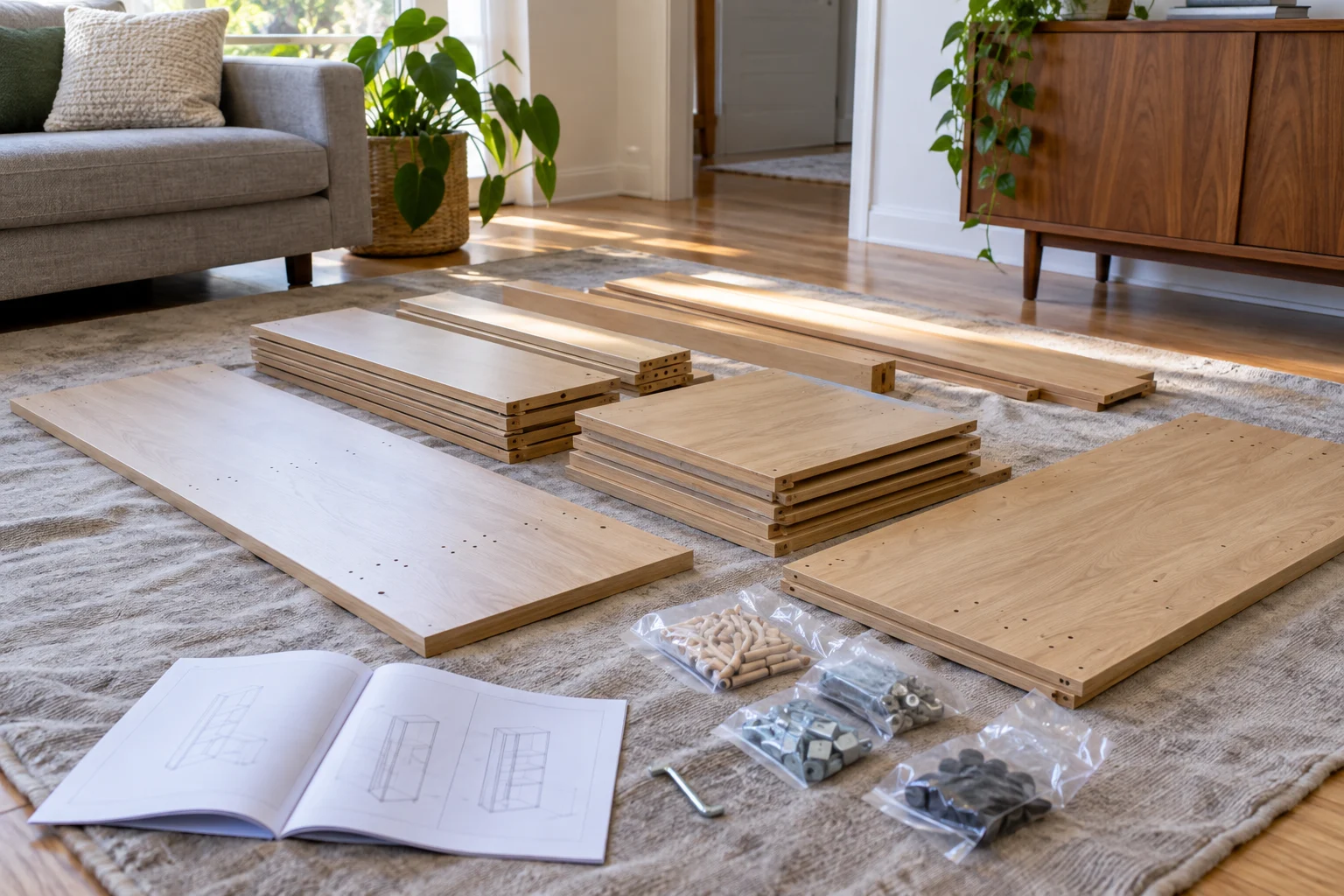
The small jobs around a home have a way of becoming background noise. A cupboard never quite closes, a shelf stays in its box, a door catches and a patch on the wall keeps waiting for paint. Each job seems too small to organize help for, until the list itself starts to feel large.
A handyman visit can be a practical way to address that list, but the quality of the plan matters. A request for “a few bits and pieces” leaves the provider guessing about tools, materials, time and whether the work is suitable. A clearer brief makes it easier to get a useful quote and a satisfying result. This guide helps you turn a collection of unfinished tasks into a manageable visit. It covers preparation, priorities and expectations rather than teaching repair techniques or assuming one person can take on every kind of work in a house.
Walk through the home and describe the symptoms
Take a room-by-room walk with a notebook or your phone. Record what you notice in ordinary language. “The door rubs at the top corner” tells a provider more than “fix door,” while “the cabinet closes but the fronts are uneven” describes a different problem from a broken hinge.
Separate the symptom from your guess about the solution. You may think a door needs replacing, but the first useful step could be an assessment. Conversely, a task that looks like a quick adjustment may involve damaged components. Give the provider room to make that distinction.
Use photographs thoughtfully. Include one wide view for context and a closer image of the concern. For a mounting job, show the intended wall and the item. For furniture assembly, keep the model name or product link. A collection of close-ups without scale can be surprisingly difficult to interpret.
Mark anything that is changing or worsening. A cosmetic blemish is not the same as active water damage, unusual movement or an electrical concern. Do not fold a potentially urgent problem into a general list of convenient improvements. The request should help identify what can be handled as routine work and what needs a separate specialist assessment.
Sort the list into jobs, decisions and questions
Not every item on a household list is ready to be scheduled. “Install these shelves” may be a job if the shelves, location and dimensions are settled. “Make this corner more useful” is still a design decision. “Why is this area damp?” is an assessment question.
Create three groups. Put clearly defined work in the first, choices you still need to make in the second, and concerns that need advice in the third. This prevents an appointment from being consumed by shopping decisions or discoveries that should have been discussed earlier.
It also helps you avoid buying materials too soon. If the hardware compatibility is uncertain, ask what information is needed before ordering. A product that looks right online may not suit the existing door, wall or available space.
You can still request help with unresolved items. Just describe them honestly as questions rather than settled instructions. The provider may be able to assess them, recommend a next step or explain that another trade is more appropriate. The aim is to make uncertainty visible, not to pretend every project is ready merely because you would like it finished.
Prioritize by usefulness, then by convenience
Choose the tasks that would make the biggest difference to everyday life. A frequently used door or a storage solution may deserve priority over a minor paint mark in a room you rarely use. Safety-related concerns should be assessed appropriately rather than simply placed first in an ordinary handyman queue.
Number the routine tasks in order of importance. This helps if the available visit is shorter than the entire list requires, or if one task turns out to need further assessment. It also gives the provider a basis for recommending a sensible sequence.
Then look for practical groupings. Several mounting tasks may share preparation needs. Hardware adjustments in one part of the house may be easier to organize together. Wet finishing work can involve drying time, which may change the order or require another visit. Grouping should improve the work, not create a promise that any number of tasks will fit into one afternoon.
Be clear about deadlines. Tell the provider if a bed must be assembled before guests arrive or a room will become inaccessible during another project. A real deadline can shape the plan. A vague hope that everything will happen immediately usually creates more uncertainty than it removes.
Understand the boundary between general work and specialist trades
A broad service menu does not mean every job is suitable for every operator. Ask directly about the work you need and the qualifications, equipment or other arrangements it requires. A good provider should be comfortable identifying their limits.
For electrical work in Ontario, the Electrical Safety Authority directs customers hiring that work to a Licensed Electrical Contractor. Its public resources let homeowners find or verify contractors. Do not assume that a general repair service or someone describing themselves as handy has the necessary authorization for electrical work.
Other projects can also require a different specialist or a more detailed assessment. Structural changes, major plumbing, hazardous materials and significant building defects should not be treated as routine additions to a small-job appointment. Describe the concern and ask who is appropriate to assess it.
This boundary protects the usefulness of the handyman service itself. Someone who is excellent at furniture assembly, doors or finishing repairs does not need to offer every trade to provide real value. Your job as the customer is to explain the work accurately and verify the proposed arrangement, rather than choosing solely on the promise that one visit will solve everything.
Match the materials to the actual task
Before the appointment, agree on who supplies parts and materials. A customer-supplied product, a provider-supplied fitting and an allowance for uncertain materials are different arrangements. Each should be clear in the quote.
For assembly, share the exact model and confirm whether all boxes have arrived. For a hardware change, identify the product you want and the existing setup. For painting or patching, explain the finish you expect and whether you already have matching paint. A leftover tin can be helpful information, but it does not automatically guarantee an invisible match.
Ask what happens if something is missing or unsuitable. Will the work pause? Can sourcing be arranged, and at what cost? Should you keep packaging and return information until compatibility is confirmed? These small decisions can prevent the appointment from turning into an unexpected shopping trip.
Do not judge the job only by the cost of the visible part. Preparation, assessment, fitting and cleanup all take time. A simple-looking item can still require careful work to suit the surface and intended use. A clear material plan supports a better quotation and reduces avoidable interruptions on the day.
Treat wall mounting as a complete project
Hanging a mirror, mounting a television and fitting a shelf all involve more than choosing a height. The item’s weight, the wall construction, the intended use and suitable fixing locations matter. Share the product details and ask for the mounting approach to be assessed.
Decide on the location with the people who use the room. Tape or a paper outline can help you think about scale without committing to holes, provided you use materials appropriate for the finish. You do not need to determine the technical fixing method yourself. You do need to make clear where the item is intended to go.
Explain anything unusual about the wall, such as a previous repair or an unknown construction. Mention existing services or fixtures nearby. The installer should assess the situation before drilling rather than relying on a photograph alone.
For safety-related installations such as grab bars or handrails, the assessment is especially important. Do not treat a familiar-looking accessory as automatically suitable for any surface. Product requirements and supporting construction need to be considered. A request expresses what you need; it does not establish that the location is appropriate until the installer has reviewed it.
Allow finishing work the time it needs
A small hole can be quick to describe but still involve several stages of preparation and finishing. Likewise, paint, filler or sealant may need time between steps. Ask whether the proposed result can be achieved in one visit or requires a return appointment.
Be specific about the desired finish. Is the aim to make an area serviceable, prepare it for painting, or complete the visible finish? Those are different scopes. A patch that is ready for paint should not be compared with an expectation of a fully finished wall unless painting was included.
Discuss matching honestly. Existing colours, textures and materials can be difficult to reproduce precisely, particularly when surfaces have aged. Ask what the provider expects to be possible and what alternative scope might create a more consistent result.
If damage has an unresolved cause, address that before focusing on appearance. Repeatedly covering a mark is not a plan for a continuing leak or movement. The provider should be told what you know, and the appropriate problem should be assessed before cosmetic work proceeds. Clear expectations about the sequence help you avoid paying for a finish that needs to be disturbed again.
Compare the whole quote, including minimums
A useful quote describes the tasks, labour, materials and any assumptions. It should make clear whether the price is for a defined result or based on time. If there is a minimum visit charge, understand how it applies to the list you have submitted.
For example, Handyman Ottawa publishes an hourly range of $100–$145 with a two-hour minimum and states a $200 minimum visit. Its smaller job examples therefore cannot always be treated as standalone callout prices. This is a provider-specific comparison, not Cody Mobile pricing, and it illustrates why the headline number needs context.
Ask how additional work is approved. If an unexpected condition is found, there should be a conversation about the revised scope before it becomes a surprise on the bill. Confirm taxes, material sourcing, disposal and any return visits that are part of the proposed arrangement.
A longer list does not automatically mean a discount, and a low hourly rate does not establish the total cost. The useful comparison is a clear proposal for the same work at an appropriate standard. Your photographs, measurements and priority list give providers a better chance of quoting on that basis.
Prepare a workspace that lets the visit stay focused
Clear access to the agreed areas and remove fragile or personal items nearby. For furniture assembly, have the boxes in the agreed location if you can safely arrange that. For a closet or cabinet adjustment, empty the relevant area when asked so the provider can assess and work without sorting your belongings.
Agree on responsibility for moving heavy furniture. Do not assume it is included in a repair visit, and do not injure yourself trying to create access. Explain the situation so the provider can plan the right arrangement or revise the scope.
Decide how pets and children will be kept clear of the workspace. Tools, packaging and unfinished assemblies can make an ordinary room temporarily unsuitable for normal use. A practical arrangement reduces interruptions and makes it easier for everyone to move around the home.
Have the written list, product information and any agreed materials ready. If you will be away during part of the visit, establish how decisions will be made and who can authorize changes. A few minutes of organization can preserve the appointment for the actual work rather than a series of searches, calls and preventable delays.
Close the visit with a useful handover
Review the completed tasks together where possible. Operate the adjusted door, look at the agreed finish and ask about any work that remains. Keep the review tied to the original scope rather than adding a fresh list of jobs as the provider is packing up.
Ask about curing or drying time, load limits and any product-specific care instructions relevant to the work. Do not assume that a mounted item, repaired surface or newly sealed joint should immediately be used in every ordinary way. The provider should explain the appropriate handover for what they have done.
Retain receipts, product information and the final list. These records help if a question arises later and make the next visit easier to organize. Note any recommendations for specialist attention or parts that must be ordered, with a clear next step rather than an indefinite reminder to “deal with it.”
Cody Mobile is currently looking for a local handyman partner. The service menu lets you register interest in tasks such as assembly, mounting, doors, storage and finishing repairs. Join the waitlist with a useful description of your priorities. When a partner is available, they will review suitability and confirm the work, price and timing before an appointment is agreed.