The boxes have arrived, the room is almost ready, and the picture on the website makes the finished furniture look wonderfully straightforward. Then you notice that there are several packages, a bag of fittings and an instruction booklet with more steps than expected. Hiring help can make the job easier, but a little preparation still makes a substantial difference.
A useful assembly appointment begins before anyone opens a toolbox. The assembler needs to know the exact product, whether all the parts have arrived, where the furniture will go and whether installation includes fixing it to a wall. This guide walks through those decisions so you can prepare the space, request a meaningful quote and recognize what a properly completed handover should include.
Identify the exact product rather than a general description
“Build a wardrobe” can describe many different jobs. A small freestanding cabinet, a modular storage system and a tall unit that must be attached to a wall involve different instructions and requirements. Send the manufacturer, product name, model or article number and a link to the exact item when asking for help.
Include the version and quantity. Two similar-looking products can use different fittings, and an older model may not match the instructions currently displayed for a replacement range. If the furniture is second-hand, photograph the label, the pieces and any instructions supplied with it. Say clearly if the item has previously been assembled or partly dismantled.
List accessories too. Doors, drawers, shelves and internal organizers may arrive in separate packages and add meaningful work. A quote based only on the main frame may not include all of them. The better your product description, the easier it is for the assembler to judge time, staffing and equipment without guessing from a single promotional photograph.
Check delivery before treating the appointment as ready
Use the order confirmation and package labels to check that the full delivery has arrived. Some products are split across several cartons, and an accessory may ship separately. A room containing large boxes can look complete even when the fittings or one essential panel are still in transit.
Inspect the packaging for obvious damage and follow the retailer's process for reporting concerns. If you open cartons, keep labels and parts organized so the contents remain identifiable. Do not discard protective packaging or mix fittings from several products before the assembler has checked the work. A small amount of organization can save a long search for a missing component.
Tell the provider if delivery is uncertain. Agree on a realistic booking arrangement rather than promising that the furniture will “probably be here.” Ask what happens if the appointment cannot proceed because a component is missing or damaged. A clear rescheduling policy is more useful than hoping the assembler can somehow complete the product without the parts its instructions require.
Find the instructions before the visit
Locate the manufacturer's assembly instructions and keep them with the product. If the booklet is missing, use the manufacturer's official support or product page to find the correct version. Match the model and configuration carefully rather than relying on a similar-looking set of pictures found elsewhere online.
The instructions help identify requirements that may not be obvious from the finished photograph. Some products need two people, a particular assembly orientation or additional installation steps. For example, IKEA's published guidance for a specific PAX frame states that two people are needed and that the frame must be secured to the wall. Those are requirements for that product, not assumptions to apply blindly to every wardrobe.
Share the instructions with the provider before the appointment if possible. This lets them flag questions about space, access or wall fixing early. You are not expected to memorize the sequence yourself. Your contribution is to make sure the correct information is available so the job can be planned around the actual product rather than an improvised interpretation.
Decide where the furniture will live
Confirm the final position before assembly begins. Think about the footprint, opening doors and drawers, access to sockets, room circulation and nearby furniture. A unit may physically fit against a wall while still preventing a door from opening comfortably or making a narrow passage difficult to use.
Measure the relevant space and compare it with the product's stated dimensions, including any clearances described in the instructions. Check skirting boards, sloping ceilings and other features that can change how the piece sits. Avoid assuming the photograph on the retailer's website shows every space requirement for your particular configuration.
If you are undecided between two positions, discuss that before the visit. Moving a completed piece can be more complicated than moving its unopened boxes, and some installations become fixed to the chosen location. The appointment should not begin with an irreversible placement decision made in a hurry. A few minutes spent considering everyday use can prevent an expensive piece of furniture from becoming an awkward obstacle.
Make room for the work, not only the finished item
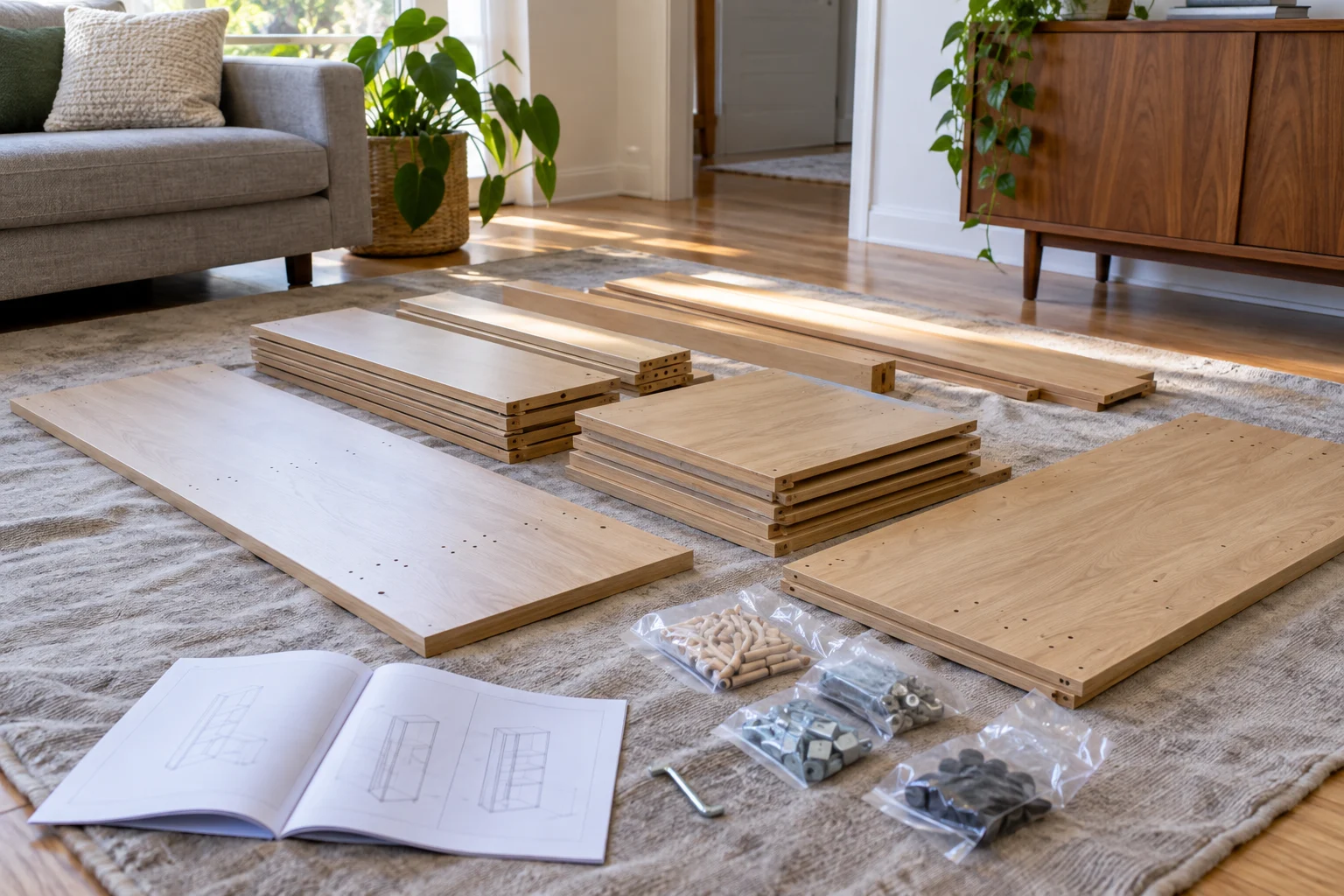
Assembly needs working space around the components. A cabinet that occupies a modest area when complete may need a larger clear floor area while panels and fittings are laid out. Ask the provider what space is required rather than clearing only the final footprint.
Remove fragile objects and belongings from the immediate area, and discuss protection for floors and nearby surfaces. The provider should explain what they bring and what they expect you to supply. A blanket you value highly may not be the right improvised work surface. Keep the plan practical and suited to the room rather than assuming someone will invent suitable protection on arrival.
Consider lighting and access to the work area. A dark corner crowded with boxes makes it harder to identify fittings and inspect finishes. Keep children and pets away from loose hardware and the assembly space. These preparations are not about presenting a spotless home. They give the assembler a controlled area in which parts can be organized and the instructions followed without repeated interruptions.
Clarify who moves boxes and completed pieces
Delivery, carrying and assembly are related but separate tasks. A retailer may leave boxes at the entrance, while your preferred assembly location is upstairs. Do not assume an assembly quote includes carrying heavy packages through the home or moving an existing cabinet out of the way.
Tell the provider where the cartons currently are and describe stairs, narrow turns or other access constraints. Include the package information when available so they can decide whether additional help is required. Avoid attempting a difficult lift yourself simply to make the booking easier. The useful next step is an agreed handling plan, not an injury or damaged wall before the assembler arrives.
If an old piece must be dismantled or removed, list that separately. Explain whether it will be reused, stored, donated or disposed of, because those outcomes involve different care and logistics. Likewise, confirm who places the finished furniture in its final position. A complete description prevents an appointment booked for one construction task from quietly becoming several moving and removal jobs.
Treat wall fixing as part of the product requirements
Some furniture must be secured to a wall according to the manufacturer's instructions. That requirement should be identified before booking, not treated as an optional finishing touch once the piece is standing. IKEA's Canadian guidance emphasizes wall attachment to help prevent furniture tip-over accidents and provides information about obtaining anchoring kits.
Tell the assembler what you know about the wall and share the product instructions. The correct approach depends on both the furniture and the actual mounting surface. Do not prescribe a random fastener because it came in a miscellaneous box or worked elsewhere in the house. If the installer cannot establish a suitable method, the work needs further assessment.
Ask whether required wall fixing is included in the quote, who supplies suitable hardware and how hidden services or other uncertainties will be addressed. If permission is required from a property owner or building manager, arrange it in advance. Furniture that cannot be installed as instructed should not be presented as fully finished and ready for ordinary use. Resolve the limitation before the room is handed back.
Describe second-hand and partly assembled items honestly
Previously used furniture can still be a worthwhile project, but it deserves a different brief from a new boxed product. Fittings may be missing, holes may be worn and parts may have been changed. The assembler needs to know what has already happened to the piece and which components are available.
Take photographs of the whole collection of parts as well as any damaged connection or uncertain fitting. Keep screws and connectors in labelled containers if you know where they belong. If you do not know, say so rather than confidently assigning them to the wrong product. An honest uncertainty is easier to work with than an incorrect instruction.
For a partly assembled item, explain where you stopped and why. Perhaps a drawer will not align, a fitting does not seem to match or a panel appears reversed. The provider may need time to assess or undo earlier work before continuing. Agree on how that assessment is charged and what happens if the furniture cannot be completed reliably with the parts available.
Build a quote around a complete list
Send one organized list containing the exact products, quantities, accessories, package status, final locations and any wall fixing or carrying required. Add the instruction links and photographs that resolve questions. This is more efficient than sending a series of messages that gradually reveals another room, another cabinet and an unexpected staircase.
Ask what the price covers. Is it fixed for the identified product and conditions, estimated by time, or subject to a minimum visit charge? How are missing parts, damaged components and additional requests handled? Does the quote include packaging cleanup, and what does cleanup mean in practice? The goal is to understand the arrangement before the first carton is opened.
If you are comparing providers, give each the same brief. A lower quote may exclude wall fixing or carrying that another includes. A higher quote may reflect two-person work the instructions actually require. Compare scope and readiness as carefully as the total. A well-defined job is easier to price fairly and easier to assess once complete.
Set a sensible order for multiple items
When several pieces are being assembled, decide which ones matter most and which depend on the others. A bed needed that evening may take priority over a hallway console. A storage system may need its frame positioned before doors and internal fittings can be installed. Explain your priorities and let the assembler recommend a practical sequence.
Avoid filling every minute of the appointment with an optimistic list. Some time will be needed to inspect parts, protect the room, organize hardware and review the finished work. If the provider has not assessed a difficult item, leave room for that uncertainty rather than assuming it takes the same time as a simpler piece.
Keep additional requests separate until they have been discussed. “While you are here” can be a reasonable question, but it should not silently expand the agreed visit. The provider may have another customer scheduled or need different tools. A clear priority list makes it easier to decide what can be completed well today and what deserves a separate appointment.
Plan packaging and leftovers before the room fills up
Furniture packaging can occupy more space than expected once several cartons are open. Ask whether the service includes breaking down boxes, gathering protective material or removing it from the property. Those are different levels of cleanup, and building rules or local collection arrangements may affect the practical plan.
Choose a place for materials that will be retained. Instructions, spare fittings and product labels are useful for future adjustments, a move or a warranty enquiry. Keep them together and identify which product they belong to. A bag of unlabelled screws becomes much less useful six months later when you cannot remember which unit it came from.
Do not assume every leftover fitting is proof of a mistake, but do ask for an explanation if you are unsure. Some products include alternatives or spare pieces; others should not have unexplained missing connections. The instructions and the assembler's account should make sense together. This is a useful handover conversation, not an invitation to improvise extra fasteners in places the manufacturer never intended.
Check the finished result before loading it
Review the completed furniture with the assembler. Ask them to demonstrate normal operation of drawers, doors and other moving parts, and discuss any adjustment still needed. Confirm that the installation requirements in the instructions have been addressed and that any unresolved limitation is clearly explained.
Inspect accessible surfaces for damage and compare the result with the agreed scope. If the piece needs time before use because of a product-specific instruction, make sure you understand that guidance. Keep load limits and care instructions available rather than relying on memory. A good handover helps you use the furniture as intended after the tools have gone.
If something is incomplete because of a missing or damaged part, agree on the next step and keep the relevant records. Do not load or use an item that has not been made ready according to its requirements. Cody Mobile's handyman page describes planned assembly and related services, with a waitlist while local partners are being recruited. When service is available, a clear product brief will help turn a room full of boxes into a much more manageable appointment.