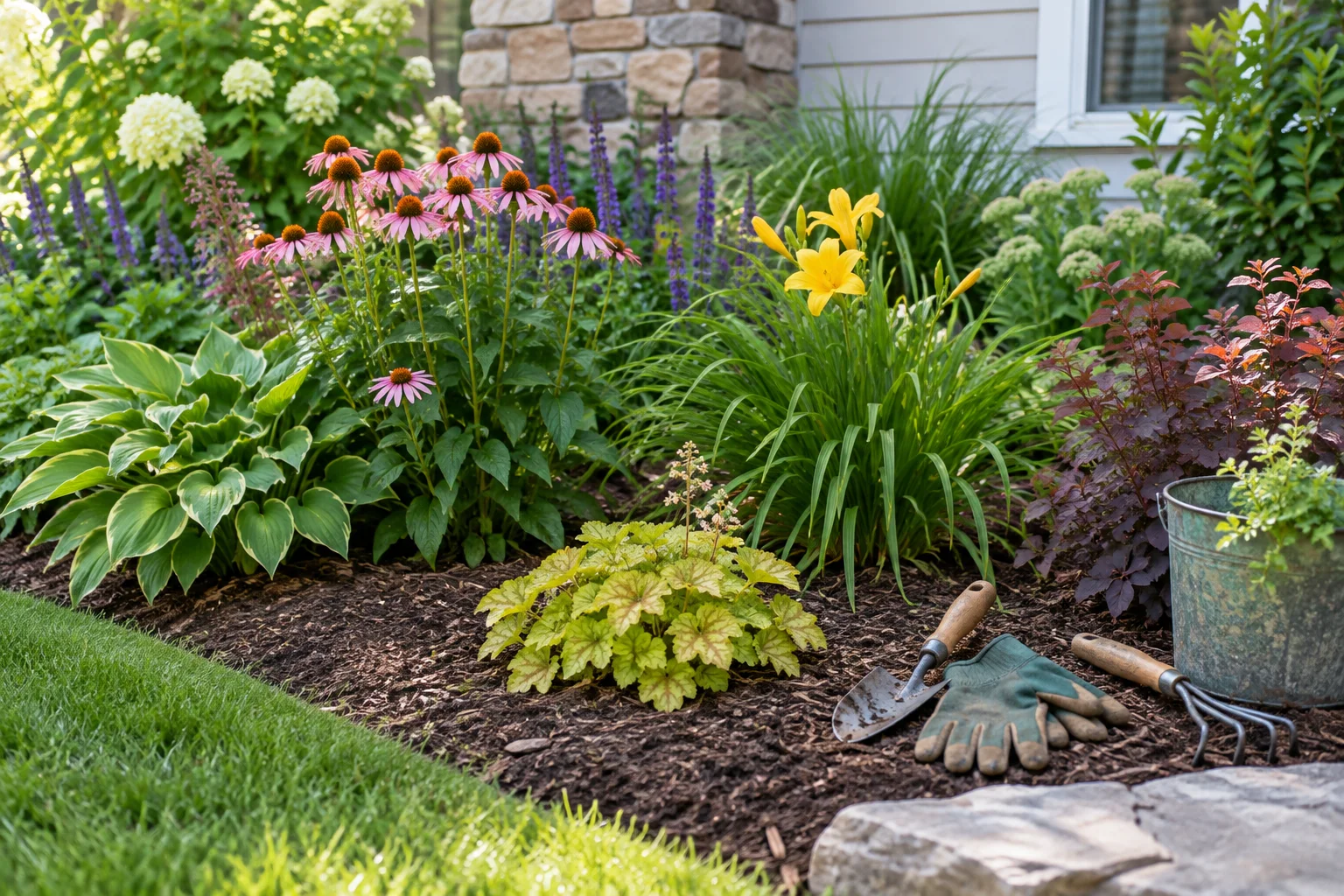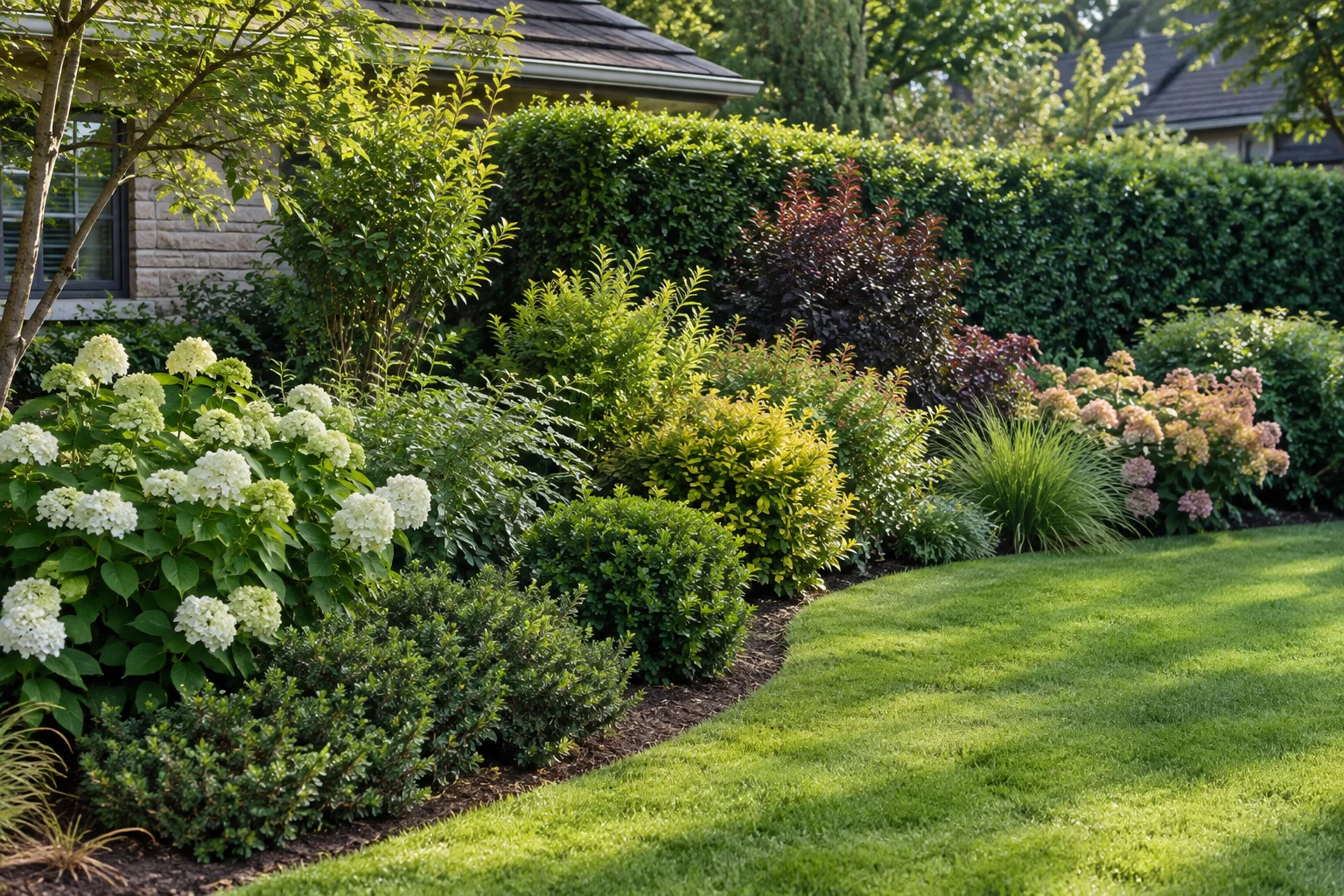
A hedge that needs its outline restored and a flowering shrub that has outgrown a window can look like the same problem: too much growth. Yet the right work may be quite different. One job maintains a continuous surface. The other involves decisions about individual branches, the plant’s natural shape and the flowers you hope to see next season.
Before requesting a general trim, describe what is bothering you and which plants are involved. A useful conversation can prevent an otherwise tidy result from becoming a disappointment. This guide helps you distinguish routine hedge maintenance from selective shrub pruning, prepare a clear brief and decide when the plant needs assessment first.
Begin with the purpose of the plant
Walk around the planting from the places where you actually see it. A hedge beside a patio may provide privacy while a shrub near the front door frames the entrance. The same amount of cutting could improve one and undermine the other. Write down what each planting is meant to do before choosing its finished dimensions.
A formal hedge is usually maintained as a connected shape. You notice its top, sides and continuity more than individual plants. A mixed shrub border works differently. Its appeal may come from separate silhouettes, flowers at different times and the spaces between plants. Asking someone to make every shrub the same height can remove the qualities you originally liked.
Give the service provider a practical outcome: restore access along the path, keep foliage away from the door swing, preserve the screen from the neighbour’s deck or make the planting look less crowded. These statements leave room for a sensible method. They are more useful than saying that everything should be cut back by half.
Identify the plants before deciding on timing
Plant identity matters because shrubs do not all produce buds, regrow or respond to cutting in the same way. A label, nursery invoice or old planting plan can be valuable. If those are missing, take clear photographs of the whole plant, leaves, stems and any flowers. Record when it flowered, even if your memory is approximate.
University of Minnesota Extension explains that pruning timing depends partly on flowering habit. Cutting at the wrong point can remove the buds that would have provided the next display. That does not mean every cut is forbidden outside a single perfect week. It means the reason for pruning and the effect on flowering should be discussed together.
Avoid assuming that all hydrangeas, all conifers or all flowering shrubs share one rule. If the person quoting cannot identify a plant confidently, marking it for later assessment is a reasonable outcome. A delayed decision on one specimen is easier to live with than an irreversible cut based on a guess.
Understand what hedge trimming is trying to achieve
Trimming usually focuses on the outer growth and the appearance of a repeated shape. The practical questions are about height, width, the top line, access and how often that outline needs attention. A hedge can look uneven because the ground slopes, because plants differ in vigour or because previous cuts followed different reference points.
Agree on the visual reference before work begins. Should the top follow the slope, stay level relative to the house or step between sections? From which side will it be judged? Take a photograph from the street and another from the garden. An outline that looks balanced from the patio may appear quite different from the driveway below.
The University of Maryland’s pruning guidance describes a hedge profile that allows light to reach the lower growth, rather than letting a wide top shade a narrow base. Ask how the proposed shape suits the actual species and existing condition. This is especially important when a dense upper section sits above a sparse lower section.
Understand what selective pruning adds
Selective pruning considers individual stems and the structure inside a shrub. The aim might be to remove damaged branches, reduce crowding, restore a natural outline or gradually manage an overgrown plant. The finished shrub may not have the crisp surface of a sheared hedge, and that can be intentional.
Ask the provider to explain the proposed approach using the actual plant. Which branches create the problem? What useful growth will remain? Is the aim achievable in one visit, or would a staged approach be more appropriate? You do not need to approve every cut, but you should understand the scale of change before it happens.
Photographs of a plant you admire can communicate style, provided everyone recognises that your shrub may be a different species or age. Use them to explain a preference for an open, natural or formal appearance. Do not treat them as a promise that an established plant can be transformed into any shape you choose.
Separate size control from a plant in the wrong place
Some maintenance problems begin with a mismatch between mature plant size and available space. If a shrub repeatedly blocks a narrow path, cutting may provide temporary relief while committing you to frequent visits. A discussion about replacement or relocation may be more useful than another increasingly severe reduction.
Measure the space you need to keep usable. Include door openings, bin movement, the route for a wheelbarrow and the view when backing out of a driveway. These functional dimensions are different from the distance between the trunk and the wall. A plant may fit at its base while occupying too much space at shoulder height.
Consider a hypothetical shrub squeezed between a porch and a walkway. The homeowner wants flowers, a clear path and almost no maintenance. Those goals may not all be possible with that specimen. The brief should allow a comparison between careful reduction, accepting some seasonal encroachment and choosing a more suitable plant later.
Be cautious about severe reductions
A hedge that has been allowed to become much wider than intended is not necessarily a candidate for a dramatic one-day reset. Different species tolerate cuts into older growth differently. Bare areas can also have causes that cutting will not address. A neat outline immediately after work does not prove that the long-term result will be healthy or attractive.
Ask for the expected appearance immediately afterwards and over the following growing period. Will stems be visible? Will privacy be reduced? Is regrowth uncertain? If the answer depends on species identification or plant condition, resolve those questions before approving the work. Avoid instructions such as “take as much off as you can.”
For a staged project, agree on what happens between visits. The homeowner may need to observe growth, arrange watering or simply tolerate an unfinished appearance. Put the intended review point in the notes. This helps prevent a different person from arriving later and undoing the plan with a more aggressive trim.
Record existing problems without diagnosing them yourself
Brown patches, broken stems, sparse sections and leaning plants should be photographed before work. Note when you first noticed them and whether they changed suddenly or gradually. Include recent construction, snow storage, unusual watering or physical damage if you know about it. These observations help an assessor without pretending to identify a disease from a photograph.
A useful description is “this section stayed brown after the neighbouring plants began growing.” A less useful one is “the hedge has a fungus and needs cutting.” The second statement turns an uncertain cause into an instruction. It can steer the work away from examining the problem and towards a treatment that may be irrelevant.
If a plant appears unstable, has substantial damaged limbs or requires work above comfortable ground-level access, ask whether a qualified arborist or another specialist should assess it. Routine garden maintenance and complex tree work are different scopes. Confirm who will make that referral rather than assuming it is included in a hedge quote.
Make access part of the quote
The visible length of a hedge is only one part of the job. Its height, depth, position and surrounding surfaces affect how it can be reached and cleaned up. Photograph both sides if access is available. Mention narrow gates, stairs, steep ground, fences, ponds, fragile beds and parked vehicles that restrict the working area.
Check whether the other side is on your property. A neighbour’s garden should not be treated as available workspace without agreement. If access is limited to one side, say so before comparing prices. The resulting method, time and finish may differ from a hedge that can be approached freely along its full length.
Also identify outdoor wiring, lighting, irrigation lines and decorations near the plants. Do not move or disconnect unfamiliar equipment just to make the area look ready. Provide the information and let the provider explain what needs to be cleared, protected or handled by someone else before work proceeds.
Specify the cleanup you expect
Clippings can land in lawn, gravel, garden beds and dense foliage. Cleanup takes different effort on each surface. A quote that includes trimming alone is not directly comparable with one that includes collecting material, bagging it and taking it away. Ask for those tasks to be stated clearly.
Decide whether clean organic material will stay on the property in an appropriate location or leave with the provider. Confirm the destination of larger branches separately. If municipal collection is part of the plan, check current local preparation rules rather than expecting every branch or container to be accepted automatically.
A realistic handover standard might include clear paths, collected visible clippings and an inspection of nearby beds. It need not promise that every tiny leaf fragment will be extracted from an established hedge. Agreeing on a sensible standard helps both sides focus on the parts of cleanup that matter to everyday use.
Give a brief that can be priced consistently
A useful request can be short while still being specific. Divide the property into sections and identify the work required in each. If one plant needs identification, separate that assessment from the sections ready for routine maintenance. This prevents an uncertain specimen from being silently included in a fixed trimming assumption.
Include the following information in your request:
- Photographs showing the whole hedge or shrub and its surroundings.
- Approximate length, height and depth, with units stated consistently.
- The practical problem and the appearance you want to retain.
- Plants or sections that should remain untouched until discussed.
- Access restrictions and the agreed approach to collecting material.
Ask what might change the quote after inspection. A concealed fence, substantial deadwood or a request for a much lower finished height can alter the work. A clear change process is more useful than an apparently precise price built on photographs that do not show the whole planting.
Plan around people, pets and the working area
Choose a day when the area can be kept clear for the agreed work period. Arrange another route to the door if the hedge borders your usual entrance. Move toys, portable planters and furniture when you can do so safely. Let the provider know if pets normally use the garden or if a gate must remain secured.
You do not need to prepare the planting by making preliminary cuts. Removing branches before the assessment can erase useful information or create a shape the provider must then work around. Concentrate on access and communication. Mark plants you want to preserve and point out sentimental specimens, even when they are small or untidy.
If work must stop for weather, access or an unexpected plant concern, agree on how the site will be left. That includes tools, loose material and temporary obstructions. A good plan anticipates an incomplete visit without turning a routine delay into confusion about what has been finished or paid for.
Keep a record of the agreed dimensions
Write the desired height and width beside a photograph, and state where each measurement begins. A hedge on uneven ground can produce conflicting measurements unless everyone uses the same reference. This small record also makes future maintenance more consistent when a different person performs the next visit.
If maintaining privacy is essential, photograph the view through the planting before work. Discuss any section where the requested reduction conflicts with that goal. The photograph provides a shared reference when deciding whether a smaller change or a staged approach is preferable.
Review the result against the original purpose
At handover, walk the route that prompted the work. Does the door open properly? Can you use the path comfortably? Is the privacy screen still serving its purpose? Then look from the agreed viewing points. This sequence keeps the review grounded in the brief rather than in a vague feeling that everything should look identical.
Ask about any sections deliberately left longer and any plants that need later attention. Keep a few photographs and a note of the date, scope and suggested review. The record will help you explain the history next time, especially if the work involved gradual correction rather than routine trimming.
For the wider seasonal picture, see planning your lawn and garden care and the mowing schedule guide. Cody Mobile’s lawn and garden care page describes the planned division. It is not operating yet; homeowners can join the waitlist while local service partners are being recruited.