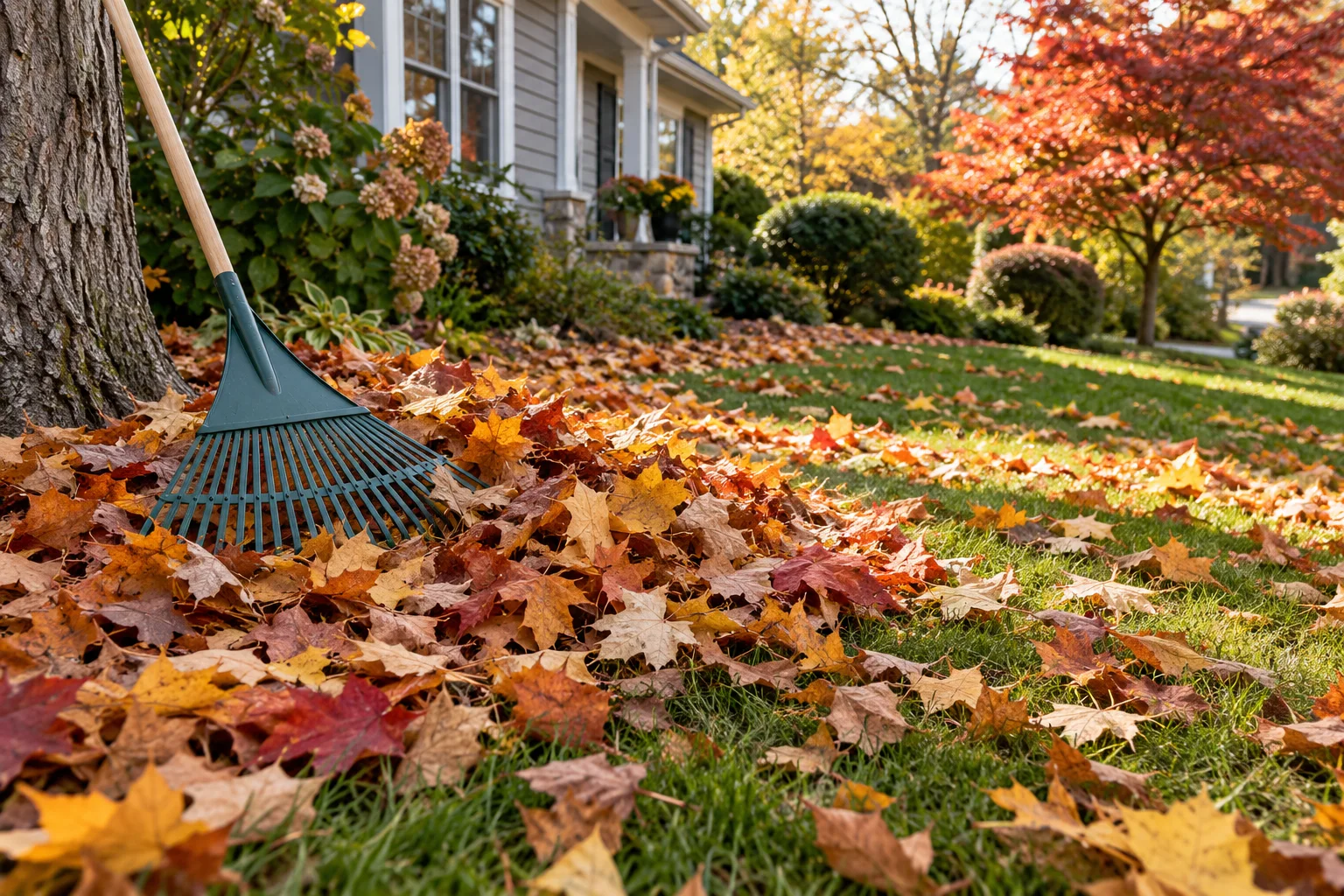
A yard rarely arrives as one tidy job. The grass needs cutting, a hedge is beginning to narrow the path, the beds have lost their edges and there is a pile of last season’s leaves behind the shed. Looking at everything together can make the whole space feel like a project you never have time to finish.
The useful first step is to stop treating it as one project. Lawn care, garden maintenance, hedge trimming and seasonal cleanup solve different problems. Once you separate them, you can choose a manageable starting point and decide what deserves regular attention. This guide is for homeowners who want a yard they can enjoy, whether they like doing some of the work themselves or prefer to arrange help. It focuses on planning and softscaping: the living areas, planting beds, mulch and soil around your home, rather than construction of patios or retaining walls.
Start with how you want to use the space
Before making a task list, picture a normal summer evening in the yard. Perhaps you want a clear place for children to play, a quiet chair beside flowers, or a route from the driveway that does not brush against an overgrown hedge. These everyday uses give the work a purpose.
Write down three priorities in your own language. “A lawn we can use,” “beds that do not look abandoned” and “less weekend maintenance” are all useful goals. They help you decide between improving an existing area and adding something new that will require ongoing care.
Look at the parts of the yard you see most often. The view from the kitchen, the entrance path and the area around your outdoor table may have a greater effect on your enjoyment than a rarely used corner. This is not a rule about where everyone should spend money. It is a way to choose priorities that matter to your household.
If several people use the space, compare preferences before work begins. Someone may value an open play area while someone else hopes for more planting. A shared plan can prevent a well-intended garden improvement from taking away the feature another person uses every day.
Make a simple map of what is already there
You do not need a landscape drawing. A rough sketch with the house, paths, lawn, beds and major shrubs will do. Add notes about sunlight, shade, slopes and access. Mark the places that remain wet, dry out quickly or are difficult to reach with equipment.
Measure the grass area separately from the whole property where you reasonably can. A large lot with a house, driveway and extensive beds may have less mowable lawn than a smaller, mostly open yard. Even an approximate measurement gives a service provider a better starting point than the property’s total size alone.
For planting areas, note what you want to keep. Photograph established plants and mark anything you are unsure about. An unfamiliar plant is not automatically a weed, and a dormant perennial can be easy to overlook during a cleanup. Ask for identification or assessment when the decision matters.
Include practical details: gate width, steps, a narrow passage, outdoor taps and the place where materials can be unloaded. These details affect how the work can be organized. A modest amount of information about the real property often produces a much more useful conversation than a long collection of inspiration photographs without context.
Separate routine care from a one-time reset
Routine care keeps a workable space in shape. A reset deals with accumulated work that has become too much for the normal routine. Mowing a maintained lawn each week is different from recovering an overgrown property, even if both are described as “yard care.”
Create two lists. The first contains recurring tasks such as cutting grass, hand weeding and tidying beds. The second contains the jobs that need a specific assessment, such as reclaiming an edge, refreshing mulch or clearing a neglected area. This helps a provider explain which work can be scheduled regularly and what must happen first.
Think about what you will maintain between visits. If you enjoy planting flowers but dislike mowing, you may want a lawn-care arrangement and occasional help with heavier garden work. If you travel often, you may need a more comprehensive plan with clear responsibilities while you are away.
Do not assume a large initial cleanup removes the need for follow-up. A freshly tidied bed will still need attention, and new planting brings aftercare. Ask what an achievable maintenance routine would look like before choosing the size of the reset. The best plan is one you can live with after the first attractive result.
Make mowing about the lawn, not just the calendar
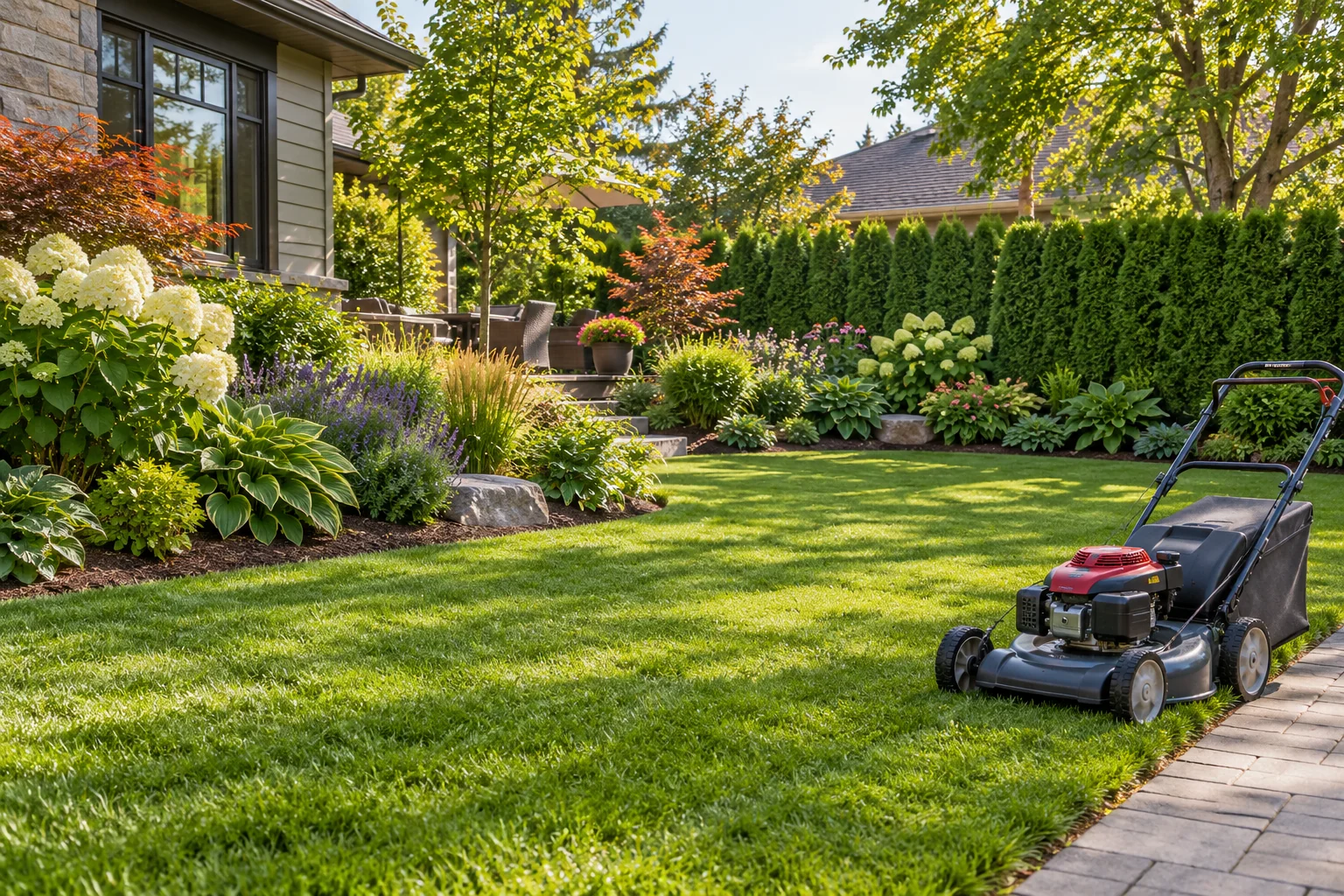
A recurring appointment is useful for organization, but grass growth and conditions still matter. Ask how the provider handles periods when the lawn is growing quickly, when the ground is too wet or when the grass is under stress. A fixed route should still allow appropriate judgement.
University of Minnesota Extension describes the spring-and-fall growth pattern of cool-season grasses and their slower activity during heat and drought. Its calendar is written for Minnesota, not as a schedule to copy directly into an Ottawa yard. The transferable point is that the work should match the plants and local conditions rather than a date alone.
Clarify what “mowing” includes. Edge trimming, work around obstacles, collecting clippings and clearing paths may be separate elements. Ask how clippings will be handled and what happens if toys, pet waste or other items are left in the lawn. Agree on a simple preparation routine that makes each visit efficient.
For recurring care, establish how changes will be communicated. You should know whom to contact when a gate will be locked or a section of the yard is unavailable. A predictable communication habit can be just as valuable as a predictable service day.
Give gardens their own maintenance plan
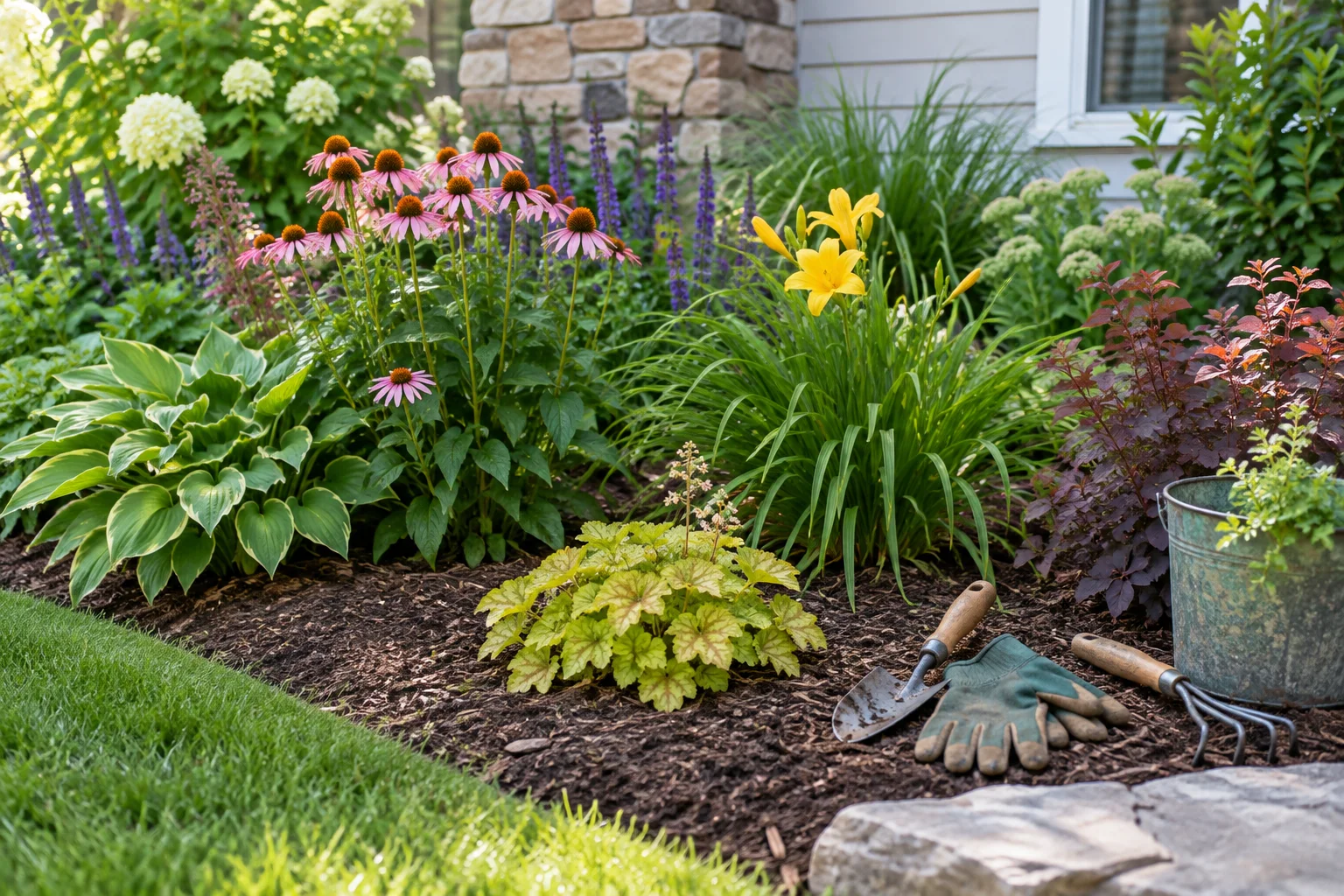
Garden beds are not simply the areas a mower cannot reach. They contain plants with different needs, and a useful maintenance plan identifies what is growing there and what you want from it. Hand weeding, edging, cultivation, planting and seasonal cutbacks should be discussed as distinct tasks.
Start with the existing bed before buying new plants. Which areas are crowded? Where do you consistently see gaps? Is the edge difficult to maintain? Are there plants you like but no longer have time to care for? Those observations can guide a manageable refresh instead of an unnecessary complete replacement.
If you want new planting, talk about the conditions and the care you can realistically provide. An inspiration image can explain the mood you like, but the actual space, light and maintenance commitment should shape the choice. Ask who will source the plants and what happens if a selected variety is unavailable.
You can also divide the work into stages. One bed this season may be more enjoyable than several new areas that all need attention at once. A smaller successful change gives you something to learn from and makes the next decision more informed.
Understand hedge trimming and shrub pruning
A hedge can be valued for a defined outline, privacy or the way it guides movement through a space. A shrub may need attention for a different reason. Describe the result you want rather than asking for every plant to be cut back by the same amount.
For a hedge, provide its approximate length and height, the sides that need work and any access restrictions. Mention whether one side faces a neighbour’s property or a public route. The provider needs to assess what can be reached and what permissions or arrangements may be necessary.
For individual shrubs, explain your concern: encroachment on a path, an awkward shape or uncertainty about the right seasonal work. The plant’s identity and condition matter. Trimming for appearance and selective pruning are not interchangeable instructions, so ask for an appropriate plan rather than specifying a dramatic cut solely for convenience.
Keep major tree work and work near overhead wires outside an ordinary garden-maintenance request. Describe it separately so the right specialist can be identified. For the work that is accepted, include cleanup and disposal in the quote. A freshly shaped hedge is only part of the result if a large pile of cut material is left for you to manage unexpectedly.
Choose lawn treatments after identifying the problem
Aeration, dethatching, overseeding and topdressing are often grouped together in service menus. They are different interventions. Before selecting several at once, ask what problem each is intended to address on your property.
Core aeration is commonly discussed in relation to compaction. Dethatching addresses an excessive thatch layer. Overseeding introduces seed into an existing lawn, while topdressing adds a suitable material over the surface. These short descriptions help you ask questions; they do not establish that your lawn needs all four.
Describe what you have noticed and when it happens. Is the area thin after heavy use, difficult to keep growing under trees, or persistently wet? A treatment chosen without understanding the conditions may not address the underlying issue. Ask whether an assessment or soil information would change the recommendation.
Also ask what you must do afterwards. Seed, for example, introduces an aftercare commitment that should fit your availability and the conditions. A service that looks attractive on a price list may be poorly timed if you will be away and cannot arrange the necessary care. The sensible purchase is an appropriate plan you can support, not the longest list of treatments.
Plan mulch, soil and waste before delivery day
Bulk materials bring practical questions that do not appear in a photograph of the finished garden. Where will the delivery go? How will it reach the beds? Is the route narrow, sloped or stepped? What preparation must happen before it is spread?
For mulch, agree on the material, the areas to receive it and who supplies it. Ask how the quantity will be estimated and whether bed preparation is included. Avoid ordering solely from the visual size of a garden without discussing the intended application and existing conditions.
The same planning applies to soil and plant deliveries. Establish what is included in the quote and how substitutions or extra material would be approved. Clear arrangements can avoid a situation where the installer arrives but the selected materials are not there, or a delivery occupies the driveway longer than expected.
Waste deserves equal attention. Bagging for curbside collection, leaving a compostable pile on site and taking material away are different scopes. Tell the provider what you prefer and confirm the applicable collection or disposal arrangements. A job can be well executed and still feel unfinished if nobody agreed on where the removed material would end up.
Read pricing in the right units
Outdoor-care prices can describe a visit, an hour, a season or a specific quantity of work. Compare the units before comparing the numbers. A seasonal mowing total cannot be set beside a one-time cut as if they are competing prices for the same appointment.
Published Ottawa examples illustrate the difference. Lawn & Order lists individual mowing from $40 before tax, with trimming and blowing, while Maki’s lists a May-through-October mowing programme starting at $860 plus HST for lawns under 2,000 square feet. Those are separate providers and scopes, not Cody Mobile prices or a promise about your property.
For garden work, a starting price may say little about bed area, overgrowth, material quantities or disposal. A useful quote names those variables and explains whether the work is hourly or priced for an agreed result. Ask how changes will be handled if the site differs from the description.
Set priorities alongside the budget. You might choose regular grass cutting first, then a hedge trim and one garden refresh. That can be more manageable than ordering every service together. The objective is to create a clear plan for what you can maintain and enjoy, with an understandable cost attached.
Build a seasonal checklist you can actually use
A good checklist is short enough to revisit. Divide it into the next necessary visit, recurring care and future improvements. Name the areas of the yard and the desired result, and keep any supporting photographs with it. Update the list as you learn what works.
At the end of a visit, review the agreed scope and ask about follow-up care. Note any areas that need another assessment rather than automatically adding them to the next routine appointment. If work was postponed because of conditions, clarify the next step and who will contact whom.
At the end of the season, look back at how you used the yard. Which changes made daily life easier? What required more attention than expected? What did you never get around to using? Those observations are valuable input for the following year and can help you avoid spending on a space that looks attractive but does not fit your household.
Cody Mobile is recruiting lawn-and-garden partners. You can join the waitlist and identify the work that interests you, from regular grass cutting to softscaping and seasonal cleanup. When a local partner is ready, they will review the property, confirm suitable services and agree on the scope, price and timing with you.