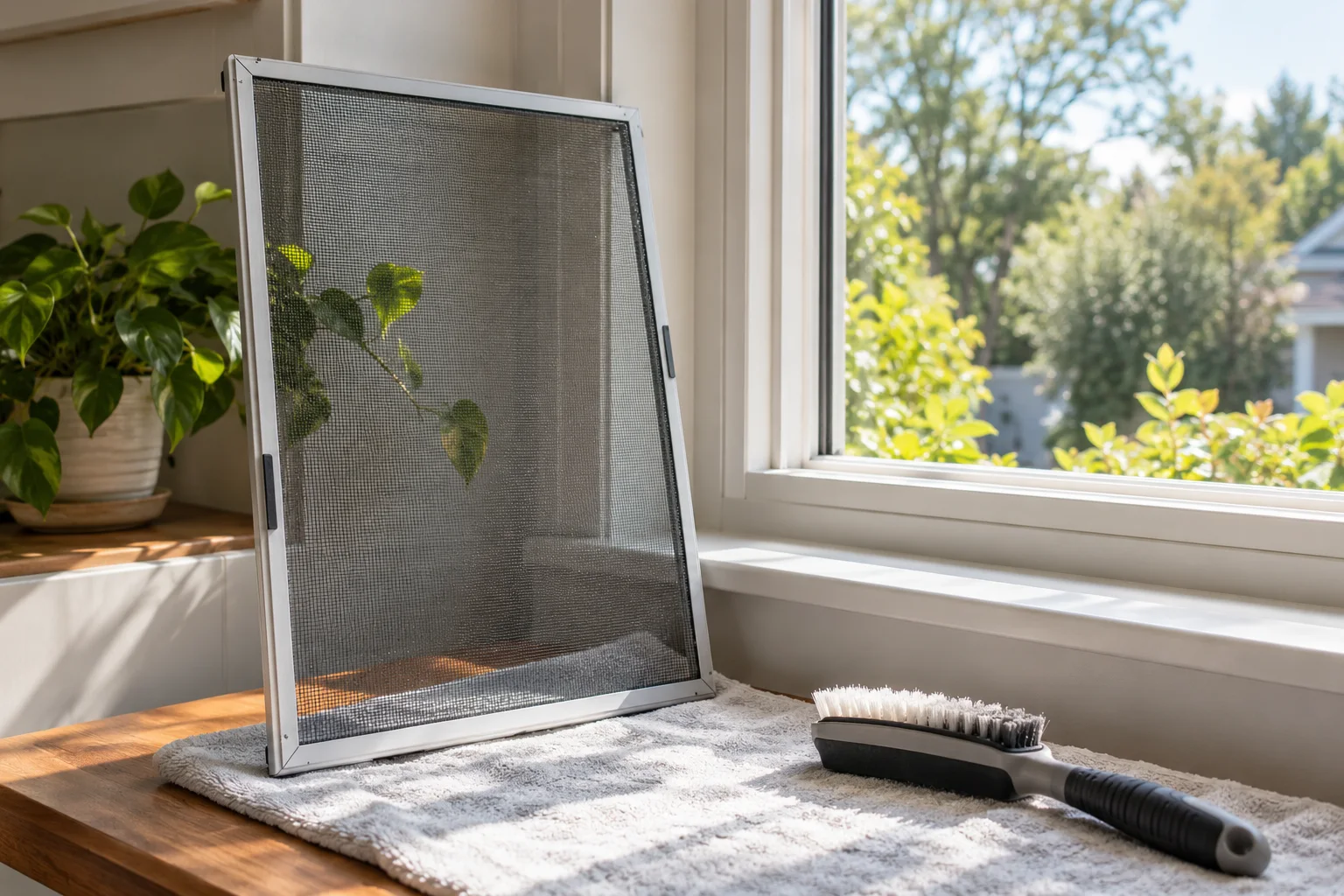
A window can look clear from across the room while the parts you touch every day still feel neglected. Dust collects in a sliding track. A screen carries last summer’s pollen. The frame around the glass has fingerprints, a muddy splash or the marks left by a visiting dog. When those details matter, a glass-only appointment may leave you disappointed even when the glass itself is well cleaned.
The useful starting point is to describe the whole window as several connected components. Each has a purpose, a material and a condition worth understanding. You do not need to become a window technician. You only need a clear picture of what you want attended to, what should be assessed first and what belongs with a repair specialist.
Give each component a name
For planning purposes, separate the glass, removable insect screen, frame, sill, track and operating hardware. Some windows have all of these in obvious places; others have fixed glass or a different opening arrangement. A photograph can settle terminology more quickly than a long exchange about the “bottom bit.”
Stand at a comfortably accessible window and take one picture of the whole opening, followed by a closer picture of the area that concerns you. Avoid leaning out or releasing unfamiliar hardware for the sake of a photograph. An incomplete picture is better than an unsafe attempt to show a difficult corner.
Use plain descriptions in your request. “The kitchen slider has loose crumbs and dark dirt in the lower channel” gives a cleaner something useful to assess. “Deep clean all windows” leaves room for several interpretations. The interior and exterior window guide can help you describe which sides of the glass belong in the same visit.
Decide what bothers you in daily use
The most valuable details are often the ones you notice regularly. A home office window may be visually important because you spend hours beside it. The patio door track may matter because it sits beside the breakfast table. Bedroom screens may be the priority when you expect to open windows more often.
Make a short room-by-room list with one main concern for each opening. You might write “living room: dusty screens,” “kitchen: sticky frame near cooking area” and “back door: dirt in the track.” This is more manageable than trying to request the most intensive option everywhere without knowing what it includes.
Separate a preferred appearance from an operating problem. A window that sticks, rattles or will not latch needs its own note. Cleaning may be useful, but the person quoting should not have to discover a mechanical concern while trying to complete a cosmetic service. Ask who will assess it and whether that assessment is within their work.
Check what screen service means
Screen cleaning can involve different levels of handling. A provider might brush an accessible screen in place, remove and wash it, or offer a separate screen service with drying and reinstallation. None of those descriptions should be assumed from the phrase “windows included.” Ask for the actual steps in ordinary language.
Tell the provider about screens that are bent, loose, torn, painted in place or difficult to remove. Do not practise removal on a fragile screen just to prepare for a visit. If you have instructions from the window manufacturer, share them with the cleaner and identify which rooms contain that product.
A useful scope also says who returns each screen to its original location. Similar-looking screens may fit different openings, particularly in a home with renovations or replacement windows. A simple room label or agreed tracking method can prevent an avoidable mix-up. Discuss the system before several screens are removed, rather than after they are leaning together in the garage.
Let the product guidance lead the method
Marvin’s window-care guidance treats screens, frames, tracks and hardware as distinct care tasks, and notes that coated glass can need special attention. That is a useful reason to share product information instead of assuming one cleaner and one tool suit the entire assembly.
Find any paperwork already available from a replacement project, builder or previous owner. A brand, product line or clear photograph of an accessible identification label may help. You do not have to dismantle the window or search from outside. If the product remains unknown, say so and ask how the cleaner will handle that uncertainty.
The same approach applies to older finishes and recent paint. Mention the work and provide the installer’s instructions if you have them. A careful provider should be willing to adjust the scope or pause an uncertain task. The goal is a cleaner window assembly, not a demonstration of how much force a surface can withstand.
Define a track clean by its result
Track cleaning is particularly prone to vague language. A light wipe of the exposed edge is different from removing loose material throughout an accessible channel. A detailed service may take longer, but “detailed” still needs a definition. Ask which accessible parts are included and whether the window must be opened to reach them.
Point out dirt that is easy to see without digging into the track. Describe whether it is loose dust, pet hair, potting soil or an unknown sticky deposit. Leave any suspected damage, sealant or unfamiliar component alone. A cleaner can assess the visible condition without you trying to prove that every mark is removable.
Ask how the surrounding room will be protected and how the area will be left at completion. A sensible handover might include a clear view of the accessible channel and an explanation of any marks that remain. It should not require an unsupported promise that every recess will look newly manufactured, especially in an older installation with permanent discolouration.
Keep drainage and repairs outside guesswork
Small openings, seals and channels may have a purpose that is not obvious from looking at them. Avoid filling, scraping or altering anything as part of your preparation. If water has collected near the window, share what happened and when. A dated photograph taken from inside can be useful without attempting a diagnosis.
Ask whether the cleaner will report visible concerns and where their service stops. A cleaning appointment should not quietly become a repair job because something unusual appears in a track. You may need the window manufacturer, installer or another qualified professional to assess the problem before further work continues.
This boundary protects expectations on both sides. “Remove loose accessible debris and report anything unusual” is a practical cleaning instruction. “Make this window drain properly” describes a performance outcome that could involve more than dirt. Keep those requests separate so you can choose the right help and understand what the invoice is actually covering.
Plan frames according to their condition
Frames can show wear that is easier to notice once surrounding dirt is gone. A faded finish, chipped paint or rubbed edge may remain visible after cleaning. Identify these concerns ahead of time, especially if you are preparing the home for photographs or guests and have a specific appearance in mind.
Send a close photograph along with a wider one that shows the frame’s position. A mark near a handle may have a different history from a streak below a planter. Tell the cleaner what you know, including any previous attempts to remove it. An honest “I do not know what caused this” is more helpful than a confident guess.
Confirm whether “frame cleaning” includes both room-facing and outdoor-facing surfaces, and whether decorative trim around the opening is included. The frame itself, the surrounding painted casing and an adjacent wall are different areas. Drawing that boundary avoids turning a small window request into an unplanned room-cleaning or painting conversation during the appointment.
Make access easy without doing the hard work
Clear small items from the sill and create a comfortable route to the window. Move lightweight furniture only if you can do so safely. Tell the provider about a heavy desk, bed or sectional sofa that cannot readily be moved, and ask what clearance is needed before promising an empty space.
Window coverings deserve a separate conversation. A blind may obstruct part of the frame, while a curtain may need to be tied back or temporarily moved. Ask who handles those items. If a fitting is delicate or unfamiliar, do not remove it just because you think that is expected.
Arrange a safe place for children and pets while windows or doors may be open. Tell the team about a cat that hides behind curtains or a dog that follows visitors outside. These everyday details affect the working arrangement. They are easier to accommodate when they appear in the booking notes than when everyone is already carrying equipment through the hallway.
Use priorities to manage the scope
If a complete detailed clean is more than you want to arrange, choose the openings that make the most difference. You might combine glass throughout the home with detailed tracks on the patio door and kitchen window. Or you might focus on one floor where windows are opened regularly.
Ask for the selected details as separate line items or plainly described inclusions. This does not require a complicated estimate. It simply helps you understand what changes if you add another room, screen or sliding door. Avoid comparing two totals until you know whether both include the same components.
For example, one quote may cover glass on both sides and a light sill wipe, while another includes screen removal and more track attention. The difference is not automatically good or bad value; it reflects different work. The whole-home planning guide offers a broader starting point if you are still deciding how much to include.
Review the work where it matters
At completion, look at the windows from the places you normally use them. Sit at the desk, stand at the kitchen counter and check the patio door area. A practical review should reflect your everyday view rather than an elaborate inspection under unusual lighting or at an extreme angle.
Ask the cleaner to show you any screen that could not be removed, any component left untouched and any mark they recommend assessing separately. Check that screens and coverings have been returned according to the agreed plan. If you notice something missed within the scope, raise it clearly while the details are fresh.
Keep a short record for the next visit: which tracks needed extra time, which windows had fragile screens and what was deferred. You do not need a formal maintenance file for every pane. A few notes with photographs can make the next conversation shorter and help prevent the same uncertainty from returning each season.
Turn one visit into a simpler routine
After the initial clean, pay attention to which areas become bothersome first. The door beside a sandy garden path may need different attention from a fixed bedroom window. A screen near a busy outdoor area may look dusty sooner than one facing a sheltered side yard. Let your own observations guide future requests.
Consider the household calendar as well. If you normally move houseplants to the patio in spring, that may be a convenient moment to arrange nearby window care. If the home office cannot be interrupted during certain hours, note that for future appointments. A useful routine fits how the home works instead of imposing an arbitrary schedule on every opening.
Cody’s window and exterior division is not yet operating while a local partner is recruited. You can review the planned direction and join the waitlist through the window-cleaning service page. In the meantime, a clear component list will help you discuss the work with any suitable provider and decide what you actually want done.
Include doors in the conversation
A sliding patio door can easily be forgotten when a homeowner counts windows. Add it explicitly, including its glass, screen and accessible track. If there are several panels, a fixed panel or a separate storm door, describe that arrangement rather than counting the whole opening as one ordinary window.
Mention any security device or household rule that affects opening the door. The cleaner should know if it must stay closed while a pet is nearby or if an alarm needs to be managed by you. Those details belong in the access plan and do not require the cleaner to take responsibility for your home’s security system.
A brief you can put together today
Walk through the rooms once with a notebook or phone, staying on the floor and leaving unfamiliar parts alone. Record the openings that matter most, the sides of glass you want cleaned and the screens or tracks that need attention. Add access restrictions and any product information already within easy reach.
Before sending the request, read it from the cleaner’s perspective. Can they tell which patio door you mean? Have you distinguished a torn screen from a dirty one? Is a stubborn operating problem clearly identified as something requiring assessment? These small improvements make the first reply more useful and reduce the chance of a mismatched quote.
The finished brief can be short: a room list, a few photographs and your preferred outcome. What matters is that it connects the visible concern with an agreed task. Clean glass is satisfying, but a well-planned visit also leaves you understanding the screens, tracks and frames that make the window part of everyday life.