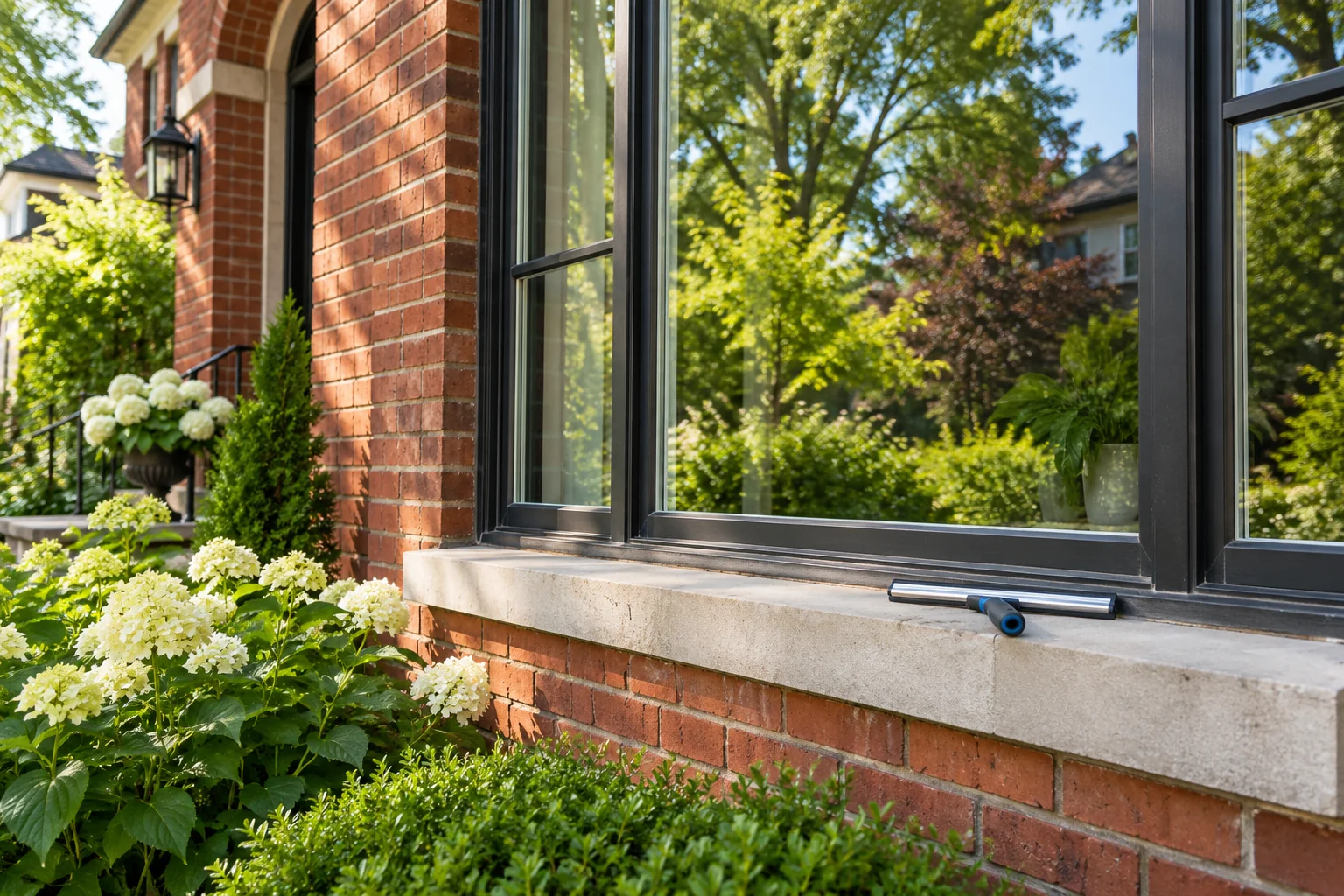
Clean windows can change the way a room feels without changing anything in the room itself. The garden looks closer, the view feels less hazy and the light has fewer distractions to travel through. Yet “please clean the windows” is often a less complete request than it sounds. Glass, screens, tracks, frames and access can all mean different things to the person preparing a quote.
A little planning helps you choose the work that matters and understand what is being offered. It also keeps a straightforward cleaning visit from becoming an improvised exterior-maintenance project. This guide is about deciding on the scope, preparing your home and reviewing the result. It is not a set of instructions for working at height. Whether you want a simple exterior refresh or a more thorough inside-and-out appointment, the aim is the same: a clear agreement and a brighter home you can enjoy.
Walk through the house before counting windows
Start inside and notice where the glass affects your day. The kitchen window you look through every morning may matter more to you than a basement opening behind storage boxes. A home office, living room or patio door can be a useful place to begin your priorities.
Then make a room-by-room list. Note the approximate size, the number of separate panes or sections, and whether a window opens. A rough list is usually more helpful than guessing a total from the driveway. If you do not know how the company counts a window, ask. One large assembly with several sections may not be priced like one small pane.
Record unusual features rather than trying to classify them yourself. Bay windows, glass railings, skylights, storm windows and enclosed porches can each need a separate discussion. Photographs from a safe, ordinary standing position can help explain the layout.
Finally, mark the windows you cannot easily access. Furniture, fixed screens or a steep exterior area can affect the proposed method and time. You are not expected to solve every access problem. You are giving the cleaner the information needed to assess the work and tell you what is feasible before the appointment is confirmed.
Decide whether you want outside, inside or both
Exterior cleaning addresses the side exposed to outdoor conditions. Interior cleaning deals with the marks and buildup inside the home. If only one side is cleaned, a mark on the other can remain visible. That sounds obvious, but it is an easy detail to overlook when comparing a few brief quotes.
Think about the sources of the marks you actually see. Fingerprints on a patio door, indoor dust near a work area and weather-related exterior buildup suggest different priorities. Do not feel obliged to choose the largest package if one side is the main issue. Equally, an exterior-only visit may not deliver the result you want when both sides need attention.
Ask how the quote labels each part of the job. “Windows throughout the house” should still explain whether it includes both sides, accessible door glass and the smaller openings you listed. If you want a partial clean, name the rooms or elevations clearly.
For example, a useful request could specify inside and outside for the main-floor windows and patio doors, with exterior cleaning only upstairs. The company can then assess access and provide a quote for that exact scope. Clear choices help you spend on the areas that will make the biggest difference to your everyday view.
Give screens, tracks and frames their own place on the list
A glass-cleaning service does not automatically include a detailed clean of everything surrounding the glass. Screens can hold dust and debris. Tracks can collect grit. Frames and sills can need attention that takes additional time and a different approach.
Ask what is included rather than treating these items as small extras that must be obvious. Does the service involve screen removal and cleaning, a light wipe of accessible sills, or a more detailed track clean? Those are different tasks. Discuss delicate, damaged or difficult-to-remove screens before anyone attempts to handle them.
Use plain descriptions if you are unsure of the terminology. “The channel where the sliding patio door runs” is a perfectly useful explanation. Mention whether you have noticed sticking, damaged seals or drainage concerns, because a cleaning request may reveal a maintenance question without resolving it.
You can also prioritize. Perhaps the main-floor tracks need a detailed clean, while upstairs frames only need the service’s normal wipe. The aim is not to create a complicated checklist for every opening. It is to make sure the less visible parts of the job are discussed, so you do not judge a glass-only quotation against expectations for an entire window assembly.
Distinguish dirt from a condition that cleaning will not solve
Not every cloudy area or visible mark sits on an accessible surface. If a mark seems to be between panes, describe that before booking. Marvin’s window-care guidance notes that fogging between insulated panes can indicate a failed seal and is not something exterior washing can reach. The appropriate next step may be an assessment of the glazing rather than a stronger cleaning method.
Likewise, scratches, worn finishes and damaged frames have different implications from ordinary dust. Do not assume an aggressive product will make the surface look new. Identify marks you are especially concerned about and ask what can reasonably be improved.
This distinction is useful when reviewing the finished work. A cleaner can explain what appears to be remaining contamination and what may be an underlying condition. You can then decide whether to pursue specialist attention without turning a cleaning visit into an argument over a result that was never achievable.
If your windows have coatings, films or other treatments, share that information. Manufacturer guidance can affect the method. A good brief includes the things the cleaner cannot reliably discover by looking through the glass for a moment, including previous repairs or a known restriction on products.
Treat access as part of the service, not an afterthought
Walk outside at ground level and consider what lies beneath each window. There may be planting beds, uneven surfaces, a narrow side passage or a locked gate. Tell the provider about these conditions and let them assess how the work can be reached appropriately.
Do not promise access that depends on you improvising equipment or moving onto a roof. Describe the situation instead. A window that looks simple from inside can involve a very different exterior approach. The cleaner should be able to explain which areas are included, which need review and which cannot be completed with their setup.
For a condominium, rental or commercial property, establish who can authorize the work and whether property-management rules apply. Clarify parking, building entry and any limits on water access or work hours. These details help the appointment run smoothly and may influence whether an individual unit can be serviced as requested.
Inside the home, identify heavy furniture and delicate items near the windows. Agree on who will move what. A provider may be able to work around some objects, but it should not be assumed that moving a large cabinet or disconnecting equipment is part of a window-cleaning service.
Keep exterior washing and window cleaning clearly defined
Window cleaning, gutter cleaning and pressure washing can all sit under exterior care, but they are not the same job. Combining them can be convenient when the operator offers the relevant work, provided each element has an agreed scope and a suitable method.
Marvin cautions that pressure washing can damage window components, including seals and frames. That is a reason to ask about the method for each surface rather than requesting one powerful treatment for everything outside. The right approach to a walkway does not automatically apply to nearby glass or siding.
If you are also interested in eavestrough cleaning, describe the building height, visible guards and any drainage concerns. For patio or siding work, provide the surface material and approximate area. Avoid presenting roof cleaning as a routine addition without an assessment; condition, material and access deserve their own review.
Make a combined checklist with separate headings. This lets the provider show what is included in the price and explain any limitations. It also helps you choose priorities if the full project is larger than you want to undertake. A coordinated visit should create convenience, not blur the difference between cleaning several kinds of surfaces.
Choose timing around the home, the work and the conditions
There is no single appointment date that suits every home. Consider your purpose: enjoying spring light, preparing for guests, refreshing the exterior after a messy project or setting up recurring care. Then give the provider enough flexibility to assess weather and access conditions.
Tell them about other planned work. If exterior repairs or landscaping will create dust and debris immediately afterwards, the order of appointments may matter. A window-cleaning visit can be scheduled around that sequence rather than becoming something you feel you need to repeat a few days later.
Ask how unsuitable weather is handled and how changes will be communicated. Do not assume light rain, strong wind or cold conditions all have the same effect on every method. The provider should make the judgement for the actual job and explain the plan to you.
If the appointment includes interior work, choose a time when access will be manageable. A busy household can still be accommodated, but the cleaner needs to know about pets, children, meetings or rooms that must remain undisturbed. You are not trying to make the house silent for an entire day. You are reducing avoidable interruptions and making the work easier to coordinate.
Prepare the rooms without turning it into a weekend project
The most useful preparation is a clear route and space near the windows. Remove fragile decorations from sills, put loose paperwork somewhere safe and tell the cleaner about alarms or sensors that should not be disturbed. Check that the agreed rooms can be accessed.
If furniture must move, settle that responsibility beforehand. Small items may be easy for you to shift, while larger pieces may need another arrangement. Do not leave lifting decisions until the operator arrives with a cleaning schedule and no expectation of moving furniture.
Plan for pets as well. Doors or gates may be opened during the appointment, and unfamiliar activity can be unsettling. Choose a comfortable separate area or another arrangement that keeps both pets and workers from having to negotiate the same narrow space.
Outside, unlock agreed gates and point out anything that needs care: newly planted beds, a fragile ornament or a recently repaired surface. These are simple observations, not instructions on the cleaning technique. When the workspace is clear, more of the appointment can be spent on the service you requested, and there is less opportunity for confusion about belongings or access.
Read the quotation as a checklist
Look for the property, window areas, sides of glass and surrounding components covered. Check whether the quote is based on photographs, a visit or a description, and ask what could cause it to change. The word “from” is a starting point, not a complete price for every possible home.
Compare like with like. A quotation for exterior glass alone should not be measured against another that includes interior work, screens and detailed tracks. If you need to reduce the scope, ask what can sensibly be separated rather than accepting a smaller number with an unclear checklist.
Confirm applicable taxes, any access-related costs and the payment arrangements. If combined exterior tasks are included, make sure they are identifiable in the proposal. Ask how additional work would be authorized if a condition is discovered on the day. Nobody benefits from an assumption that every unexpected task is automatically included.
Keep a copy of the agreed scope. It does not need to be a lengthy document to be useful. A concise, specific description provides a shared reference for the arrival conversation, the final check and any later question. The clearest quotation is often the one that leaves the least room for different interpretations.
Review the result and make the next visit simpler
At the end of the appointment, review the agreed areas and ask about anything the cleaner noticed. If an opening could not be reached or a component could not safely be removed, find out what was completed and what remains. A clear explanation is more useful than discovering the omission later.
Look at marks you identified before the service and discuss any that are still visible. Some may be on the other side of glass that was outside the scope, while others may involve damage or a condition between panes. The initial notes make that conversation easier and fairer.
Keep the successful checklist for next time. Note whether interior work was especially worthwhile, whether the screens needed extra attention and what preparation helped. A recurring plan should reflect your home and preferences rather than simply repeat the largest service available.
Cody Mobile is currently recruiting a local partner for window and exterior cleaning. You can explore the planned services and join the waitlist for your community. Your interest can include the particular work you want, from a simple glass refresh to a more detailed exterior-care discussion. When a partner is available, the property, scope, price and timing will be confirmed with you.