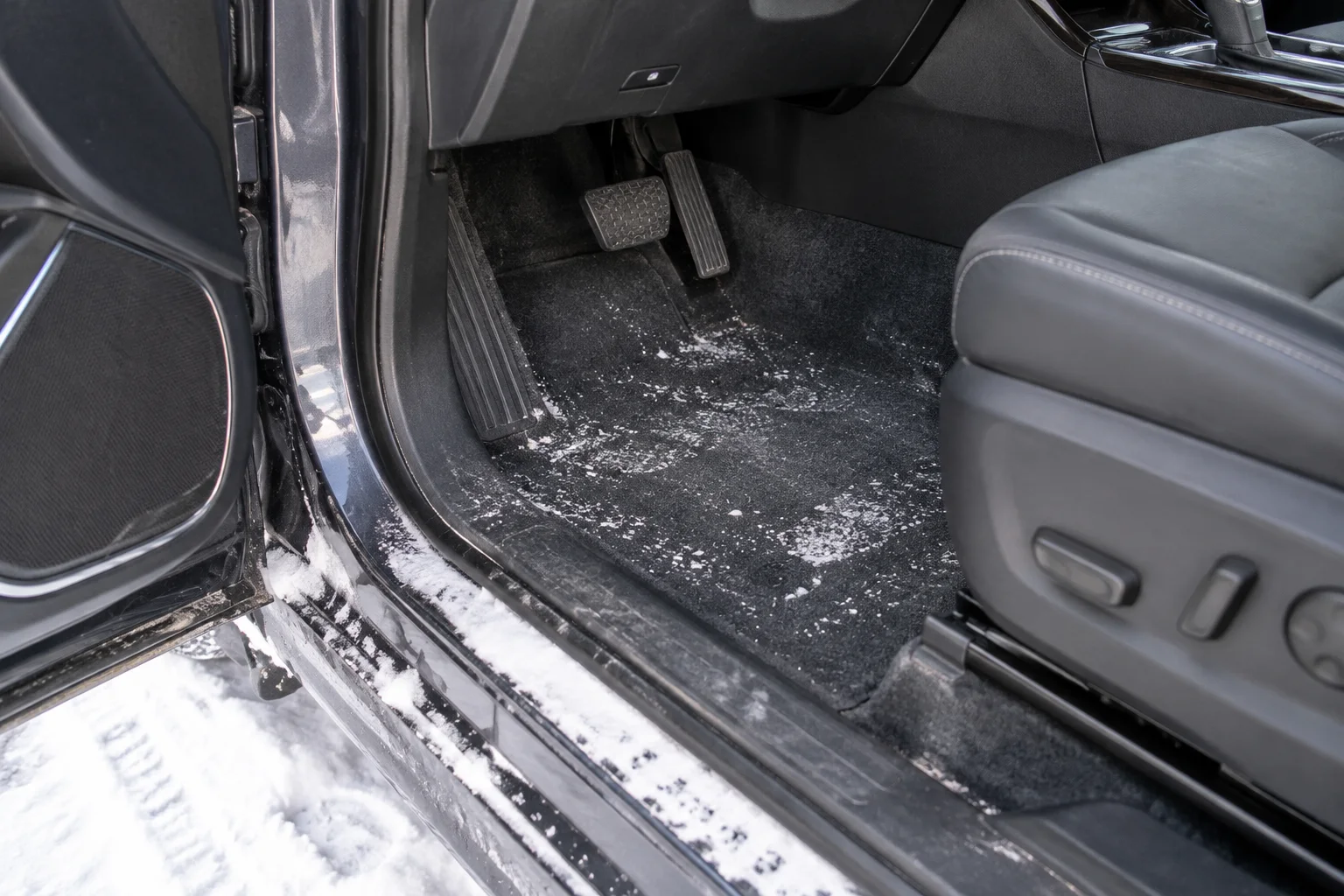
An Ottawa winter can leave its signature on a vehicle long after the snowbanks shrink. There is the pale outline beside the accelerator, the gritty edge of a rear floor mat and the surprising amount of debris under a cargo liner. None of these makes you a careless owner. They are simply the record of getting people, groceries and equipment through a working winter.
The useful question is what needs attention now, what belongs in a detailing appointment and what calls for a different kind of assessment. A sensible salt cleanup starts with the surfaces involved and the time available for drying. It ends with a vehicle that is easier to live with, rather than an ambitious promise to reverse every sign of winter.
Read the floor before choosing a service
Look at the vehicle when it is parked and there is enough daylight to see the footwells. Start with the driver's area, then check each passenger position. A clean front passenger mat does not tell you much about the carpet under a child who regularly climbs in with snowy boots. The cargo area deserves its own look, especially if it carries skates, shovels or a stroller.
Describe what you can actually see. Is the pale material loose and powdery, a hard ridge, or a broad discoloured patch? Is it on a removable mat or on the fitted carpet? Does the material seem worn underneath? These observations help a detailer understand the job without asking you to diagnose the chemistry of a winter stain.
Take one photograph of the whole footwell and another of the concern. A close photograph alone can make a small patch look like an entire interior. Mention whether the area is currently damp and whether previous cleaning has changed its appearance. That short history can matter more than a dramatic photograph.
Mats and fitted carpets are different jobs
A removable liner can usually be taken out and cleaned separately according to its own instructions. Fitted carpeting is part of a much larger assembly. Its edges, backing and neighbouring trim limit what can be reached without additional work. The amount of visible floor also changes between a small hatchback and a vehicle with several rows of seating.
WeatherTech's guidance for its own floor liners describes cleaning, agitation and rinsing as a sequence, followed by drying. That is useful manufacturer guidance for those products; it is not permission to use the same tools or products on every carpet in the vehicle. A stiff brush suitable for a durable liner may be an entirely different proposition on an ageing textile.
When requesting a quote, distinguish removable rubber or polymer liners, carpeted mats and fixed carpet. Say whether you want all three addressed. Otherwise, two people can use the phrase salt removal while imagining quite different work. A useful scope names the surfaces instead of relying on the phrase alone.
The white edge is only part of the story
It is tempting to judge winter cleaning by whether every white mark disappears. Appearance matters, but a vehicle can have more than one issue in the same patch. Embedded debris, an old spill, flattened fibres and physical wear can overlap. Cleaning the soil does not necessarily restore the original texture or colour of the material beneath it.
Ask the detailer which areas are likely to respond and which need inspection before a result can be predicted. An honest answer may distinguish a removable deposit from a remaining stain. That gives you a fair way to judge the appointment and avoids turning a worn heel area into an endless cleaning experiment.
A good description might be: the driver's mat has a thick pale edge, the carpet beside it is stained, and the rear floor feels damp after the last thaw. Those are three observations, not a single request for a perfect floor. Each can then receive the right attention and an appropriate limit.
Decide what you need from the appointment
Some drivers want a practical midwinter reset. Others are preparing for spring, selling the car or trying to make a second vehicle pleasant again after months of school runs. The reason changes the sensible scope. A focused floor service may solve your main frustration even when the dashboard and seats are already satisfactory.
Write down the two areas that would make the biggest difference. Perhaps the driver's footwell looks unpleasant every morning and the rear mats are difficult to handle without spilling debris. Tell the detailer those are the priorities before discussing additional work. It is easier to make a useful choice when the purpose is specific.
Our guide to choosing an interior cleaning level can help you separate a routine cabin refresh from more involved textile work. You do not have to choose the most extensive option to take good care of a vehicle. You do need a scope that matches the actual condition.
Give drying a place in the schedule
If the plan involves wet cleaning, ask when the vehicle can be used comfortably and what the detailer needs after the cleaning stage. The answer should be based on the method, materials and conditions on the day. A general appointment length is not automatically the same as the time at which every carpeted area will be ready to cover again.
A useful booking conversation includes the next unavoidable journey. If you must collect children at three, say so while arranging the work. If the car can stay parked until the following day, mention that too. This gives the provider an opportunity to recommend a manageable plan rather than discover the deadline after starting.
Think about where the vehicle will sit afterwards. Secure, weather-appropriate ventilation may need planning, especially when outdoor conditions are poor. Follow the provider's instructions and the vehicle manual. Do not improvise drying equipment in the cabin or assume that a wet floor will sort itself out under a heavy liner.
Make room for the work
Empty the areas being cleaned before the appointment. Coins, charging cables, spare gloves and shopping bags turn a straightforward floor job into an exercise in sorting somebody else's belongings. A small box indoors is often the easiest temporary home for everything you want to keep.
Check the spaces behind the front seats and around the cargo floor. Remove personal papers and valuables, and tell the detailer about anything that must stay. If a child restraint is in the way, agree in advance who will remove and reinstall it according to its instructions. Do not assume that restraint handling is included in detailing.
You need not pre-clean the whole vehicle. The point is access, not hiding the condition that prompted the booking. If you have already tried a product, share its name or photograph the label. That is useful information even when the attempt did not help. It allows the provider to plan with a more complete picture.
Treat persistent dampness as a separate concern
A damp patch deserves a little history. Does it appear after passengers track in snow? After rain? After the vehicle has sat unused? You do not need to remove trim or investigate hidden components yourself. Simply recording when you notice moisture helps distinguish ordinary winter use from a possible issue that needs professional assessment.
Detailing can clean accessible materials, but it does not by itself establish why water keeps appearing. If the same area remains wet or becomes wet again without an obvious reason, raise that before authorizing repeated cleaning. A vehicle repair professional may need to assess the source before another cosmetic appointment is worthwhile.
This is particularly important when an odour accompanies the dampness. Avoid trying to solve uncertainty with fragrance. Tell the provider what you notice, how long it has been happening and whether the smell changes after the car is closed overnight. That information gives the next person a sensible starting point without making an unsupported diagnosis.
Ask what access is included
The phrase deep clean can sound as though every surface will be exposed. In practice, ordinary detailing access is different from removing seats, lifting fitted carpet or dismantling trim. Those activities can involve vehicle systems and should never be assumed from a package name.
Ask what can be reached in the agreed visit and how inaccessible areas are handled. If a visible salt line runs under a seat rail, find out whether the provider will clean up to the accessible edge or whether another arrangement is needed. A clear boundary is more useful than a vague promise about getting everywhere.
The same applies to the underside of the vehicle. Interior salt work does not mean an underbody wash, corrosion inspection or rust treatment. If you are concerned about exterior winter exposure, describe that separately. Keeping those requests distinct helps you find the right service and prevents a clean cabin from being mistaken for a mechanical assessment.
Build a small winter routine
The best routine is one you can repeat on an ordinary week. Keep a simple place for wet equipment when you get home, and empty removable items before they become permanent cargo. A vehicle used for hockey practice may need a different rhythm from one used mainly for commuting.
Choose an easy reminder, such as the weekend grocery trip, to look at the mats. You are checking whether they need attention and whether anything has collected beneath them. You are not committing to a complete detailing session every Sunday. A small inspection is valuable because it makes changes easier to notice.
Follow both the vehicle and mat manufacturer's fit instructions when replacing liners. WeatherTech's installation guidance says to remove existing mats before installing its liners. Do not solve a messy footwell by stacking several layers. Correct fit and secure placement matter more than building the thickest possible barrier between boots and carpet.
Consider the rear seats and cargo habits
Winter debris rarely stays in one place. A child may enter through the same rear door every day, while a folded stroller carries slush into the boot. These patterns explain why one side of the vehicle can look much worse than the other. They also make it easier to choose useful prevention measures.
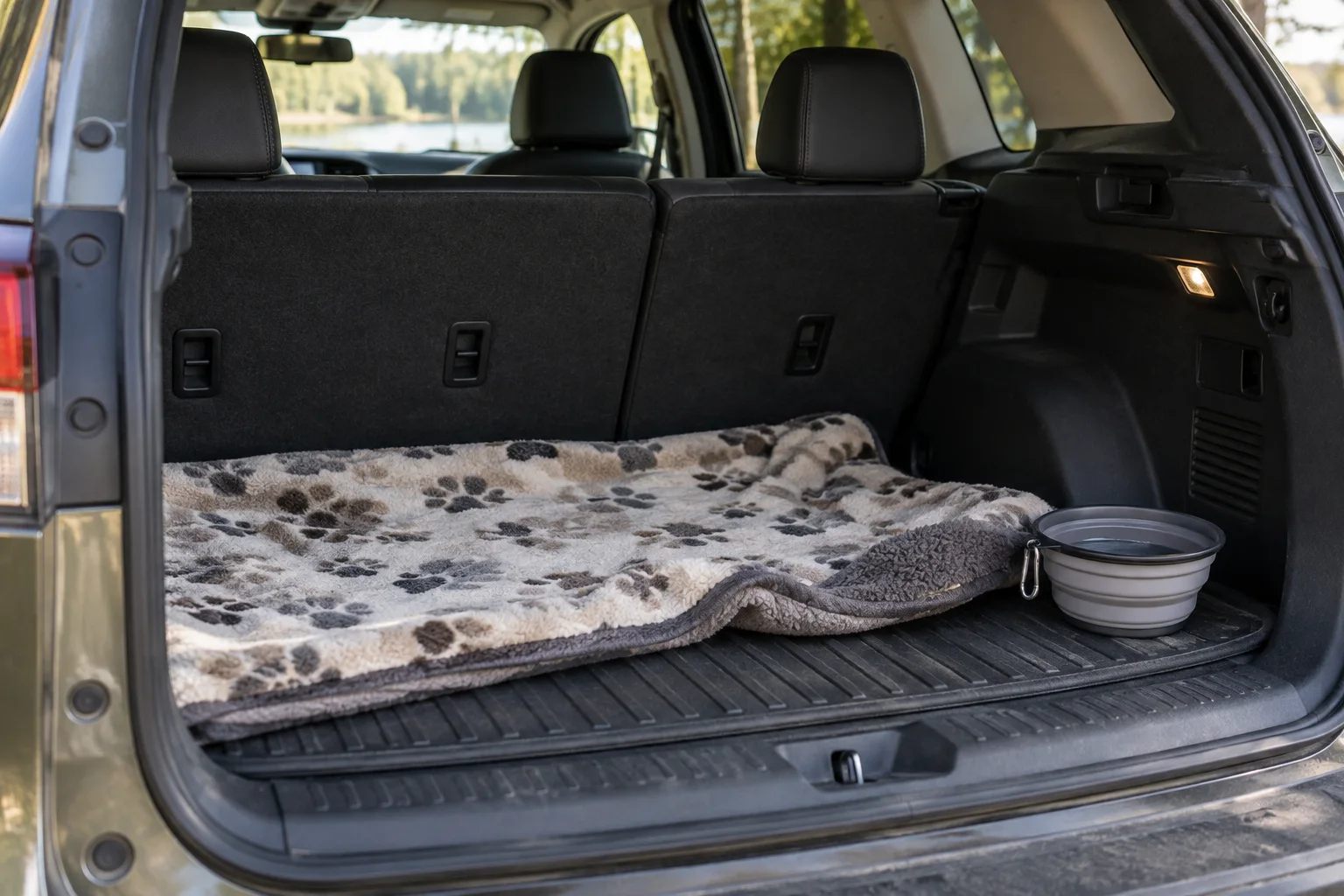
For a stroller or sports bag, consider a removable, compatible cargo liner that can be maintained separately. Check its fit and any restrictions associated with the vehicle's cargo system. The aim is to give messy equipment a sensible place, not to cover air outlets, anchors or other functional parts with an improvised arrangement.
Ask passengers to keep wet gear together rather than distributing it across every seat. A designated container for small winter items can reduce the time spent searching and clearing the car later. It does not need to be a special automotive purchase. It simply needs to be suitable, secure and easy to take indoors when the journey ends.
Review the result with reasonable expectations
At handover, look at the same areas you photographed before the work. Ask about any remaining marks and whether they represent residual soil, discolouration or wear. A detailer should be able to explain what was done within the agreed scope and what was intentionally left alone.
Check the condition of removable mats and ask when they should be returned if they are still drying. Confirm any follow-up instructions in plain language. If a carpeted area needs more time, make sure you understand how that affects your plans rather than interpreting a clean appearance as a complete drying assessment.
There is no need to search for microscopic imperfections to make the review worthwhile. Concentrate on the concerns that justified the visit: the visible deposits, the accessible floor areas and the usability of the cabin. Record any unresolved issue so you can discuss it accurately later instead of relying on memory after another week of winter driving.
Keep the winter history useful
Save the photographs and a note of the completed work. If a pale patch returns, you can describe whether it appeared after another week of snowy journeys or while the vehicle remained parked. Those are different histories, and the distinction helps the provider decide what to assess next. A simple record also makes next season's booking easier because you already know which surfaces needed the most attention.
Know when another service is the better next step
If the carpet is physically damaged, cleaning may reveal the damage more clearly without repairing it. If trim is loose, water is entering repeatedly or a fitting no longer holds a mat properly, identify that as a separate concern. It is reasonable to ask a detailer for an observation while accepting that a repair decision may belong elsewhere.
Before booking more work, decide whether your priority is appearance, function or diagnosis. That simple distinction saves time. A faded mat might be acceptable once clean, while persistent dampness should not be treated as merely an unattractive patch. Your next step should follow the unresolved problem, not simply repeat the previous appointment.
For current availability, visit Cody Mobile auto detailing. Detailing is bookable in Ottawa and the surrounding service area; other areas are on the waitlist. Share the vehicle size, the affected surfaces and a few clear photographs. With a realistic scope and a drying plan, winter cleanup can become a manageable reset instead of a yearly guessing game.