Christmas lighting is easier to enjoy when the decisions happen before the season becomes crowded. A clear design, a realistic installation window and an agreed removal plan can make a modest display feel well considered. Rushing to fill every roofline at the last moment tends to leave practical questions unanswered.
This guide is about planning and choosing suitable professional help, not installing elevated lighting yourself. You can develop a useful brief from the ground: decide what you want to see, identify the property constraints and ask how the provider will handle products, access, electrical questions and end-of-season care.
Begin with the view you want
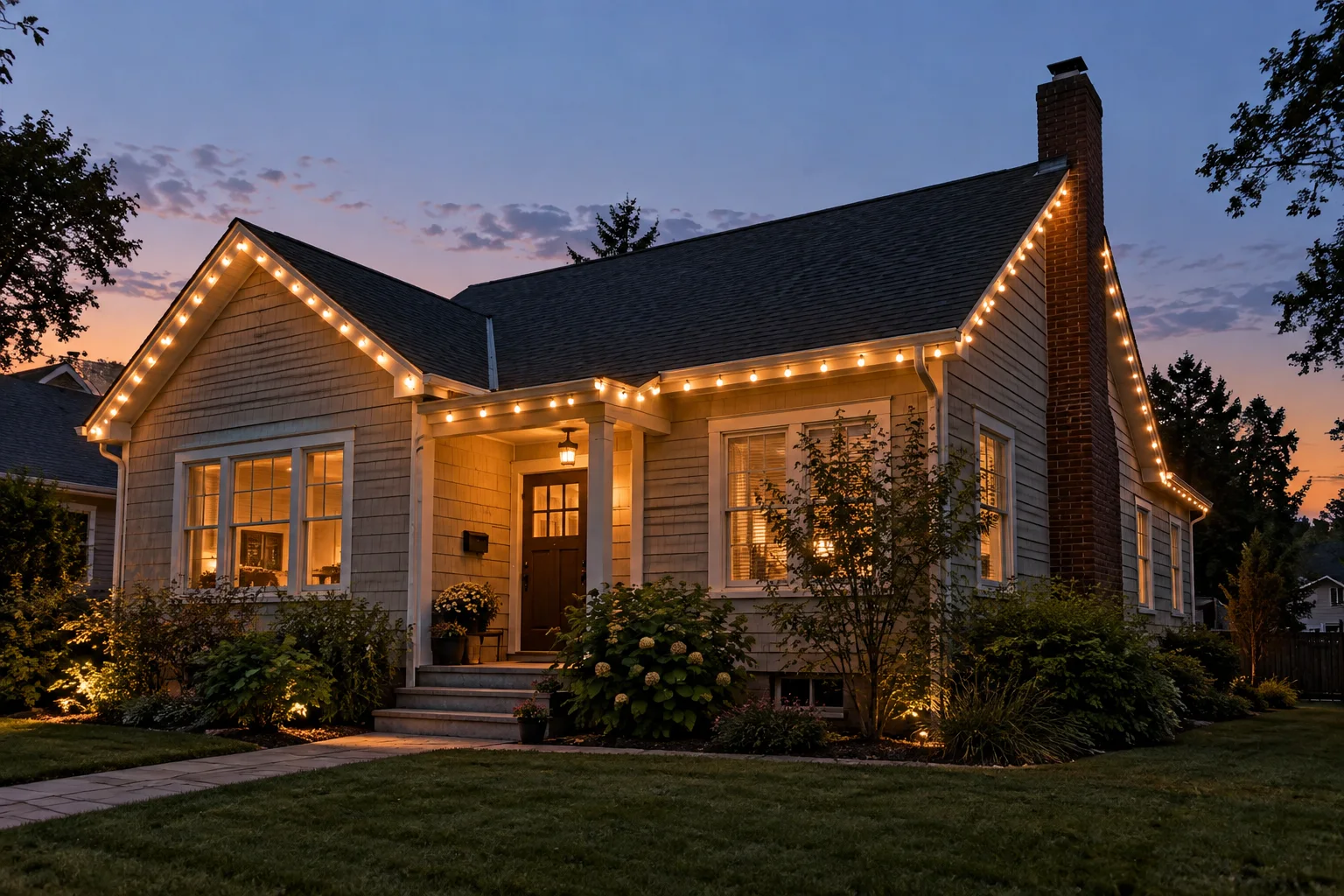
Stand in the places where you will actually enjoy the display, such as the front path or the room facing the garden. Decide whether you want a simple welcome at the entrance, an outline of part of the house or a feature around a tree. A focused design can be easier to describe and maintain than a request to decorate everything.
Take a daylight photograph and mark the areas you would like considered. You do not need measurements taken at height. Show the whole frontage so the provider can understand scale, access and adjacent features rather than receiving only a cropped picture of a roof edge.
Keep a small list of preferences: warm or cool appearance, restrained or colourful, steady or another effect you want to discuss. These are design choices, not installation instructions. The professional can explain what is practical with suitable products and what would require a different scope.
Choose essential and optional features
Separate the display you would be happy with from additions you might enjoy if the proposal allows. An entrance feature could be essential, while an upper roofline or several garden trees remain optional. That helps a provider suggest a manageable plan without guessing which element matters most.
Ask for options to be described individually. If an extra feature changes access, maintenance or removal work, you should see that difference in the proposal. A single attractive total can be difficult to assess when it combines items you value differently.
For example, a household may choose lighting visible from the living room over a decorative element facing a quiet side lane. Another may prioritize the doorway used by visiting relatives. There is no universal best display. A useful brief reflects how you use and see your home during the season.
Set the season’s dates early
Think beyond installation day. When would you like the display operating, and when should it be removed? Are you away during part of the season? Will guests arrive on a particular weekend? Share these dates while recognizing that weather and access can affect the final schedule.
Ask the provider how they allocate installation windows and communicate changes. You need to know whether a requested date is a preference or a confirmed commitment, and what happens if conditions make the planned work unsuitable. Clear language avoids building a family event around an assumption nobody formally accepted.
Leave a reasonable buffer before the first occasion when the lights matter to you. A buffer allows time for a question, adjustment or product issue to be addressed. The goal is not to guarantee that nothing can change, but to avoid making every ordinary decision urgent because the display must be ready that evening.
Clarify who supplies and owns the lights
Some arrangements use homeowner-owned products; others include supplied or rented equipment. Ask which model the provider offers and what ownership means after the season. The distinction affects replacements, storage, future design changes and what happens if you use a different installer later.
If you already own lights, provide product information and photographs of labels that are safely accessible. Do not assume an installer will use every item from a mixed storage box. They may need to inspect suitability and condition, or they may work only with particular products as part of their service.
Keep the decision practical. Sentimental decorations may belong in the design conversation, but they do not override product limitations. Ask whether the items can be included appropriately or whether they should be displayed separately in a location and manner supported by their instructions.
Make product suitability a real question
Health Canada’s holiday-safety guidance distinguishes indoor and outdoor ratings and warns against damaged or poorly routed cords. For planning, ask the installer to use products appropriate to the location and to explain the operating instructions that you will need afterwards.
The Electrical Safety Authority’s seasonal advice also emphasizes following product instructions. Avoid treating a product’s festive appearance or online description as proof that it fits your installation. The relevant markings and instructions should be part of the provider’s assessment.
You do not need to calculate an installation yourself. Ask who verifies product compatibility and electrical requirements, and what happens if the existing arrangement is unsuitable. A decoration service should be clear about when a qualified electrical professional is needed rather than promising that any available outlet will make the design possible.
Keep electrical work in its proper scope
Describe the exterior power arrangements you know about without opening fittings or investigating wiring. Tell the provider if an outlet has a known issue or if the desired display is far from the available location. Those observations help them determine what needs assessment before installation.
If new electrical work is proposed, ask who will perform it and how it is separated from decorative installation. Use the appropriate qualified electrical professional for that work and confirm the applicable process with them. Do not accept improvised alterations as a convenient addition to hanging lights.
A useful quote distinguishes the decorative design from any unresolved electrical dependency. You might approve the design subject to a separate assessment, or choose a simpler display that fits an approved arrangement. Either is clearer than committing to a large plan whose basic requirements have not yet been established.
Let the provider assess elevated access
Share photographs of the house, changes in ground level, narrow areas and overhead features from safe positions. Let the professional determine whether the work is within their capabilities and what equipment is appropriate. You should not be expected to climb, inspect a roof or suggest a makeshift working platform.
Ask what conditions would postpone the visit and how inaccessible areas are handled. A roofline that looks straightforward in a photograph may present a different situation on site. A responsible plan leaves room to decline or revise an element if suitable access cannot be arranged.
If your home is part of a managed community, confirm permission and contractor requirements before booking. Shared exteriors and common routes can affect the project. The condo and townhome guide explains the value of settling responsibilities and access before a private exterior appointment is arranged.
Discuss attachment and the building’s finish
Ask how the proposed installation will account for the surfaces it touches. Tell the provider about recent paint, new siding, fragile trim or existing damage. Provide product or warranty information if it is readily available, and ask whether more detail is needed before selecting an attachment approach.
Do not approve unspecified fastening simply because it promises a neat visual result. You should understand whether the arrangement makes any lasting change and how removal will be handled. The provider can explain the method without turning the conversation into a do-it-yourself installation tutorial.
Photograph the relevant areas from accessible positions before work if that helps establish condition. This is particularly useful around a recently finished entrance. The purpose is a shared starting point, not an expectation that every seasonal decoration creates a dispute. Clear records make an ordinary handover easier.
Plan paths, doors and everyday activity
Explain how the household uses the entrance, driveway and garden during winter. Delivery routes, pet walks and access for bins still matter after decorations are installed. Ask how the design keeps those activities workable and how any temporary installation restriction will be managed.
Mention where snow is normally cleared or stored without assuming that routine will remain compatible with every decorative feature. A ground-level element may need a different location if it interferes with everyday access. The provider should understand these patterns before finalizing the layout.
Consider neighbours as well. A design can be festive while remaining considerate about placement and operating times. If a feature faces someone else’s window or uses a shared boundary, discuss the practical arrangement early. You do not need to turn the project into a neighbourhood event, but you should avoid surprising others with an unresolved access or placement decision.
Agree on operation and support
Ask how the display will be switched on and off and what instructions you will receive. Keep controls understandable for the people who will actually use them. If a timer or other control is included, request a demonstration and a record of the settings agreed at handover.
Find out how faults or changes are reported during the season. Who should you contact if part of the display stops working? Is a return visit included, separately charged or subject to particular conditions? A clear answer matters more than an undefined promise to take care of everything.
Do not attempt an elevated adjustment because a small section looks uneven from the street. Report it through the agreed process and let the provider assess the next step. The display should remain enjoyable without turning the homeowner into the person responsible for accessing and repairing difficult parts.
Price the complete season
Compare installation, equipment, maintenance, removal and storage on the same basis. A lower installation figure may exclude several later tasks. Ask whether optional design changes or product replacements affect the total and when additional work needs approval.
Read the payment and cancellation terms before committing. If weather delays are possible, understand how they interact with deposits and scheduling. You do not need a complicated contract for every modest display, but the agreement should state the essential responsibilities and dates clearly enough to avoid conflicting expectations.
Use the exterior quote checklist as a general model for scope clarity, while recognizing that lighting has its own requirements. A transparent seasonal proposal is easier to compare than a collection of package names that do not explain who owns the products or takes them down.
Include removal and storage from the start
Choose a removal window and ask how weather-related changes will be communicated. Clarify who checks the surfaces afterwards and how any homeowner-owned equipment is returned. The project is not finished simply because the display looked good during the holiday gathering.
If storage is offered, ask what is stored, how it is identified and how ownership is recorded. If you will store products yourself, request the relevant instructions and a clear handover. Avoid accepting an unlabelled bundle that makes the next season’s planning harder than it needs to be.
Keep a photograph of the completed design with the service notes. Next year, you can explain what you liked and what you would change without reconstructing the layout from memory. A repeat display can still be reviewed for new property conditions, product issues and different household plans.
Review the design after dark
If the service includes an appearance review, ask how that will happen when installation is completed in daylight. A photograph after dark or a planned follow-up conversation may be useful, depending on the provider’s process. Agree on the arrangement before assuming someone will return that evening.
Look from the viewpoints you identified at the beginning. Is the entrance feature visible where you expected? Does the design feel balanced from the room where you spend time? Keep comments tied to the agreed design and distinguish an installation concern from a new preference that would change the scope.
If you want an adjustment, describe it and ask about feasibility, timing and any additional cost. Do not move installed equipment yourself or ask a family member to reach an elevated section. The provider can assess the request through the same access and product considerations used for the original work.
Record the final arrangement once you are satisfied. A brief note about operating times and favourite features can help next season’s conversation begin with an actual experience rather than another round of guesswork.
Finish with a modest, complete brief
Your brief can fit on one page: desired areas, essential features, preferred operating dates, product ownership, known property constraints and the questions you want answered. Attach safe photographs and ask for a proposal that covers the whole season. That is enough to begin a useful professional conversation.
Cody’s window and exterior division is not yet operating while a local partner is recruited. The window-cleaning service page provides the current context and waitlist; it is not confirmation of available Christmas-lighting installation or a seasonal booking. Ask any prospective provider to confirm their actual scope and capabilities.
Planning early is valuable because it creates choices. You can simplify the design, resolve a dependency or choose another date without a rush. The result should be a display you enjoy, supported by a clear installation, operating and removal plan from beginning to end.