The easiest vehicle-care habits rarely look impressive. Taking a lunch bag indoors, giving a spill a useful written history or putting a clean cloth back in its proper place will not produce a dramatic before-and-after photograph. Yet these small actions can make the next detailing appointment simpler and the weeks between appointments more comfortable.
You do not need to maintain a showroom or add a long cleaning routine to every weekend. The goal is to reduce avoidable accumulation, notice changes early and make professional work easier to plan. Choose habits that fit your real journeys, then keep only the ones you can repeat without turning the car into another demanding household project.
Start with the mess that actually repeats
Look at the vehicle after an ordinary week. What has accumulated, and where? The answer may be food packaging in the front, school items in the rear or bags of equipment in the boot. A useful routine begins with that pattern rather than a generic list of everything a car could ever need.
Choose one recurring problem to address first. If the main frustration is a passenger seat covered with belongings, a storage decision may help more than buying a new cleaning product. If the mats fill with debris, a regular inspection may make the next service request more accurate.
Resist adding ten habits at once. A routine you use twice and abandon has little practical value. A small action linked to something you already do, such as returning home from groceries, can become part of normal life without needing a special burst of motivation.
Give rubbish a predictable exit
Decide when rubbish leaves the car and where it goes. The end of a trip, the evening return home or a regular household collection day can provide a natural reminder. Keep the task brief and specific so it does not become an open-ended clean every time.
If a suitable container helps, place and secure it in a way that fits the vehicle and does not interfere with controls or passengers. Empty it before it becomes another permanent storage area. The container is useful only if it makes removal easier.
Separate rubbish from items that need a decision. Receipts, small parts and children's belongings can make people hesitate to clear a space. A designated place for those items prevents them being mixed with waste and saves the detailer from having to guess what you intended to keep.
Bring the journey's contents indoors
Sports bags, wet textiles, lunch containers and shopping bags often remain in the car because the journey feels finished when the engine stops. Make unloading part of finishing the trip. It is a small change that can substantially reduce what accumulates between details.
Care for those items according to their own instructions. The vehicle's interior and a removable blanket or bag are separate cleaning responsibilities. A professional detail cannot permanently improve a space that immediately receives the same unaddressed item afterwards.
Keep a convenient landing place indoors if that helps the habit. The aim is not to put every item away perfectly at once. It is to get it out of the vehicle and into the next appropriate step, whether that is laundry, washing a container or returning equipment to storage.
Keep a short list of what belongs in the car
Some items genuinely need to remain: appropriate emergency equipment, a useful charging cable or a routinely used accessory. Decide which items serve a purpose and give them a sensible place. Everything else should not become permanent cargo by default.
Review the list when the season or household routine changes. A vehicle used for school runs in one period may carry camping equipment in another. The contents can adapt without requiring a complete organisation project every month.
Follow vehicle instructions for storage and securing belongings. A tidy appearance is not the same as a suitable arrangement. The practical goal is that necessary items are available, unnecessary items leave and the agreed cleaning surfaces can be accessed without emptying an entire household into the driveway.
Notice spills and preserve the history
If something spills, follow the relevant material guidance and address it appropriately. If a mark remains, note what happened, approximately when and what you used afterwards. That short history can make a future professional assessment much easier.
You do not need to record every dropped crumb. Focus on incidents likely to matter later, such as a drink reaching a seat seam or a substance leaving an unusual stain. A photograph of the product label can be useful if you attempted cleaning.
Avoid a sequence of unrelated products applied out of frustration. The upholstery materials guide explains why identifying the surface comes before choosing a method. When uncertain, seeking advice is a more useful habit than escalating the strength of the next bottle.
Inspect mats without creating a large chore
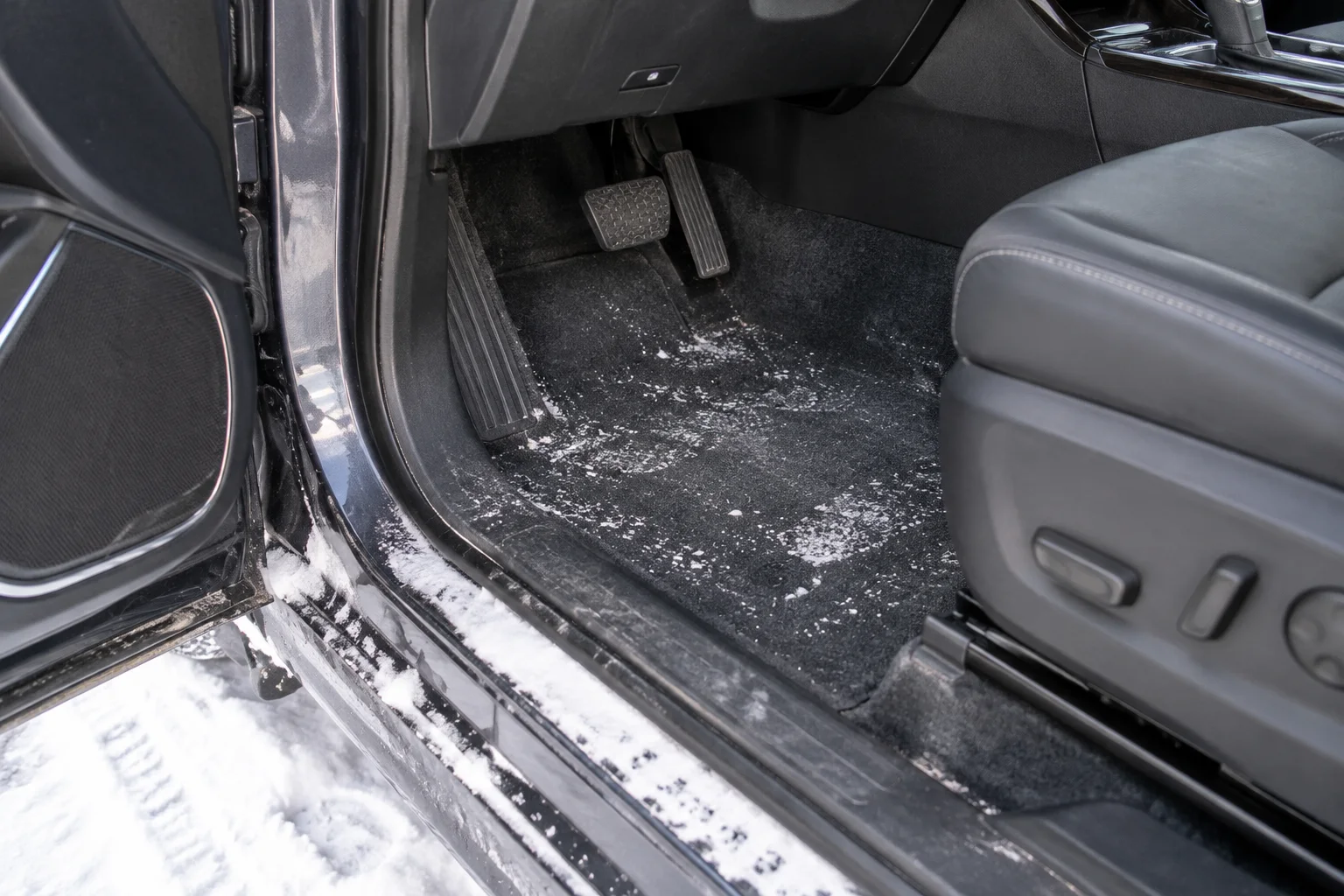
At a convenient interval, look at the mats and the accessible floor around them. Notice whether debris is collecting, whether an area is damp or whether a mat has shifted. Follow the vehicle and mat manufacturer's instructions for any removal, cleaning and reinstallation.
WeatherTech's installation guidance says to remove existing mats before fitting its liners. That product-specific instruction is a reminder that piling layers into a footwell is not a substitute for proper fit. Keep the actual installation requirements in mind when trying to protect the carpet.
A quick inspection can end with a simple note that the floors need attention at the next visit. You do not have to undertake the entire job immediately. The value is noticing condition and preventing the concern from disappearing beneath a familiar layer of everyday use.
Store cleaning tools so they stay useful
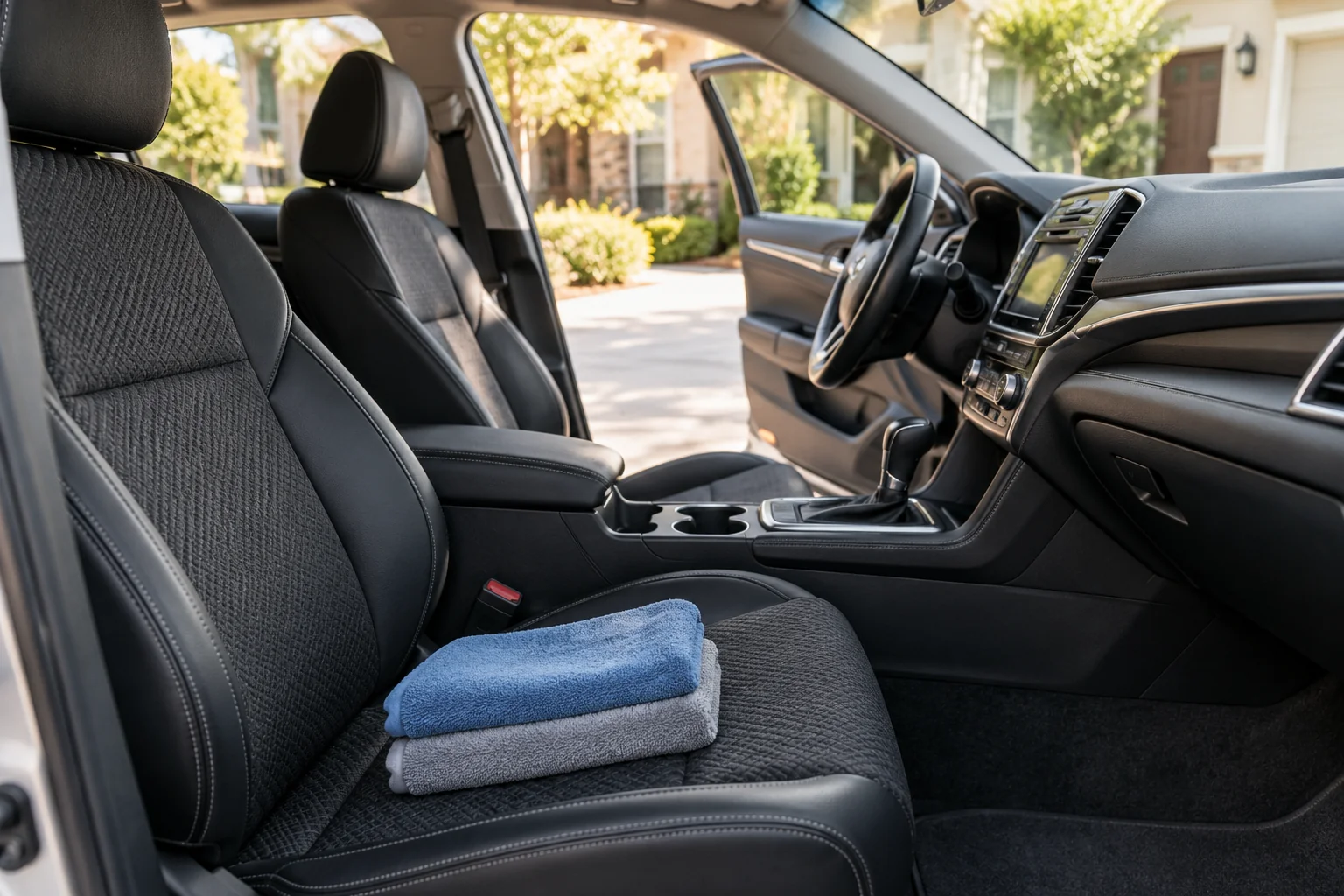
A clean cloth left loose among muddy equipment is no longer ready for delicate interior work. Keep suitable tools in an appropriate, clean place and follow their care instructions. Separate items used on different kinds of surfaces rather than treating every cloth as interchangeable.
Keep product information available and avoid collecting bottles whose purpose you no longer remember. A small set of suitable, clearly identified items is easier to use responsibly than a large assortment bought for one-off experiments.
Do not store supplies in conditions contrary to their labels. The vehicle may not be the right long-term home for every product. You can keep the routine convenient without assuming that everything must remain in the boot through every Canadian season.
Let the manual answer the material question
Save the relevant care section of the vehicle manual somewhere easy to find. When you are unsure about a screen, trim surface or seat, you can check before applying a product. This is a practical shortcut, not an obligation to memorise the entire manual.
Ford's display-care instructions, for instance, distinguish touchscreen care from ordinary cleaning by restricting detergents and solvents. That example supports a useful habit: do not let visual similarity decide that one method belongs on every hard-looking surface.
If the manual is unclear or the interior has been modified, ask the manufacturer, installer or a suitable professional. A detailer can also help explain the service they propose. Keeping the question open is better than labelling every smooth seat leather or every clear panel ordinary glass.
Make pet travel items easy to remove
If pets travel with you, organise the blanket, cover or carrier so it can be cared for separately according to its instructions. Check that any accessory is compatible with the vehicle and used as directed. Convenience should not override the requirements of seats and restraint systems.
After a muddy outing, take used textiles indoors rather than allowing them to become part of the car's permanent contents. A small, repeatable routine can keep the next detail from beginning with several months of removable material still in place.
The pet-hair guide helps distinguish loose debris, embedded hair and accident-related concerns. You do not need to prevent every hair from entering the car. You need an arrangement that makes ordinary cleaning manageable and more involved work easy to describe.
Give passengers a simple role
If the vehicle is shared, agree on a few clear expectations. Each passenger might remove their belongings at the end of the day, or the driver might check the rear seat before locking up. Keep the task small enough that it can happen when everyone is tired.
Avoid a complicated system of containers and rules that nobody understands. A child who knows where a used snack wrapper belongs can contribute more easily than one asked to keep the whole car immaculate. Adults benefit from equally clear arrangements.
If a habit repeatedly fails, change the setup rather than repeating the same complaint. The storage place may be inconvenient or the expected task too large. A vehicle routine works best when it reflects how the household actually moves through the day.
Link a quick check to an existing routine
Choose a regular event that already happens: refuelling, a grocery trip or returning from weekend activities. Use it as a reminder to look at the areas that matter most. You are checking condition and clearing a few obvious items, not committing to a full detail.
The reminder can be flexible. If the week has been unusually busy, a short reset is still useful. Avoid making the routine so strict that missing one occasion feels like failure and leads to abandoning it altogether.
Over time, the check can help you recognise when professional work is worthwhile. You will notice when a routine vacuum no longer addresses the concern or when a new stain deserves assessment. Booking becomes a response to actual condition instead of a reaction to a suddenly overwhelming mess.
Keep changes in use visible
A new pet, a different commute, a work project or a child beginning a sport can change how the vehicle gets dirty. Revisit the routine when that happens. The habits that suited last year's journeys may no longer address the current pattern.
Tell the detailer about these changes at the next booking. A vehicle with a newly used third row or frequent cargo loads may need a different scope from its previous appointment. Do not assume that repeating the old package automatically meets the new need.
This is also a good time to review accessories. Add something only if it is compatible and solves a real problem. The aim is a more usable vehicle, not a collection of organisers that creates extra surfaces to clean and makes the original storage areas harder to access.
Prepare for the next detail in small stages
Keep a running note of concerns rather than trying to remember everything when filling out a booking request. Include a location, a short description and any relevant history. A few clear photographs can support the note without turning it into a formal inspection report.
Before the appointment, remove valuables and personal belongings from the agreed work areas. Confirm who will handle child restraints or other equipment. If the car has a strict next-use deadline, tell the provider early and ask about drying or product aftercare.
The mobile detailing planning guide covers these practical steps. Small preparation habits make the appointment easier because the provider can spend the agreed time on the vehicle's surfaces instead of resolving avoidable access questions.
Keep the standard kind to real life
A vehicle that carries people through work, school, weather and recreation will show use. The purpose of a maintenance habit is to make that use more comfortable, not to turn every journey into a threat to the upholstery.
Choose a standard you can describe positively: accessible seats, belongings removed regularly, concerns noticed and appropriate cleaning arranged when needed. That is more useful than a vague ambition never to let the car become dirty again.
If a habit adds more frustration than value, simplify it. A good routine should leave you more willing to use the vehicle for the life it supports. Professional detailing then becomes an occasional, well-planned reset rather than a rescue from a system that never fit your household.
Keep useful information with the vehicle
Save the names of any films, coatings or repaired upholstery alongside the care notes. This information can be difficult to reconstruct months later, especially when the work was arranged by another household member. A simple digital folder or short note is sufficient.
When the next detail is booked, share only the information relevant to the work. You are helping the provider identify the existing surfaces and recent treatments, not presenting an elaborate maintenance dossier. This quiet habit can prevent uncertainty about whether a panel is wrapped, a seat has been repaired or a product requires particular aftercare.
Turn those observations into a useful booking
When the vehicle needs professional attention, describe the current condition and the improvements that matter most. Share material information, incident history and practical timing. Ask which available scope fits rather than assuming the same treatment is necessary on every visit.
For current options, see Cody Mobile auto detailing. Booking is available in Ottawa and the surrounding service area, with a waitlist for other areas. The interior cleaning levels guide can help you organise the request.
Small habits make the next detail easier by reducing uncertainty as much as dirt. You know what belongs in the car, what changed and what you want addressed. That gives the provider a clear starting point and gives you a cleaner, more enjoyable vehicle without requiring a second job in the driveway.