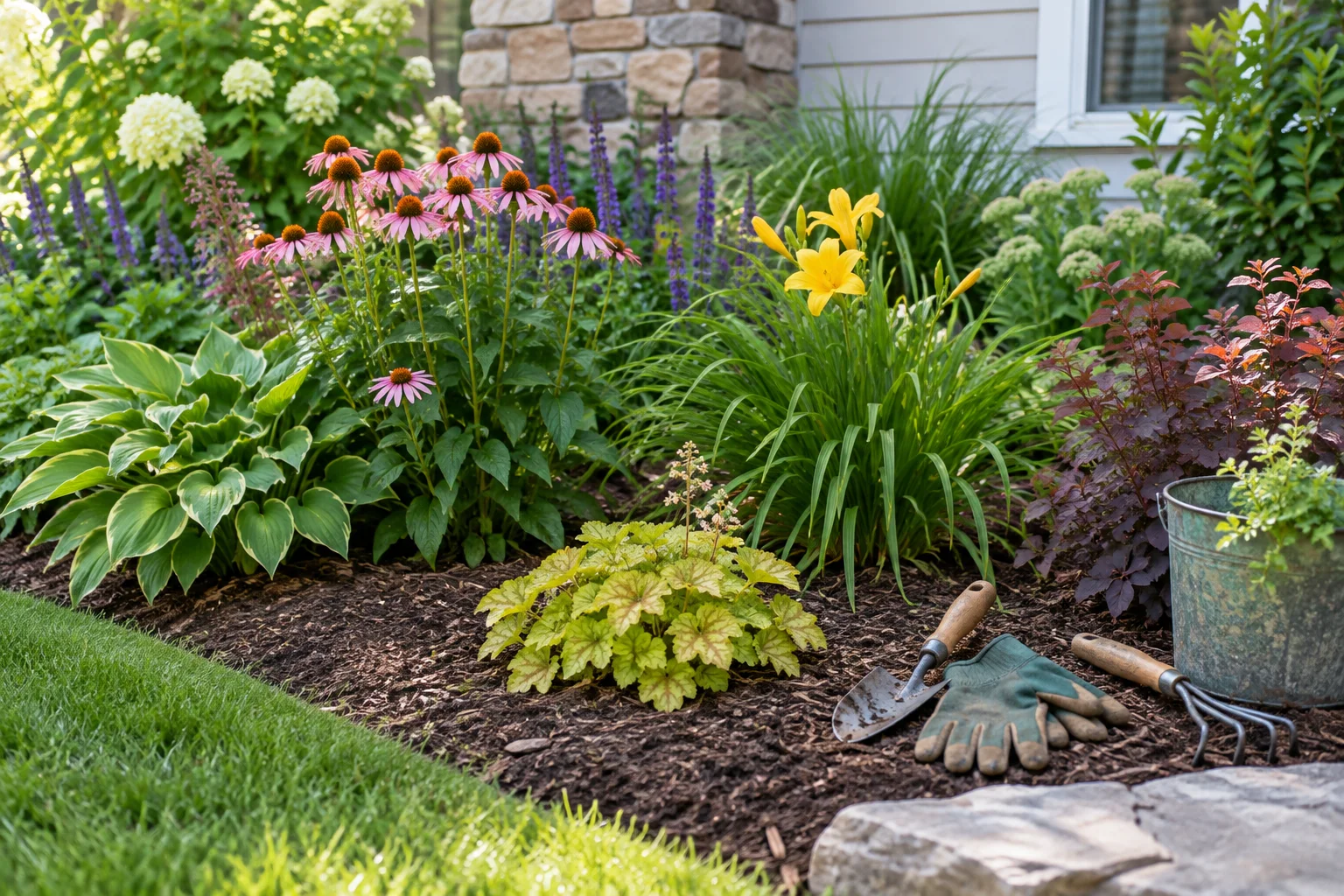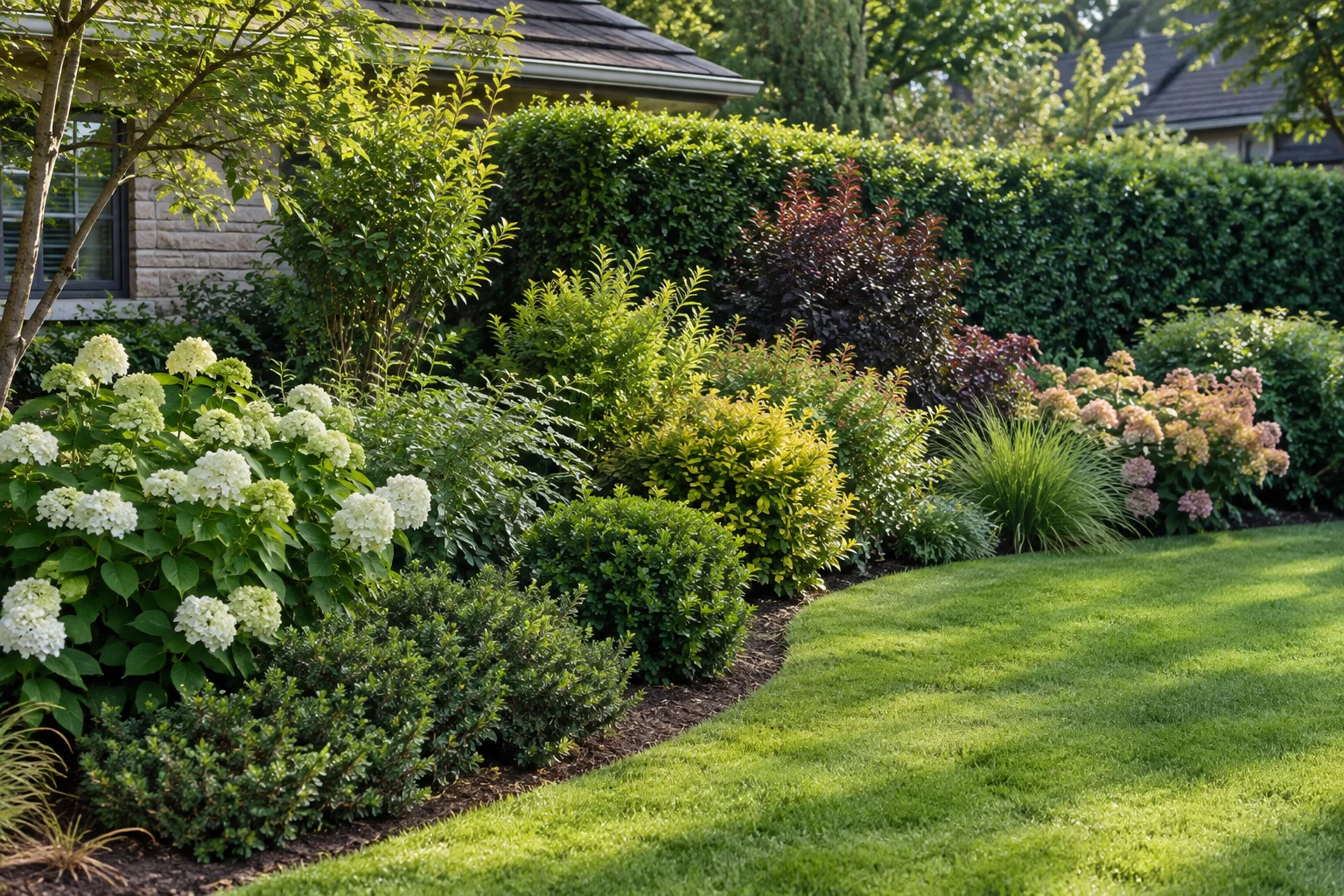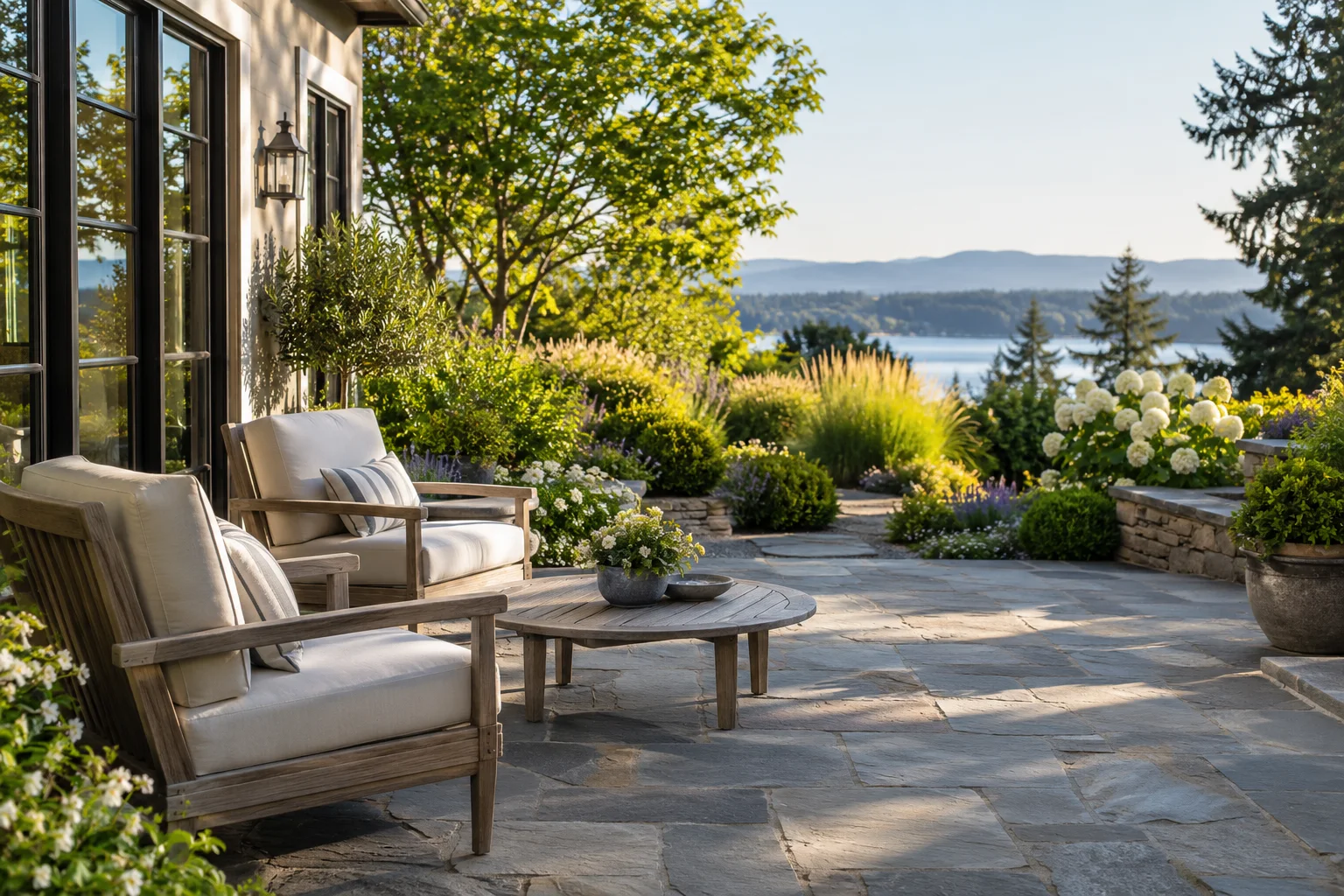
A garden project can begin with a simple wish, such as making the backyard easier to use, and quickly involve plants, paths, soil, drainage and structures. Knowing the difference between softscaping and hardscaping helps you describe the work, but the labels alone do not tell you which provider has the right expertise.
The useful question is what must be designed, installed, assessed and maintained on your particular site. This guide explains the broad categories, the places where they overlap and how to find suitable help without assuming that every outdoor service belongs in one general gardening appointment.
Understand the broad categories
Softscaping commonly refers to the living and planting-related parts of a landscape: lawn, trees, shrubs, garden beds and associated growing materials. Hardscaping commonly refers to constructed features such as patios, paths, walls and other built surfaces. The terms are useful for conversation, though formal municipal definitions may differ from everyday usage.
Do not use a service label as a legal classification. A material that a contractor describes casually as part of the garden may be treated differently under local requirements. If a rule depends on the type of surface or project, check the current municipal definition for the actual work.
For an initial brief, describe the physical outcome instead. “Replace this narrow lawn strip with a planted bed” or “build a path between the gate and shed” gives a provider more useful information than simply requesting softscape or hardscape services. The details reveal the skills and planning the project needs.
Start with function before materials
Explain what you want to do in the space. Perhaps you need a reliable walking route, more comfortable seating, improved privacy or a garden that is easier to maintain. Those goals can be met in different ways, and choosing a material too early may limit better options.
For example, a difficult lawn corner might be addressed through changed planting, a revised route or a suitable built surface. The right choice depends on use, site conditions, budget and ongoing care. A provider should help compare those factors rather than assume the first material mentioned is already a final instruction.
Write down what the project must preserve. Existing trees, drainage routes, access to services and valued planting can shape the design. A successful new feature should work with the property rather than solve one inconvenience by creating another elsewhere.
Identify the separate parts of the job
Break the idea into tasks: assessment, design, removal, excavation, installation, planting, cleanup and aftercare as applicable. A small project may combine several tasks in one person’s service. A larger one may require different specialists. The breakdown helps you ask who is responsible for each part.
Include work that is easy to overlook. A new patio may require surrounding planting to be restored. A new bed may require old edging to be removed and material hauled away. An access route for equipment may need reinstatement after the main construction is finished.
Ask the provider to describe what is outside their scope. A clear boundary is a useful sign of professionalism. It allows you to arrange the right additional help before work starts rather than discovering halfway through that an important component was assumed to belong to someone else.
Recognise when planting expertise matters
Planting work requires more than placing attractive specimens into available gaps. Selection should account for light, soil, climate, mature size and care. University of Minnesota Extension’s planting guidance stresses the importance of matching trees and shrubs to site conditions. Local knowledge is needed to apply those principles appropriately.
Ask how existing plants will be identified and protected. If the project includes moving or substantially pruning a valued specimen, discuss the method, timing and uncertainty separately. A construction schedule should not automatically determine every horticultural decision.
Request a plant list and establishment plan for new planting. You should know what is being supplied, why it suits the location and what care you must provide afterwards. A visually finished bed at handover is the beginning of plant establishment, not the end of the garden’s responsibilities.
Recognise when construction expertise matters
Built features must suit their intended use and the conditions beneath and around them. A path, retaining structure and seating area are not interchangeable construction tasks. Ask for relevant experience with the type and scale of work proposed, not simply a broad claim to do landscaping.
Discuss preparation, materials, levels, drainage and the finished connection to adjoining surfaces. You do not need to design technical details yourself, but the provider should explain the approach clearly enough for you to understand the scope. A photograph of attractive paving does not demonstrate every aspect of construction quality.
Where structural design, permits or another specialist’s input is required, clarify who will arrange it and when. Do not let the word garden make a substantial built feature sound like ordinary maintenance. The responsibilities should match the actual project rather than the setting in which it happens.
Treat drainage as a project condition
Changes to surfaces and ground levels can affect water movement. Ottawa’s landscaping and site-alteration guidance addresses drainage and grading, and the City advises contractors to respect the intended drainage design. Consult current requirements and suitable expertise before making changes that could affect your property or neighbouring land.
Describe existing observations: where water collects, where it travels and when the issue appears. Do not prescribe a drain or added soil based only on a wet patch. The underlying cause and the wider movement of water need to be understood before selecting a response.
If a planting project and a drainage concern overlap, decide which assessment must happen first. Installing a new bed before resolving the relevant levels may create rework. A good sequence preserves options and keeps the final planting from being disturbed by a later technical correction.
Confirm boundaries and applicable rules
Check where the proposed work sits in relation to property lines, public land, easements and shared areas. A fence or maintained lawn edge is not always an authoritative boundary. If the location matters to the project, obtain the appropriate information rather than relying on visual assumptions.
Ottawa’s landscaping education guide covers both private-property considerations and work involving the right of way. Use the current guide and ask the City about questions specific to your proposal. Avoid treating a neighbour’s completed project as evidence that the same work is permitted on your property.
For condominiums, rentals or shared developments, confirm the relevant approval process as well. The person arranging work should have the authority to authorise it. Clarifying that early prevents a provider from preparing a detailed installation plan for a change that has not been properly agreed.
Arrange locating before excavation
Planting and hardscape projects can both involve digging. Ontario One Call explains that public utility locate requests and privately owned underground infrastructure require attention before excavation. Ask the person performing the work to confirm the appropriate locating process and the status of the required information.
Do not assume shallow work is exempt from the need to consider buried services. A new garden bed, tree planting or edge installation can still intersect infrastructure. Follow the current requirements and the instructions provided with the locate information, rather than relying on a remembered depth or an old marking.
Keep the locating responsibility in the project scope. The homeowner should know who is arranging it and whether it affects scheduling. A planned start date should not become pressure to begin while necessary information or clearances remain incomplete.
Protect existing trees and planting during work
Discuss how access, storage and construction activity may affect the existing landscape. A mature tree or established bed can be harmed by work nearby even when it is not being removed. Ask whether an arborist or other specialist should advise before equipment routes or excavation areas are finalised.
Mark plants to retain and show their locations in the brief. Include roots or planting areas that may not be obvious from above-ground foliage alone. The provider should explain protection measures appropriate to the project, rather than assuming anything outside the immediate excavation footprint is unaffected.
Plan where materials will be stored. The most convenient open area may be part of a plant’s growing environment or a route needed for ongoing care. A storage decision made at delivery time can undermine careful design work if the landscape around the project was never considered.
Coordinate the sequence across providers
If different people handle construction and planting, appoint a clear coordinator. Decide who confirms levels, bed boundaries, access and readiness for the next stage. Without that handover, one provider may finish according to assumptions the other has not seen.
Ask what must be completed before plants arrive. Conversely, identify any planting or tree protection that must be addressed before construction begins. The sequence should be based on the work, not simply whichever contractor has the earliest opening.
Keep drawings and revisions shared with the people who need them. A change to a path width can affect bed area, plant quantity and access. Even a modest adjustment should be communicated before the next stage proceeds, so the final result does not depend on conflicting versions of the plan.
Compare quotes by responsibilities and finished state
Request enough detail to understand design, preparation, materials, installation, restoration and removal. A quote for laying a surface on a prepared area is different from one that includes all preparation. A planting price may or may not include removing existing vegetation and providing aftercare information.
Ask for product descriptions and plant identities where relevant. Clarify how substitutions will be approved. Materials that look similar can differ in their suitability, and plants with similar flowers can have different mature sizes or care needs. Availability should not silently redefine the project.
Describe the intended finished state around the main feature. Will lawn edges be restored? Will excess soil leave? Will paths be cleaned and temporary protection removed? These details help prevent a technically completed installation from leaving you with an unplanned series of smaller jobs.
Plan access, deliveries and disruption
Show the complete route from the street to the work area. Gate width, stairs, slopes and shared parking can influence equipment and labour. A compact site may require substantial carrying even when the finished project is small. Include photographs of the route in any remote request.
Discuss how the household will use the property during work. Which entrance stays open? Where can bins go? How will pets be kept away from active areas? The answers should be part of scheduling, especially when the project affects the only route through a narrow side yard.
If a project is phased, agree on the condition left between stages. Temporary access, unfinished edges and stored materials need a practical plan. A pause that was expected to last a few days can become longer, so the interim arrangement should be understandable and manageable.
Compare ongoing care as well as installation
Hard surfaces are not maintenance-free, and planting does not all require the same level of attention. Ask what care each proposed option introduces. That might include surface upkeep, inspection, seasonal plant tasks or establishment watering. The comparison should reflect the actual products and plants selected.
Think about future access for repairs or replacement. Could one plant be changed without disturbing the entire surface? Could a service point be reached without removing a built feature? Planning for ordinary maintenance can make the landscape more adaptable as your needs change.
The low-maintenance planting guide and garden makeover brief guide can help connect those long-term questions with the design. A good proposal should make the future routine understandable before you approve the installation.
Review both the construction and the living elements
At handover, walk the intended routes and inspect the agreed boundaries, surfaces and planting. Compare the work with the approved plan and document substitutions. Ask about anything deliberately left for a later stage, and identify who is responsible for completing it.
Obtain the relevant care and product information. New plants need an establishment handover, while constructed features may have maintenance instructions and workmanship terms. Keep those records together but distinguish the responsibilities. A plant concern and a construction concern may need different follow-up.
Take reference photographs and note the date. They can help you describe a later change accurately. If something is wrong, report the specific location and observation promptly rather than waiting until the evidence is difficult to separate from normal use or seasonal change.
Find help by the work that must be done
Choose providers whose demonstrated skills match the project’s actual components. A gardener may be right for selective planting care, a landscape contractor for a built feature and a specialist for drainage, trees or structural questions. One business may coordinate several roles, but that arrangement should be explicit.
Cody Mobile’s planned lawn and garden care division is not operating yet; homeowners can join the waitlist while local partners are recruited. Do not assume that the planned division includes every form of landscape construction or specialist assessment.
A clear description of function, site conditions and responsibilities will help you find the right support. Use softscaping and hardscaping as starting vocabulary, then define the real work closely enough that everyone understands what will be built, what will grow and how the two will be cared for together.