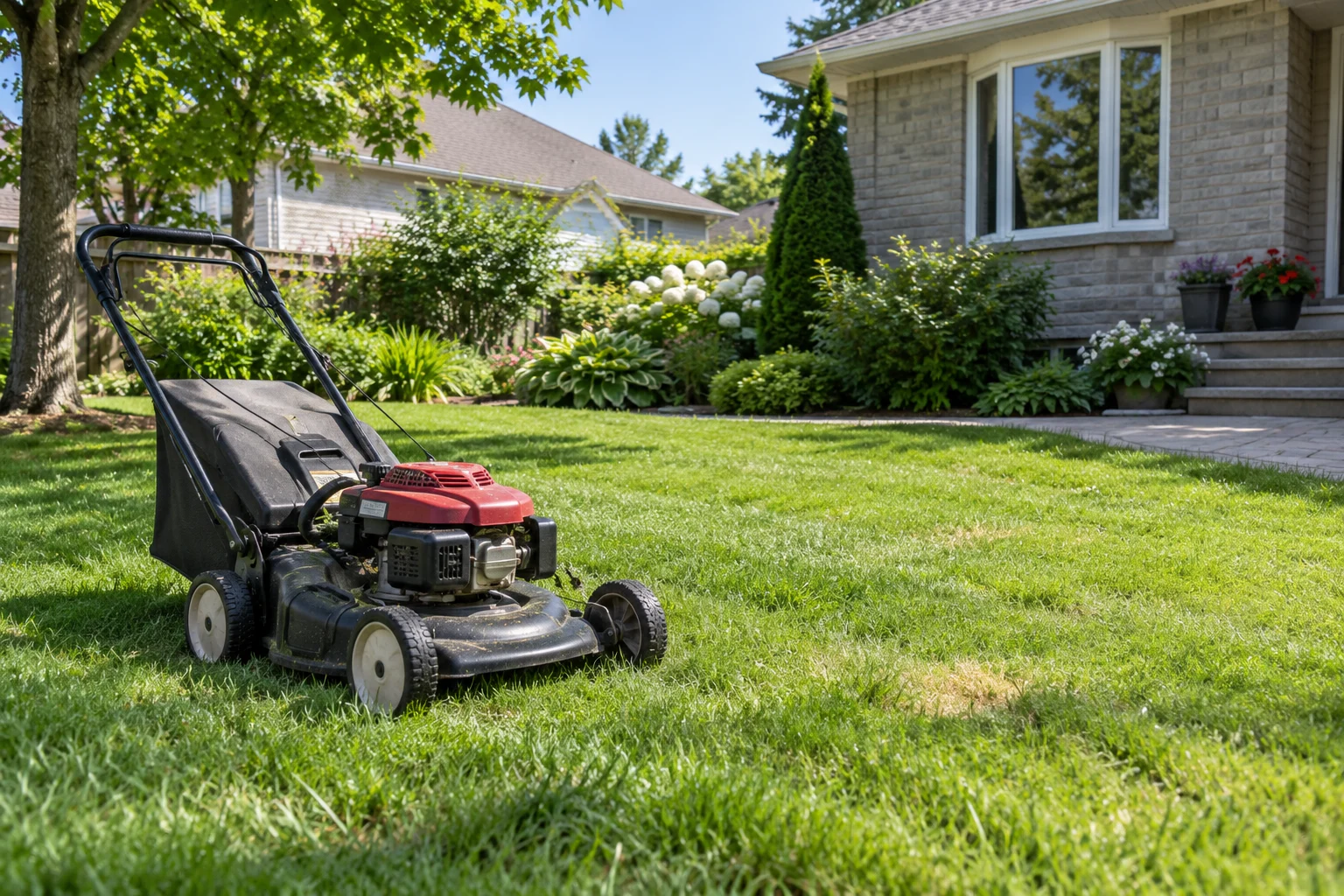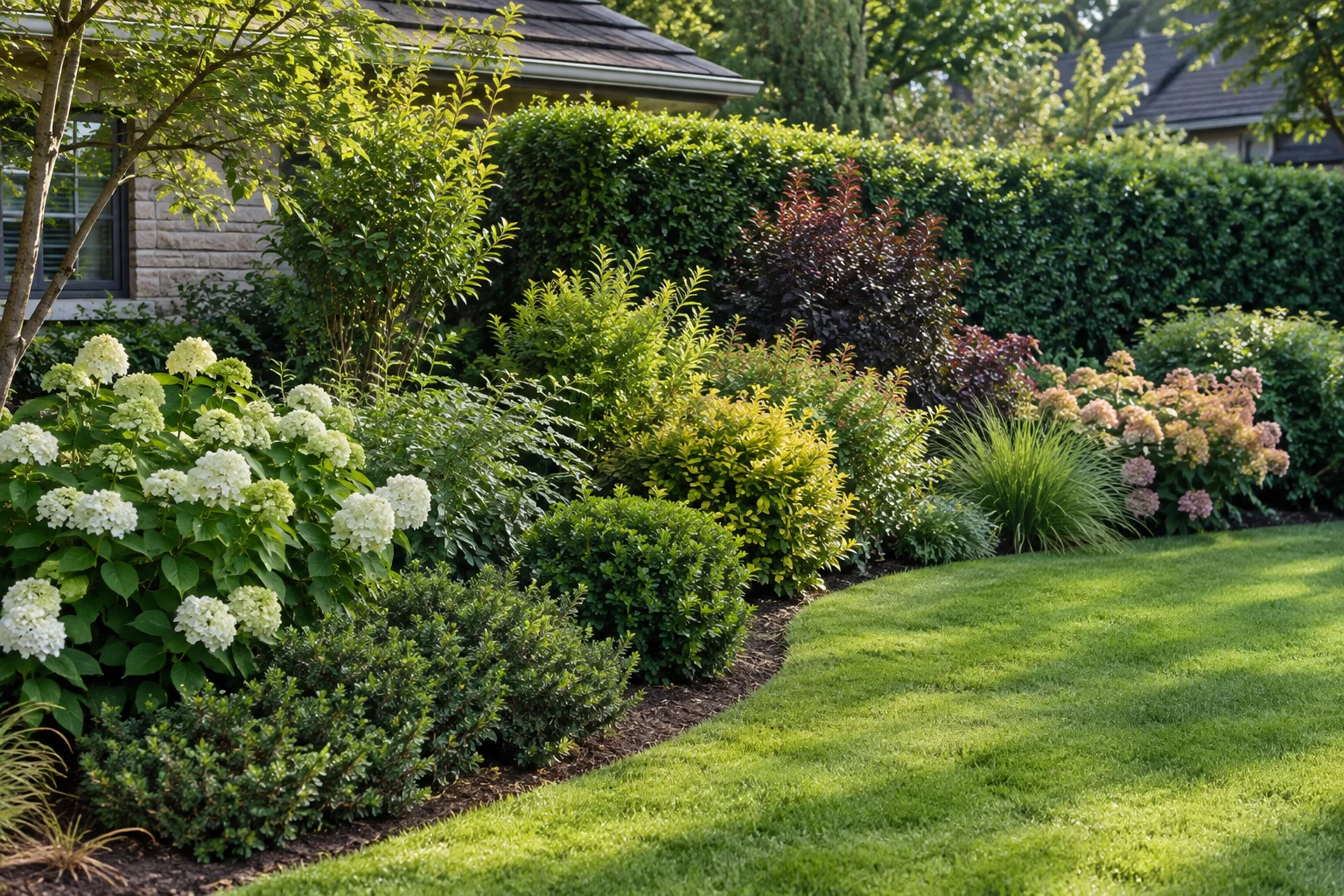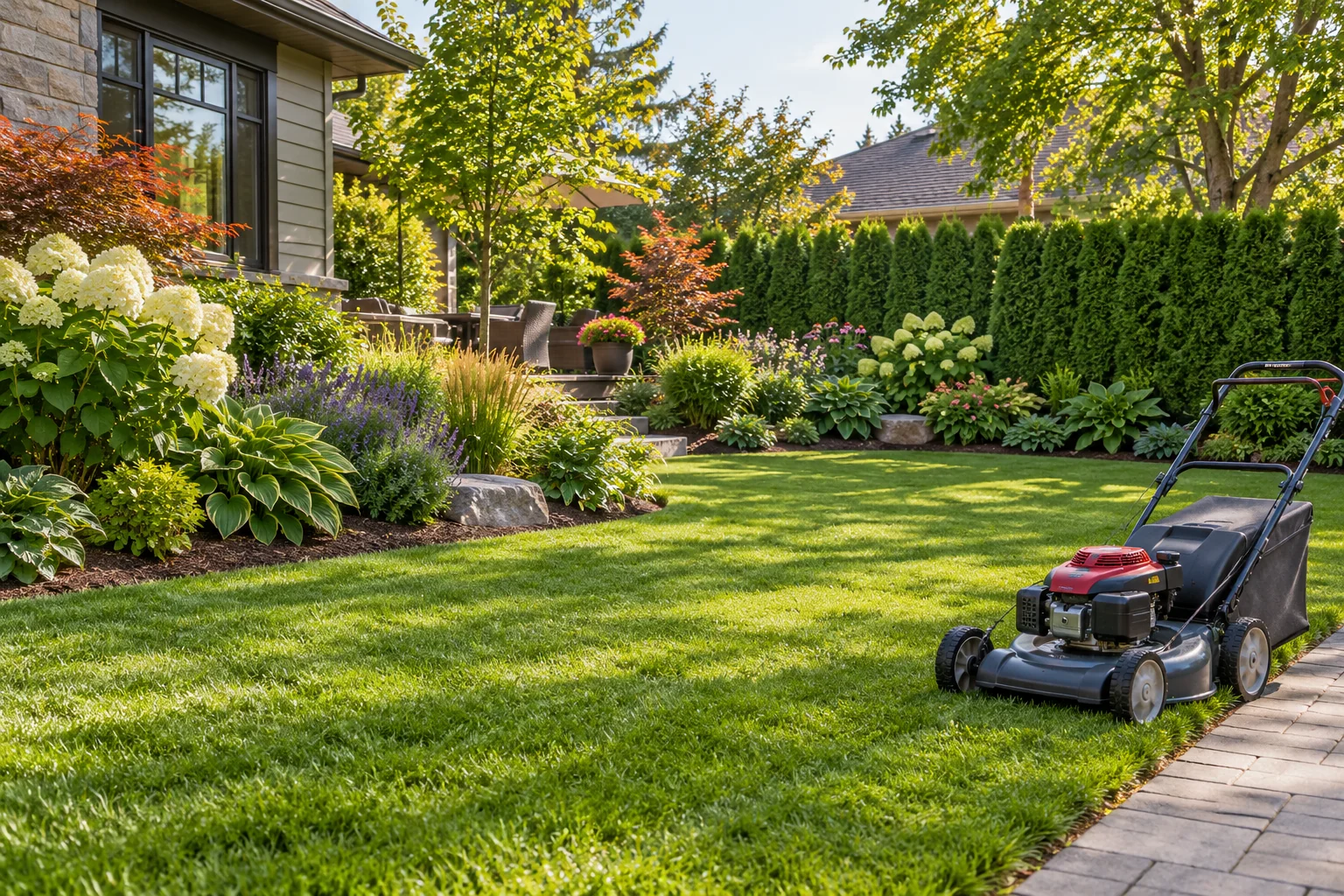
A useful outdoor-care budget begins with the work your property needs, not with a single number for gardening. Mowing, selective weeding, a spring reset and a planting project behave differently. Some recur, some depend on conditions and some are choices you can postpone or phase.
The goal is to make those differences visible before the season begins. You can then compare proposals, choose where professional help adds value and leave room for changes without treating every invoice as a surprise. This guide offers a practical planning method without assuming a particular local price or promising that every yard needs the same services.
Define the standard you want to maintain
Describe what a satisfactory yard looks like in ordinary use. You may want clear paths, regularly managed grass and beds that remain identifiable without being immaculate. Another household may prefer a formal entrance and carefully maintained hedges. Those standards affect labour and frequency, so they belong in the budget conversation.
Separate the areas that need close attention from those that can be more relaxed. A front entrance, main patio and frequently used path may justify a different standard from a less visible rear border. This is a practical allocation of effort, not a judgement about which parts of the property deserve care.
Write the standard in terms you can check. “Keep the route to the shed clear” is easier to price and review than “make the backyard perfect.” A realistic baseline helps you decide whether an optional improvement is worth adding without losing track of the work that makes the property usable.
Inventory the work before seeking prices
Walk the property and list the actual areas: lawn sections, beds, hedges, containers and access routes. Record approximate dimensions where useful. Add photographs that show both the area and how it is reached. A provider can estimate more accurately when the request describes the property rather than only its street address.
Then list tasks for each area. Mowing may include trimming and clearing adjacent surfaces, while bed care may involve selective weeding, plant identification and seasonal tidying. Keep the tasks separate until you know what a proposed package includes. A broad service name can conceal different assumptions.
Do not add treatments simply because they appear on a menu. University of Minnesota Extension advises understanding the cause of lawn problems before renovation. That principle also helps with spending: assessment can prevent a budget from filling with interventions whose purpose has not been established.
Divide the plan into recurring, seasonal and project work
Recurring work happens throughout a period, such as mowing or agreed bed maintenance. Seasonal work has a more specific occasion, such as a spring cleanup or fall leaf plan. Project work changes something, such as creating a bed or replacing unsuitable planting. These categories help you understand both total cost and timing.
A project can create future recurring costs. New containers need care, a larger bed needs maintenance and a formal hedge needs an appropriate trimming arrangement. Include that later work when comparing design options. An installation price alone does not describe what the choice will require over time.
Conversely, a project may simplify future care. Revising an awkward edge or replacing an oversized shrub might reduce a repeated task. Ask for a realistic explanation of the change rather than assuming every makeover produces savings. The value may be convenience or enjoyment even when spending does not fall.
Identify work you can reliably handle
List the tasks you are willing and able to do, then test that list against a busy month. A plan based on unlimited weekend energy will understate the help you need. Consider physical effort, equipment, knowledge and the time required to dispose of material as well as the task itself.
You might handle light observation and watering while hiring mowing and seasonal material removal. Another household may enjoy mowing but prefer help identifying and maintaining plants. Build the division around actual preferences. There is no requirement to outsource the whole yard or to do every simple-looking task yourself.
Include the cost of your own supplies where it matters to comparison. If doing a task yourself requires equipment you do not own, storage and maintenance become part of the decision. Avoid buying specialised tools for one occasional job before comparing a suitable service arrangement.
Understand the pricing basis
A per-visit price, an hourly rate and a seasonal total answer different questions. A per-visit arrangement needs a defined scope. An hourly arrangement needs priorities and a realistic time allowance. A seasonal arrangement needs clear inclusions, timing and rules for changes. None is automatically more economical without those details.
Ask whether the quote includes labour, materials, disposal and applicable taxes. Clarify any minimum charge and whether travel or access affects the total. You do not need to negotiate every line separately; you need to understand the complete amount associated with the work you expect.
For recurring work, ask how weather delays, skipped visits and unusually heavy conditions are handled. A fixed seasonal payment may not mean a fixed number of identical visits. A pay-per-visit arrangement may vary with the growing season. Read the terms rather than inferring them from the payment frequency.
Estimate recurring totals with ranges
For planning, multiply the expected number of visits by the quoted per-visit amount, then consider a lower and higher visit scenario where appropriate. The figures are your planning assumptions, not a prediction of weather or growth. Label them clearly so you can revise them as the season develops.
A simple hypothetical calculation can illustrate the method without inventing local rates. If a provider quotes an amount called V and you expect N visits, the recurring subtotal is V multiplied by N. Add any separately quoted seasonal tasks and materials. The important step is identifying every component, not choosing an arbitrary sample price.
For hourly work, ask for a likely range and a check-in point. You may agree that the provider completes the highest-priority areas first and contacts you before exceeding an agreed amount. This makes uncertainty manageable while preserving a clear spending boundary.
Budget for the beginning and end of the season
Initial cleanup and fall material handling can be larger jobs than routine visits. Do not assume they are included in a mowing agreement. Ask whether they are separate, optional or part of a defined seasonal package. Put their expected payment timing beside the recurring costs.
The first visit may also need a reset before ordinary maintenance can begin. An overgrown bed or accumulated debris should be described honestly. A provider pricing a maintained garden may reasonably need to revise the scope when the actual starting condition is different.
Use photographs to support the distinction. An initial reset can have a clear endpoint, after which the recurring standard applies. Without that separation, it can be difficult to tell whether the ongoing price includes catching up on past work or only maintaining the condition achieved after the first phase.
Include material handling and access
Leaves, clippings, prunings and removed plants do not disappear when the cutting or weeding ends. The budget should account for gathering, bagging, carrying, storage and removal as applicable. Clarify who supplies containers and who moves material to the collection point.
Access can influence labour even on a small property. Stairs, narrow gates, long carries and shared parking may change how equipment and materials are moved. Tell the provider before asking for a firm price. A quote based on open driveway access is not directly comparable with the same work reached through a constrained route.
If you plan to use municipal collection, check current rules and scheduling. Do not build the budget around an assumption that every kind or quantity of project waste will be accepted. Unusual material or a large removal project may need a separate disposal arrangement.
Keep optional improvements visible
Maintain a wish list separate from the baseline care plan. It might include a new bed, additional mulch, changed planting or decorative containers. Give each idea a purpose and a rough priority. This makes it easier to choose one useful improvement rather than agreeing to several small additions that collectively exceed the budget.
Ask whether an improvement depends on other work. Adding mulch before a planned bed redesign may create rework. Installing plants before resolving access or drainage questions can complicate the project. A sensible sequence often matters more than obtaining a small discount on materials.
When funds are limited, reduce area or phase the work while preserving appropriate preparation. A modest finished section can be more useful than a large project left in an awkward intermediate state. The garden makeover brief guide can help define phases and their intended outcomes.
Allow for uncertainty without creating an open cheque
Set aside some capacity for unexpected needs if your circumstances allow, but do not treat that reserve as automatic authorisation for extra work. Agree on a change process with the provider. Ask for the reason, proposed response and revised amount before proceeding with work outside the original scope.
Distinguish urgent practical concerns from optional improvements discovered during a visit. A blocked access route, an uncertain plant condition and an attractive planting suggestion are different decisions. Each may deserve attention, but they should not be bundled into one vague recommendation to do more.
If you cannot approve additional spending, say so clearly and ask for observations only. A provider can document a concern for later assessment. A useful budget supports honest decisions about what can happen now and what must wait; it should not rely on pressure at the moment equipment is already on site.
Plan payments alongside the work calendar
Record when deposits, instalments or per-visit payments are due under the actual agreement. A seasonal total can appear manageable while concentrating payments in one part of the year. Knowing the schedule lets you compare arrangements on practical terms without assuming a lower monthly figure means a lower total.
Keep invoices linked to the relevant scope or visit. If an invoice includes an approved extra, retain the note explaining it. This makes later review easier and helps resolve a question without reconstructing several conversations from memory. Simple records are enough for most household care plans.
Do not confuse a payment schedule with a guarantee about service frequency or results. Read those terms separately. Ask how cancellation, pauses and changes are handled before committing to an arrangement that spans the season.
Review spending against useful outcomes
After the first part of the season, compare the plan with what actually happened. Which services made the property easier to use? Which tasks were unnecessary, poorly timed or still left to you unexpectedly? The answers can improve the remaining budget more than a narrow focus on the cheapest visit.
Look for recurring sources of extra work. An awkward edge, unclear plant record or difficult waste route may repeatedly add time. A small design or communication change could help. Ask for evidence from actual visits before approving a larger project intended to solve the problem.
Keep the review factual. Record completed work, time or visits where known, and the effect on your routine. You do not need to justify every enjoyable garden choice as a financial return. The point is to spend deliberately on the results that matter to your household.
Carry a clearer plan into the next season
Save the final scope, useful photographs and a short list of changes. Update your baseline standard if your preferences or available time changed. The lawn and garden planning guide can help connect recurring maintenance with seasonal priorities, while low-maintenance planting addresses design choices that affect future work.
A good budget remains adjustable while making decisions visible. You should know what you are maintaining, what you are improving, which responsibilities stay with you and what approval is needed for something extra. That clarity is more useful than a precise-looking total built on undefined services.
Cody Mobile’s planned lawn and garden care division is not operating yet. Its waitlist is open while local partners are recruited. Use the planning period to gather quotes for clearly defined work and build a seasonal budget around your own property rather than an assumed standard package.